Welcome to the world of compact brilliance! If you’ve ever dreamt of adding a discreet glow to your living spaces, creating stunning accent lighting, or tackling a clever DIY project, then Small Led Strip Lights are your ultimate secret weapon. As a seasoned expert with over a decade in LED strip design and installation, I can tell you these tiny powerhouses are revolutionizing how we light up those tricky, confined areas. Forget bulky fixtures; we’re talking about flexible, cuttable, and incredibly versatile lighting solutions that fit almost anywhere, bringing both functionality and flair to your home.
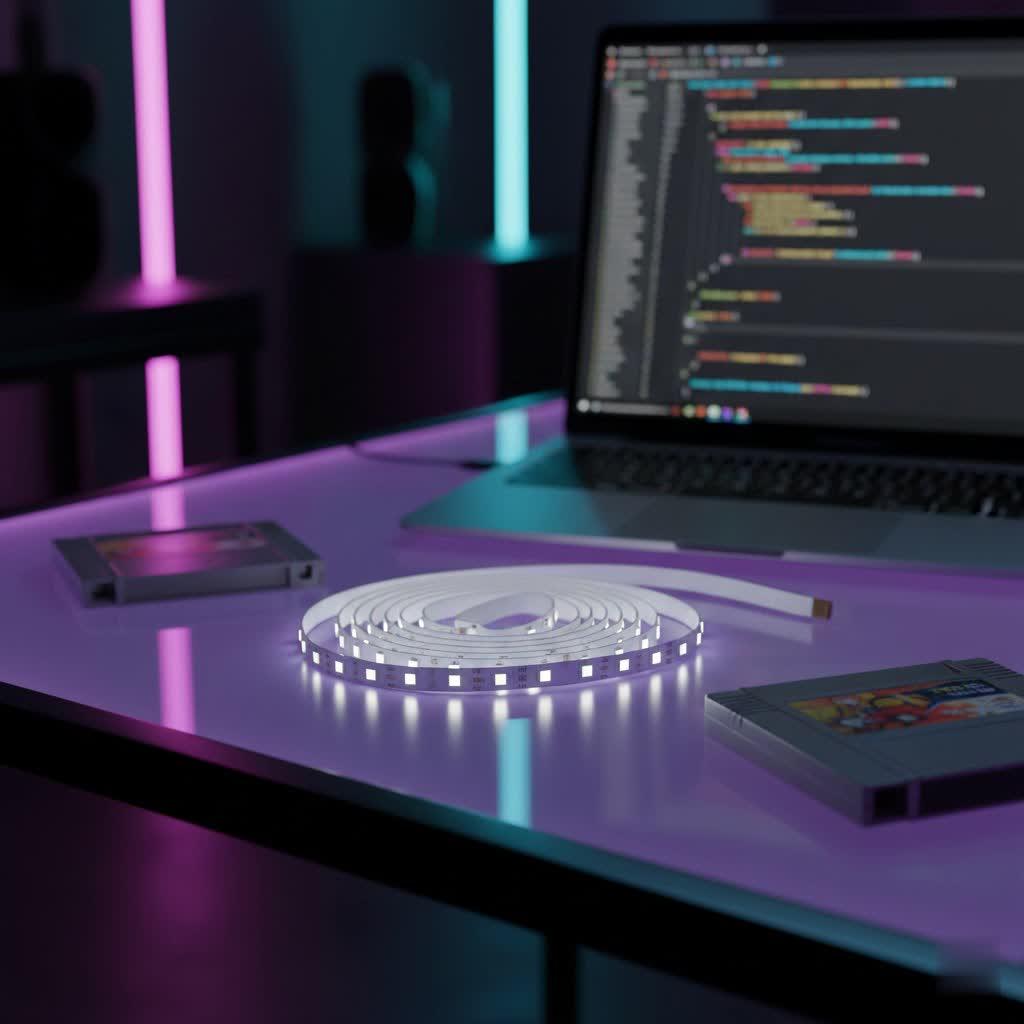
Understanding the Magic of Small LED Strip Lights
So, what exactly makes an LED strip light “small,” and why should you care? It’s all about their inherent design: a series of tiny LED chips mounted on a flexible circuit board. This unique construction allows them to be incredibly thin, narrow, and bendable, making them perfect for applications where traditional lighting simply can’t go.
These miniature marvels offer a host of benefits that make them ideal for residential and commercial settings:
- Energy Efficiency: Small LED strip lights consume significantly less power than older lighting technologies, leading to noticeable savings on your electricity bill.
- Long Lifespan: With an impressive operational life often exceeding 50,000 hours, you won’t be replacing these lights anytime soon, ensuring consistent illumination for years.
- Low Heat Emission: Unlike incandescent bulbs that generate a lot of heat, LEDs remain cool to the touch, making them safer for installation in enclosed spaces or near sensitive materials.
- Exceptional Flexibility: Their pliable nature allows them to conform to curves, corners, and irregular shapes, opening up a world of creative possibilities.
- Customizable Lengths: Most small LED strips feature designated cut marks, typically every few centimeters, allowing you to tailor them precisely to your project’s dimensions.
- Vast Color Options: From warm whites and cool daylight tones to a full spectrum of RGB colors and tunable white options, you can set the perfect mood for any occasion.
- Dimmability: When paired with a compatible controller, you can easily adjust their brightness to create subtle ambiance or powerful task lighting.
Unpacking the Types: SMD vs. COB Small LED Strips
When diving into the world of small LED strip lights, you’ll often encounter two primary types: SMD (Surface-Mount Device) and COB (Chip-on-Board). Understanding the difference is key to achieving your desired lighting effect.
- SMD LED Strips: These are the traditional flexible strips, featuring individual LED chips spaced out along the ribbon. They are highly versatile and often more budget-friendly. However, in applications where the light source is directly visible or reflected, you might notice a “dotted” appearance due to the gaps between the individual diodes.
- COB LED Strips: COB technology is a game-changer for small, visible lighting applications. Instead of discrete chips, dozens of tiny LED emitters are packed tightly onto a single substrate and then covered with a phosphor coating. The result? A perfectly continuous, dot-free line of light that appears incredibly smooth and professional. COB strips also tend to offer better heat dissipation and higher lumen efficiency, making them an excellent choice for a premium, seamless aesthetic, particularly in tight spots where uniformity is paramount. While they might have a higher initial cost, their superior light quality and performance often make them a worthwhile long-term investment.
|
Our Picks for the Best LED Strip in 2026
As an Amazon Associate I earn from qualifying purchases.
|
||
| Num | Product | Action |
|---|---|---|
| 1 | KANTUTOE LED Lights for TV, 16.4ft LED Lights for 45-75 Inch TVs, RGB TV Backlight Behind, Music Sync Bluetooth APP & Remote Control Strip Lights USB Powered for Bedroom, Gaming, Home Décor |

|
| 2 | Govee Smart RGB LED Strip Lights for Bedroom, 32.8ft WiFi LED Light Strip Work with Alexa Google Assistant, 16 Million Colors with App Control and Music Sync Lights for Home Decor, 2 Rolls of 16.4ft |
|
| 3 | Govee Warm White LED Strip Lights, Bright 300 LEDs, 3000K Dimmable Light Strip 16.4ft with Control Box, LED Lights for Bedroom, Kitchen Cabinets, Living Room, ETL Listed Adapter Included |
|
| 4 | Aclorol LED Strip Lights 5V USB 6.56FT/2M 640 LEDs Blue Indoor Rope Lights for Bedroom Not Waterproof IP20 CRI85+ Flexible LED Light for TV Backlight Living Room Party DIY Lighting |
|
| 5 | KSIPZE 100ft Led Strip Lights RGB Music Sync Color Changing Led Lights with Smart App Control Remote Led Lights for Bedroom Room Lighting Flexible Home Décor |
|
| 6 | VOEWT LED Neon Lights Daylight White 6000K,9.8ft 110-120V LED Strip Lights,Flexible Outdoor Waterproof Neon Rope Lights for Bedroom,Cabinet,Kitchen,Living Room,Mirror,Halloween Decor |
|
| 7 | Tenmiro Led Lights for Bedroom 100ft (2 Rolls of 50ft) Music Sync Color Changing Strip Lights with Remote and App Control RGB Strip, for Room Home Party Decoration |
|
| 8 | Govee RGBIC LED Strip Lights, 32.8ft Smart LED Lights for Bedroom, Bluetooth LED Lights APP Control, DIY Multiple Colors on One Line, Color Changing LED Strip Lighting Music Sync, Home Decor |
|
| 9 | Govee 100ft RGBIC LED Strip Lights, Smart LED Lights Work with Alexa and Google Assistant, LED Lights for Bedroom WiFi App Control Segmented DIY Multiple Colors, Color Changing Light, (2 x 50ft) |
|
| 10 | Govee RGBIC LED Strip Lights, Smart LED Lights for Bedroom, Bluetooth LED Lights APP Control, DIY Multiple Colors on One Line, Color Changing LED Strip Lighting Music Sync, Home Decor, 16.4ft |
|
Choosing the Perfect Small LED Strip Lights for Your Project
Selecting the right small LED strip lights can feel a bit like choosing the perfect paint color – there are many nuances! Here’s how to narrow down your options based on your specific needs:
What are the main applications for small LED strip lights?
Small LED strip lights are incredibly versatile, finding their home in countless applications. Their compact size and flexibility make them ideal for accentuating features, providing discreet task lighting, and creating ambiance in even the tightest spots.
What are the key factors to consider when selecting small LED strip lights?
The primary considerations include your intended application, desired brightness and color, voltage requirements, and whether you need specific control options. Thinking about these upfront will help you choose the best strip for your project.
1. Application: Indoor, Outdoor, or High-Moisture Areas?
First, consider where your lights will be installed.
- Indoor (Dry Areas): For living rooms, bedrooms, or display cases, an IP20 rating is typically sufficient. These strips are not protected against water.
- Indoor (High-Moisture Areas): For kitchens (under cabinets near sinks) or bathrooms (around mirrors), opt for IP65 rated strips, which offer protection against splashes and dust.
- Outdoor or Submersible: For patios, garden features, or even inside saunas and pools, you’ll need highly waterproof strips, generally rated IP67 or IP68. These are designed to withstand immersion and harsh environmental conditions.
2. Brightness and Color: Setting the Mood
Brightness is measured in lumens per foot (or meter), while color temperature is measured in Kelvins (K).
- Brightness: If you need task lighting (e.g., under a kitchen cabinet), look for higher lumen output. For accent or mood lighting, lower lumen strips are perfect.
- Color Temperature (White Light):
- Warm White (2700K-3000K): Creates a cozy, inviting atmosphere, similar to traditional incandescent bulbs.
- Neutral White (3500K-4000K): Offers a clean, balanced light, great for workspaces and modern interiors.
- Cool White (5000K-6500K): Provides a bright, crisp light, ideal for task-oriented areas or contemporary aesthetics.
- Dynamic Color:
- RGB (Red, Green, Blue): Allows you to mix millions of colors for decorative and mood lighting.
- RGBW (RGB + White): Adds a dedicated white LED chip for a purer white light alongside color options.
- RGBCCT (RGB + Color Correlated Temperature): Offers RGB colors plus the ability to adjust the white light from warm to cool.
3. Voltage: Powering Your Project
Most small LED strip lights operate on low voltage: 12V DC or 24V DC.
- 12V Strips: Common for shorter runs, typically up to 16.4 feet (5 meters).
- 24V Strips: Ideal for longer runs, often up to 32.8 feet (10 meters) or more, as they experience less voltage drop over distance, ensuring more consistent brightness from end to end.
- Matching Power Supply: Always ensure your power supply (transformer or driver) matches the voltage and wattage requirements of your LED strip to prevent flickering or damage.
4. LED Density: The Smoothness Factor
This refers to the number of LED chips per meter. Higher density means more LEDs packed closely together.
- Higher Density (e.g., COB strips): Provides a more uniform, “dot-free” light output, which is aesthetically pleasing, especially when the strip itself is visible or reflected on surfaces. This is often preferred for high-end accent lighting.
- Lower Density (e.g., some SMD strips): Can create a more distinct “dotted” effect but might be more budget-friendly.
5. Control Options: Smart Home Integration
How do you want to control your lights? Options include:
- IR/RF Remotes: Simple, handheld controllers.
- Bluetooth/Wi-Fi: Allows control via smartphone apps.
- Smart Home Integrations: Compatibility with systems like Alexa or Google Home for voice control and advanced automation.
Easy Installation Guide for Small LED Strip Lights
Installing small LED strip lights is a rewarding DIY project that can dramatically enhance any space. Here’s a step-by-step guide to help you achieve a professional look:
Checklist: Tools and Materials You’ll Need
Before you begin, gather these essentials:
- Small LED strip lights
- Compatible power supply (transformer/driver)
- LED controller (for RGB, tunable white, or smart strips)
- Connector cables (if needed for corners or extensions)
- Scissors (sharp, for cutting strips)
- Tape measure
- Rubbing alcohol and a lint-free cloth
- Screwdrivers or mounting clips/brackets (optional, for extra security)
- Soldering kit (optional, for more permanent connections)
Step-by-Step Installation:
-
Plan Your Layout:
- Measure the exact length of the area where you intend to install the lights.
- Sketch out your plan, noting where the strip will bend, split, or connect to power. Consider visibility: aim to conceal the strip itself while letting its light shine.
- Locate your power source and ensure your chosen strip’s maximum run length is appropriate.
-
Prepare the Surface:
- Crucial Step! Use rubbing alcohol and a clean, lint-free cloth to thoroughly clean and dry the installation surface. Any dust, grease, or moisture will compromise the adhesive backing.
-
Cut the Strip to Length (if necessary):
- Always cut only at the designated cut marks, usually indicated by a small scissor icon or copper pads. Cutting elsewhere can damage the circuit and make a section unusable.
-
Attach Connectors or Solder (if required):
- For custom lengths or sharp corners, use strip-to-strip connectors or L-shaped connectors. If you prefer a more robust and permanent connection, carefully solder wires between segments, ensuring correct polarity (positive to positive, negative to negative).
-
Peel and Stick:
- Remove a small section of the adhesive backing at a time and carefully press the strip firmly into place. Work slowly and press along the entire length to ensure maximum adhesion.
- For heavier, waterproof strips (IP67/IP68) or surfaces where adhesive might struggle (like unfinished wood or metal), use mounting clips or aluminum channels for extra security. Aluminum channels also provide better heat dissipation and a sleek, finished look.
-
Connect to Power Supply:
- Connect the LED strip to its compatible power adapter. Double-check that polarity matches (positive to positive, negative to negative).
- If using an RGB, tunable white, or smart strip, connect the LED controller between the strip and the power supply, following the manufacturer’s instructions.
-
Power On and Test:
- Plug in your power supply and test the lights. If they don’t illuminate or a section is out, check all connections and ensure the power supply capacity is adequate. Adjust as needed.
Creative Ideas for Small LED Strip Lights in Home Decor
Small LED strip lights are fantastic for adding character, functionality, and a touch of modern elegance to virtually any space. Here are some “mind-blowing” ideas to spark your creativity:
- Under-Cabinet & Shelf Lighting: Instantly brighten kitchen countertops or illuminate display shelves in a living room, making them both functional and aesthetically pleasing. For an extra touch, add strips under bottom cabinets for a soft, ambient glow that defines the room’s edges.
- Mirror Backlighting & Vanity Lights: Apply strips behind bathroom mirrors or around vanity areas for a halo effect that provides excellent task lighting for grooming or makeup, along with a sophisticated glow.
- Accent Lighting:
- Cove Lighting: Conceal strips within architectural coves to wash walls or ceilings with indirect, soft light, adding depth and ambiance.
- Furniture Enhancement: Outline the underside of a bed, sofa, or desk to create a floating effect or a stylish, modern edge.
- Artwork Highlighting: Frame a favorite piece of art or a mural with LED strips to make it truly pop and draw attention.
- Staircase & Pathway Illumination: Install strips under handrails or along the lip of each step for enhanced safety and a stunning visual effect, especially in low-light conditions. This helps prevent those dreaded middle-of-the-night stubbed toes!
- Display Cases & Wardrobes: Bring your collectibles to life in display cases or illuminate the contents of your wardrobe, making it easier to find what you’re looking for.
- DIY Projects: From custom-built gaming desks with integrated lighting to unique shelving units, the possibilities for DIY enthusiasts are endless.
As Clara Johansson, a renowned lighting designer, often says, “Small LED strip lights are not just about illumination; they are about transforming a space with intentional artistry. They offer a subtle yet powerful way to define, highlight, and elevate an environment, revealing its true potential.”
Maintaining Your Small LED Strip Lights
With proper care, your small LED strip lights will provide years of reliable service.
- Cleaning: Gently wipe the strips with a dry, lint-free cloth to remove dust. For stubborn grime, a slightly damp cloth can be used on non-waterproof strips, ensuring they are completely dry afterward. For waterproof strips, follow manufacturer guidelines.
- Troubleshooting Common Issues:
- Strip doesn’t turn on: Double-check all connections, ensuring polarity is correct and the power supply is plugged in and functional.
- Part of the strip not lighting: Inspect connectors and cut lines for any loose connections or damage.
- Flickering: This often indicates an overloaded power supply. Ensure your power supply’s wattage capacity exceeds the total wattage required by your LED strip length.
- Wrong color or unresponsive control: Verify that your controller is compatible with your strip and that any remote control batteries are fresh.
- Ensure Proper Ventilation: While LEDs emit little heat, in extremely enclosed spaces, adequate airflow can prolong their lifespan, especially for higher density strips or those without aluminum channels for heat dissipation.
Frequently Asked Questions
Q: Can I cut small LED strip lights anywhere?
A: No, you should only cut LED strip lights at the designated cut marks, which are usually indicated by a small scissor icon or copper pads. Cutting elsewhere can damage the electrical circuit and render that section unusable.
Q: What voltage should I choose for small LED strips?
A: Most small LED strips come in 12V or 24V options. For shorter runs (under 16 feet), 12V is generally fine. For longer installations, 24V strips are often preferred as they minimize voltage drop, ensuring consistent brightness across the entire length. Always match the power supply to the strip’s voltage.
Q: Are small LED strip lights safe to use?
A: Yes, when installed correctly with appropriate power supplies and components, LED strip lights are very safe. They operate on low voltage, produce very little heat, and many are designed with safety certifications. Always disconnect power before working on them and use waterproof versions in damp or outdoor areas.
Q: How do I hide the wires for small LED strip lights?
A: Wires can be hidden behind trim, furniture, inside aluminum channels, or tucked into grooves. Careful planning of your power source location and cable routing will help ensure a clean, professional appearance. Many strips also come with slim connectors that are easier to conceal.
Q: What’s the main difference between “mini” and “regular” LED strips?
A: “Mini” or “small” LED strips generally refer to narrower and thinner versions of standard LED strips, often utilizing smaller LED chips or COB technology for a more compact profile and seamless light. This makes them ideal for tighter spaces and applications where discretion is key, while “regular” strips might be wider and more noticeable.
Q: Do small LED strips get hot?
A: Compared to traditional lighting, LED strips emit very little heat. However, they do produce some heat, especially higher-density or brighter strips. For optimal lifespan, especially in enclosed spaces, ensuring good airflow or using aluminum channels for heat dissipation is recommended, though most low-power small strips generate negligible heat.
Light Up Your World with Small LED Strip Lights
From subtle accent lighting to vibrant mood setters, small LED strip lights offer an unparalleled blend of versatility, energy efficiency, and aesthetic appeal. They empower you to transform ordinary spaces into extraordinary showcases, bringing your vision to light in a way that’s both practical and captivating. With the right knowledge and a dash of creativity, you can confidently embark on your next lighting project, knowing you’re choosing a solution that is safe, effective, and truly transformative. Let NamsP be your trusted guide as you illuminate every corner of your world with the endless possibilities of small LED strip lights.
