Hey there, fellow lighting enthusiasts! If you’ve ever dreamt of transforming a mundane space into something truly magical, you’ve probably stumbled upon the incredible world of Led Strip lighting. As someone who’s spent over a decade knee-deep in wires, diffusers, and power supplies, I can tell you that LED strip lights are a game-changer. They offer unparalleled flexibility, energy efficiency, and a fantastic array of colors and brightness levels, making them perfect for almost any lighting project you can imagine, whether it’s sprucing up your living room or adding a touch of flair to your outdoor patio. They are, quite simply, one of the most versatile lighting solutions available today, and mastering them is easier than you think.
Understanding LED Strips: Types and Their Magic
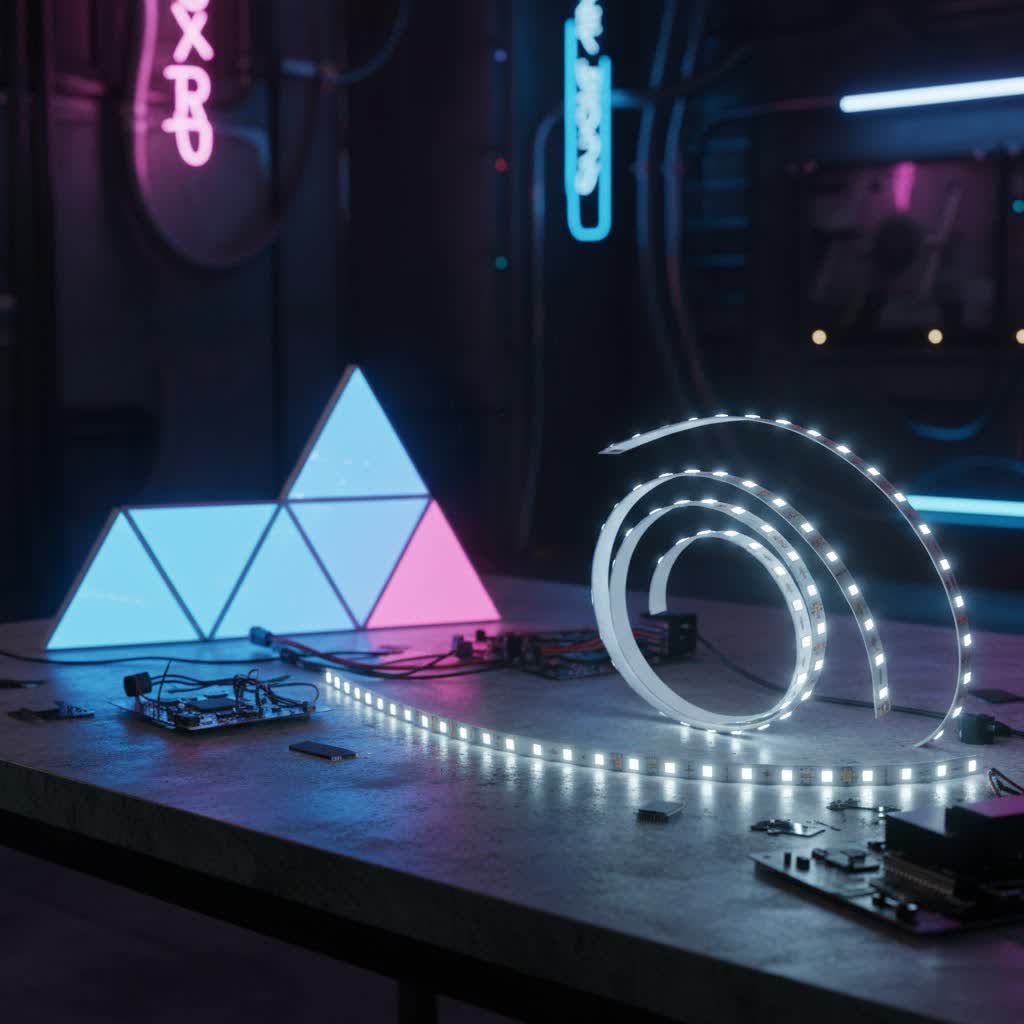
So, what exactly is an LED strip? At its core, an LED strip (also known as LED tape or ribbon lighting) is a flexible circuit board populated with surface-mounted light-emitting diodes (SMDs). These strips typically come with an adhesive backing, allowing for easy installation on various surfaces. But not all LED strip lights are created equal; understanding the different types is key to making the right choice for your project.
You’ll encounter several main categories. Single-color LED strip lights are straightforward, offering a consistent hue like warm white, cool white, red, or blue. Then there are RGB (Red, Green, Blue) strips, which can produce millions of color combinations by mixing these three primary colors. If you want white light and colors, RGBW or RGBWW strips add dedicated white (or warm white) LEDs for a purer, brighter white light. For the truly adventurous, addressable LED strip lights allow you to control individual LEDs or small segments, creating breathtaking dynamic effects and light patterns.
When diving deeper, you’ll also notice different SMD types, like 3528, 5050, or 2835. These numbers refer to the physical dimensions of the LED chip (e.g., 5.0mm x 5.0mm for a 5050 chip), which often correlates with brightness and power consumption. The number of LEDs per meter, voltage (typically 12V or 24V), and IP (Ingress Protection) rating for water and dust resistance are also crucial specifications to consider for your LED strip projects.
Choosing the Right LED Strip for Your Project
Selecting the perfect LED strip isn’t just about picking a color; it’s about matching the right product to your specific needs and environment. Think of it like a puzzle – every piece has to fit just right.
Assess Your Needs: Where and How Bright?
|
Our Picks for the Best LED Strip in 2026
As an Amazon Associate I earn from qualifying purchases.
|
||
| Num | Product | Action |
|---|---|---|
| 1 | Tenmiro Led Lights for Bedroom 100ft (2 Rolls of 50ft) Music Sync Color Changing Strip Lights with Remote and App Control RGB Strip, for Room Home Party Decoration |

|
| 2 | Govee 100ft RGBIC LED Strip Lights, Smart LED Lights Work with Alexa and Google Assistant, LED Lights for Bedroom WiFi App Control Segmented DIY Multiple Colors, Color Changing Light, (2 x 50ft) |
|
| 3 | KSIPZE 100ft Led Strip Lights RGB Music Sync Color Changing Led Lights with Smart App Control Remote Led Lights for Bedroom Room Lighting Flexible Home Décor |
|
| 4 | Govee RGBIC LED Strip Lights, Smart LED Lights for Bedroom, Bluetooth LED Lights APP Control, DIY Multiple Colors on One Line, Color Changing LED Strip Lighting Music Sync, Home Decor, 16.4ft |
|
| 5 | Govee RGBIC LED Strip Lights, 32.8ft Smart LED Lights for Bedroom, Bluetooth LED Lights APP Control, DIY Multiple Colors on One Line, Color Changing LED Strip Lighting Music Sync, Home Decor |
|
| 6 | Aclorol LED Strip Lights 5V USB 6.56FT/2M 640 LEDs Blue Indoor Rope Lights for Bedroom Not Waterproof IP20 CRI85+ Flexible LED Light for TV Backlight Living Room Party DIY Lighting |
|
| 7 | KANTUTOE LED Lights for TV, 16.4ft LED Lights for 45-75 Inch TVs, RGB TV Backlight Behind, Music Sync Bluetooth APP & Remote Control Strip Lights USB Powered for Bedroom, Gaming, Home Décor |
|
| 8 | Govee Smart RGB LED Strip Lights for Bedroom, 32.8ft WiFi LED Light Strip Work with Alexa Google Assistant, 16 Million Colors with App Control and Music Sync Lights for Home Decor, 2 Rolls of 16.4ft |
|
| 9 | Govee Warm White LED Strip Lights, Bright 300 LEDs, 3000K Dimmable Light Strip 16.4ft with Control Box, LED Lights for Bedroom, Kitchen Cabinets, Living Room, ETL Listed Adapter Included |
|
| 10 | VOEWT LED Neon Lights Daylight White 6000K,9.8ft 110-120V LED Strip Lights,Flexible Outdoor Waterproof Neon Rope Lights for Bedroom,Cabinet,Kitchen,Living Room,Mirror,Halloween Decor |
|
First off, where are you planning to install your LED strip? Is it for ambient lighting in a bedroom, task lighting under kitchen cabinets, or decorative lighting on your deck? The application dictates many choices. For indoor accent lighting, a lower brightness strip might suffice, while task lighting requires more lumens. For outdoor use, an LED strip with a high IP rating is non-negotiable to withstand the elements.
Color Temperature and Type
The mood of your space is heavily influenced by color temperature. Warm white (around 2700K-3000K) creates a cozy, inviting atmosphere, ideal for living rooms and bedrooms. Cool white (4000K-6500K) offers a more modern, energetic feel, perfect for kitchens, bathrooms, or workspaces. If you crave versatility, RGB or RGBW LED strip options allow you to switch between static colors and dynamic effects, giving you complete control over the ambiance.
Power and Brightness
Lumens measure brightness, and watts measure power consumption. Don’t confuse them! A higher lumen output means a brighter light. The voltage (12V or 24V) is important for determining your power supply. For longer runs, 24V systems are often preferred as they experience less voltage drop, meaning more consistent brightness along the entire LED strip. Always ensure your power supply can handle the total wattage of your LED strip run, with a little extra headroom for safety.
Durability and Environment
The IP rating tells you how well your LED strip is protected against solids and liquids. An IP20 rating is fine for dry indoor areas. For bathrooms or kitchens where splashes might occur, IP44 or IP65 is better. For direct exposure to rain or submersion, you’ll need IP67 or IP68. This is one area where cutting corners can lead to costly replacements, so choose wisely!
Mastering LED Strip Installation: A Step-by-Step Guide
Installing LED strip lights can be a satisfying DIY project, even for beginners. Here’s a comprehensive guide to get you started safely and efficiently.
Checklist: Tools and Materials Needed
Before you begin, gather your essentials:
- LED strip (of course!)
- Power supply (transformer/driver)
- Controller (if using RGB/dimmable strips)
- Wire strippers
- Soldering iron and solder (optional, for robust connections)
- Solderless connectors (alternative to soldering)
- Measuring tape
- Scissors or utility knife
- Isopropyl alcohol and clean cloth
- Mounting clips (optional, for extra security)
- Heat shrink tubing (for soldered connections)
Planning Your Layout
Start by measuring the exact length of your desired installation area. LED strip lights typically have designated cut marks, often every 1 to 4 inches. Plan where your cuts will be to avoid dark spots and ensure your strip fits perfectly. Also, consider the best location for your power supply and controller – somewhere discreet but accessible.
Preparing the Surface: Cleaning is Key!
This step is often overlooked but is crucial for the longevity of your LED strip‘s adhesive. Thoroughly clean the mounting surface with isopropyl alcohol to remove any dust, grease, or dirt. A clean, dry surface ensures the adhesive backing of your LED strip forms a strong, lasting bond.
Cutting and Connecting
Most LED strip lights can be cut at specific intervals marked by a copper pad. Always cut precisely on these marks to avoid damaging the circuit. For connecting multiple strips or adding wires, you have two main options:
- Solderless Connectors: These are quick and easy, ideal for beginners. Simply insert the ends of your cut LED strip into the connector, ensuring the polarity matches (positive to positive, negative to negative).
- Soldering: For a more secure and reliable connection, especially in areas with vibration or moisture, soldering is the way to go. Carefully solder wires to the copper pads at the cut points, then use heat shrink tubing for insulation.
Powering Up
This is where your power supply comes in. Connect the output wires of your power supply to the input wires of your LED strip (or controller, if using one), matching polarity. If you’re using a controller, it typically sits between the power supply and the LED strip. Always double-check your connections before plugging anything into the wall socket. For longer runs or multiple segments, you might need to “power inject” by connecting the power supply to the strip at multiple points to prevent voltage drop.
Mounting the LED Strips
Carefully peel off the adhesive backing from your LED strip and press it firmly onto your prepared surface. Apply steady pressure along the entire length. For installations that might be subject to stress, like under cabinets or outdoors, using additional mounting clips every few feet can provide extra security.
Controlling Your Lights
If you’re using dimmable or RGB LED strip lights, you’ll have a controller. This can be a simple inline dimmer, a remote control, or even a smart controller integrated with your home automation system. Follow the manufacturer’s instructions for pairing and operation.
Longevity and Maintenance: Keeping Your LED Strips Shining
You’ve installed your LED strip lights beautifully; now you want them to last! With proper care, they can provide years of reliable illumination.
The number one rule for longevity is proper power supply matching. An underpowered supply will struggle, and an overpowered one can damage the LEDs. Always calculate your total wattage and choose a power supply with at least 10-20% extra capacity.
Heat is the enemy of LEDs. While LED strip lights produce less heat than traditional bulbs, effective heat dissipation is still important, especially for high-density or high-brightness strips. Mounting them on a thermally conductive surface like an aluminum channel can significantly extend their lifespan by drawing heat away from the LEDs.
For cleaning, simply wipe your LED strip with a soft, dry cloth. If it’s an outdoor or high-IP-rated strip, a damp cloth might be acceptable, but always ensure the power is off and the strip is dry before reconnecting to power.
Common issues like flickering often point to a failing power supply or a loose connection. If a segment isn’t lighting up, check the connection at that point; sometimes a cut isn’t clean, or a solderless connector has come loose.
Creative LED Strip Ideas to Transform Your Space
This is where the fun really begins! LED strip lights offer endless possibilities for adding ambiance, functionality, and flair to any area.
- Under-Cabinet Lighting: A classic application that brightens countertops, making kitchen tasks easier and adding a modern touch.
- Cove Lighting: Install LED strip lights in a hidden alcove near the ceiling to create a soft, indirect glow that “lifts” the ceiling and bathes the room in gentle light.
- Backlighting TVs/Monitors: Reduce eye strain and enhance viewing pleasure by placing RGB LED strip lights behind your screen. It creates a captivating “halo” effect.
- Stair Lighting: Enhance safety and add dramatic appeal by running LED strip lights under stair treads or along handrails.
- Outdoor Accent Lighting: Illuminate pathways, deck edges, or garden features with weather-resistant LED strip lights for stunning evening aesthetics.
- DIY Projects: Think outside the box! Create custom light boxes, illuminated shelves, or even unique art installations. The flexibility of the LED strip makes it perfect for bending around curves and fitting into tight spaces.
“The magic of LED strip lights lies in their ability to transform the ordinary into the extraordinary with minimal effort,” says Alex Nguyen, a seasoned lighting designer. “From subtle accent lighting to vibrant party backdrops, they provide a level of creative control that traditional lighting just can’t match.”
Frequently Asked Questions About LED Strips
Got more questions? You’re not alone! Here are some common queries that often pop up about LED strip lights.
Can I cut my LED strip anywhere?
No, you can only cut an LED strip at the designated cut marks, usually indicated by a copper pad and a scissor icon. Cutting anywhere else will damage the circuit and cause a segment of your strip to stop working.
Do LED strips use a lot of electricity?
Compared to traditional incandescent or even fluorescent lights, LED strip lights are incredibly energy-efficient. Their low power consumption makes them a cost-effective lighting solution that won’t significantly impact your electricity bill.
How do I extend the length of my LED strip?
You can extend an LED strip by connecting multiple segments using either solderless connectors or by soldering wires between them. Always ensure your power supply is robust enough to handle the total extended length and wattage.
Are LED strips safe for outdoor use?
Yes, but only if they have an appropriate IP (Ingress Protection) rating. For outdoor environments exposed to rain or moisture, look for LED strip lights with an IP rating of IP65, IP67, or IP68 to ensure water resistance.
What’s the best way to clean LED strips?
For most indoor LED strip lights, a soft, dry cloth is sufficient to remove dust. For higher IP-rated strips, a slightly damp cloth can be used, but always ensure the power is off and the strip is completely dry before reconnecting it to electricity.
Bring Your Vision to Light with LED Strips
There you have it – a comprehensive dive into the versatile and vibrant world of LED strip lighting. From understanding the different types and choosing the right one for your needs to mastering installation and unlocking creative applications, these flexible lights offer endless possibilities to illuminate and enhance your living spaces. They’re energy-efficient, long-lasting, and surprisingly easy to work with, making them an ideal choice for DIY enthusiasts and professional designers alike.
Don’t be shy; take the plunge and start experimenting with LED strip lights. Whether you’re aiming for subtle ambient lighting, functional task illumination, or a show-stopping decorative feature, the power to create is now literally at your fingertips. We’re confident that once you start, you’ll wonder how you ever lived without the dynamic glow of a well-placed LED strip. So, go ahead, illuminate your world, and let your creativity shine!
