Have you ever gazed at a beautifully lit space and wondered how they achieved that smooth, unbroken line of light? No distracting dots, just pure, consistent glow? If so, you’ve likely encountered the magic of Cob Led Strip lighting. This innovative technology is revolutionizing how we illuminate our homes, offices, and commercial spaces, bringing a new level of sophistication and seamless brilliance to modern design.
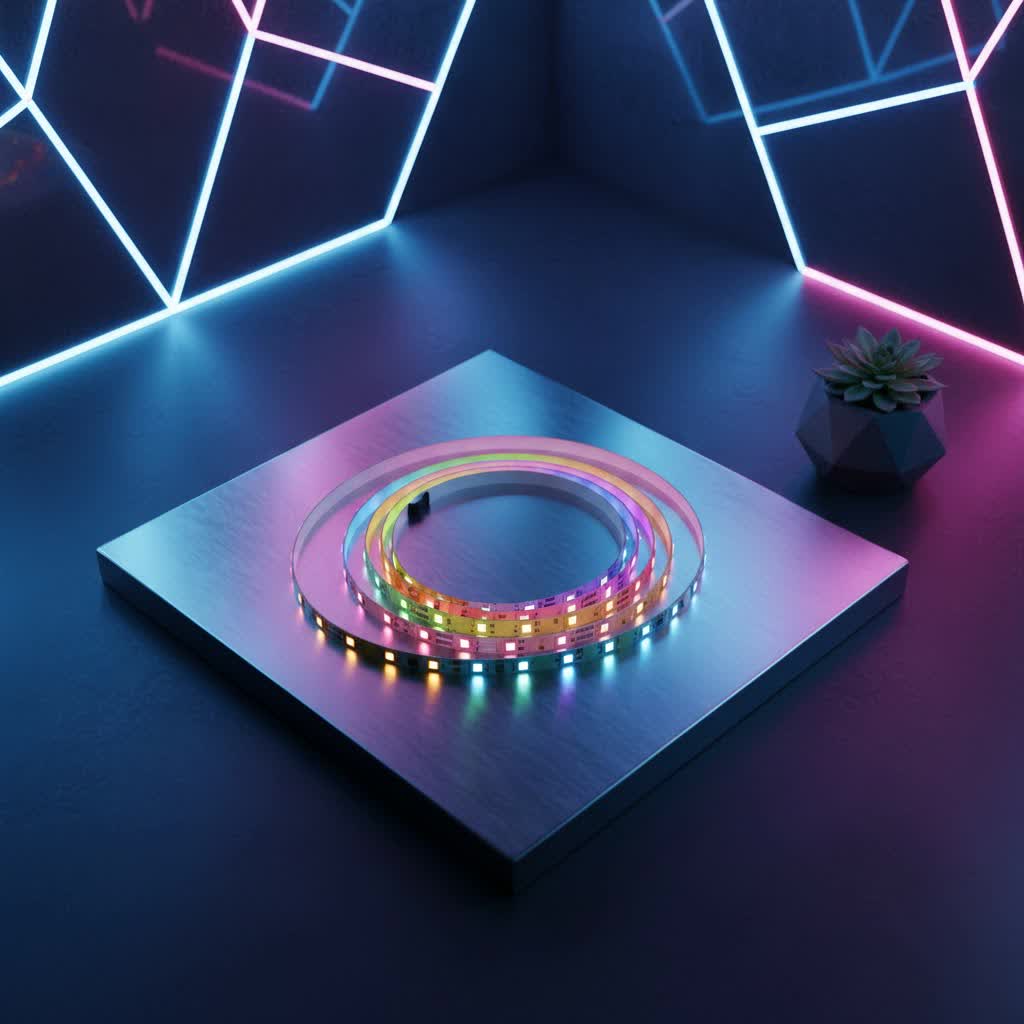
As your trusted expert from NamsP.com, with over a decade of hands-on experience in LED strip design, installation, and repair, I’m here to demystify everything about COB LED strips. From understanding their unique technology to mastering installation and unlocking their creative potential, consider this your definitive guide to achieving that flawless, professional lighting look you’ve been dreaming of.
What Exactly is a COB LED Strip?
Let’s dive right into the heart of the matter. COB stands for “Chip-on-Board,” and it represents a significant leap forward in LED technology. Imagine countless tiny LED chips, not individually packaged, but directly mounted onto a single, flexible circuit board (PCB) and then covered with a continuous layer of phosphorescent resin. This dense packing and uniform coating are what give COB LED strip lights their signature feature: a seamless, uninterrupted line of light.
Unlike traditional LED strips where you can often see individual “dots” of light, COB technology blends these points into one continuous, almost neon-like glow. This makes them ideal for applications where the light source itself might be visible, or where a high-end, diffused illumination is desired. They offer remarkable flexibility, allowing them to bend and conform to various shapes, and are available in different voltages (commonly 12V or 24V) to suit diverse project needs.
Key Features that Set COB LED Strips Apart
What makes these strips a true game-changer?
- Dot-Free, Seamless Illumination: This is their standout characteristic. The continuous light output eliminates hot spots, providing a smooth, professional aesthetic.
- High Density LED Arrangement: With hundreds of chips packed tightly per meter, COB strips deliver a high lumen output for impressive brightness.
- Enhanced Flexibility: Their unique construction allows for greater bending and shaping without compromising performance, perfect for intricate designs.
- Excellent Color Consistency: The uniform phosphor coating ensures a consistent color temperature across the entire strip.
- Energy Efficiency & Longevity: Thanks to improved thermal management, COB LED strips often run cooler, leading to a longer lifespan and lower energy consumption compared to some older LED technologies.
|
Our Picks for the Best LED Strip in 2026
As an Amazon Associate I earn from qualifying purchases.
|
||
| Num | Product | Action |
|---|---|---|
| 1 | Tenmiro Led Lights for Bedroom 100ft (2 Rolls of 50ft) Music Sync Color Changing Strip Lights with Remote and App Control RGB Strip, for Room Home Party Decoration |

|
| 2 | VOEWT LED Neon Lights Daylight White 6000K,9.8ft 110-120V LED Strip Lights,Flexible Outdoor Waterproof Neon Rope Lights for Bedroom,Cabinet,Kitchen,Living Room,Mirror,Halloween Decor |
|
| 3 | Govee Smart RGB LED Strip Lights for Bedroom, 32.8ft WiFi LED Light Strip Work with Alexa Google Assistant, 16 Million Colors with App Control and Music Sync Lights for Home Decor, 2 Rolls of 16.4ft |
|
| 4 | Govee RGBIC LED Strip Lights, Smart LED Lights for Bedroom, Bluetooth LED Lights APP Control, DIY Multiple Colors on One Line, Color Changing LED Strip Lighting Music Sync, Home Decor, 16.4ft |
|
| 5 | Govee Warm White LED Strip Lights, Bright 300 LEDs, 3000K Dimmable Light Strip 16.4ft with Control Box, LED Lights for Bedroom, Kitchen Cabinets, Living Room, ETL Listed Adapter Included |
|
| 6 | Aclorol LED Strip Lights 5V USB 6.56FT/2M 640 LEDs Blue Indoor Rope Lights for Bedroom Not Waterproof IP20 CRI85+ Flexible LED Light for TV Backlight Living Room Party DIY Lighting |
|
| 7 | KSIPZE 100ft Led Strip Lights RGB Music Sync Color Changing Led Lights with Smart App Control Remote Led Lights for Bedroom Room Lighting Flexible Home Décor |
|
| 8 | Govee RGBIC LED Strip Lights, 32.8ft Smart LED Lights for Bedroom, Bluetooth LED Lights APP Control, DIY Multiple Colors on One Line, Color Changing LED Strip Lighting Music Sync, Home Decor |
|
| 9 | KANTUTOE LED Lights for TV, 16.4ft LED Lights for 45-75 Inch TVs, RGB TV Backlight Behind, Music Sync Bluetooth APP & Remote Control Strip Lights USB Powered for Bedroom, Gaming, Home Décor |
|
| 10 | Govee 100ft RGBIC LED Strip Lights, Smart LED Lights Work with Alexa and Google Assistant, LED Lights for Bedroom WiFi App Control Segmented DIY Multiple Colors, Color Changing Light, (2 x 50ft) |
|
COB LED Strip vs. SMD LED Strip: The Ultimate Showdown
When you’re shopping for LED strip lights, you’ll primarily encounter two main types: COB (Chip-on-Board) and SMD (Surface-Mounted Device). While both are fantastic LED solutions, they have distinct characteristics that make them suitable for different applications.
Here’s a quick comparison to help you understand the differences:
| Feature | COB LED Strip | SMD LED Strip |
|---|---|---|
| Light Appearance | Continuous, seamless, dot-free (“neon-like” glow) | Individual visible light points (“dotted” effect) |
| Brightness/Density | Higher light density, often brighter per watt | Can be bright, but individual chips are spaced |
| Heat Management | Superior due to direct chip-on-board mounting | Each chip generates heat, can vary with spacing |
| Flexibility | Highly flexible, ideal for intricate curves | Good flexibility, but less seamless bending than COB |
| Beam Angle | Wider, more uniform light distribution | Can be narrower, sometimes requiring diffusers |
| Cost | Generally higher upfront investment | More budget-friendly |
| Color Options | Primarily single color (white tones) or tunable white | Wide range, including extensive RGB and RGBW options |
When to Choose COB LED Strips: If your project demands a high-end, polished look with absolutely no visible light dots, such as under-cabinet lighting in a modern kitchen or architectural accent lighting where the strip itself might be seen, COB is your go-to. It offers a premium aesthetic and exceptional light uniformity.
When to Choose SMD LED Strips: For applications where the light source is hidden (e.g., inside a deep cove) or where vibrant color-changing capabilities (RGB) are a priority, SMD strips are often a more cost-effective and versatile choice.
Unlocking the Brilliance: Advantages of COB LED Strips
The rising popularity of COB LED strip lights isn’t just a trend; it’s a testament to their superior performance and aesthetic benefits. Let’s delve deeper into why these strips are becoming the preferred choice for discerning users and professionals alike.
Seamless Illumination: The Dot-Free Difference
This is arguably the most compelling advantage. The uniform light emitted by a COB strip creates a luxurious, continuous glow that elevates any space. Forget the “dotted” look often associated with older LED strips; COB technology ensures a smooth, unbroken line of light, even in shallow profiles or when viewed directly. This makes them perfect for subtle accent lighting, where a clean finish is paramount.
Superior Brightness and Efficiency
Thanks to the dense packing of tiny LED chips, COB strips can achieve higher luminous efficacy, meaning more light output per watt. This translates to brighter illumination with less power consumption, saving you money on your electricity bills in the long run. Their efficient design also contributes to less wasted energy as heat, making them more environmentally friendly.
Enhanced Durability and Lifespan
The Chip-on-Board design inherently leads to better thermal management. By spreading the heat across a larger surface area, the individual LED chips experience less stress. This optimized heat dissipation significantly extends the lifespan of the COB LED strip, often reaching 50,000 hours or more under proper conditions. This means less frequent replacement and more consistent performance over time.
Design Flexibility: Bend, Cut, and Create
COB LED strips are remarkably flexible, making them incredibly versatile for creative lighting designs. They can effortlessly navigate corners, curves, and irregular shapes, adapting to your unique vision. With designated cut marks, you can also trim them to precise lengths, ensuring a perfect fit for any project, from intricate furniture accents to expansive architectural features.
Navigating the Downsides: Disadvantages of COB LED Strips
While COB LED strip lights offer numerous benefits, it’s important to be aware of their potential drawbacks to make an informed decision for your project.
Initial Cost
Generally, COB LED strips tend to have a higher upfront cost compared to traditional SMD LED strips. This is due to the more advanced manufacturing process and the higher density of chips involved. However, when considering their longer lifespan, superior light quality, and energy efficiency, the long-term value often outweighs the initial investment. Think of it as investing in a premium finish for your space.
Limited Color Variety (Mostly White-Focused)
For projects that require vibrant, multi-color (RGB) lighting effects, COB LED strips might not always be the primary choice. While tunable white COB strips are common (allowing you to adjust from warm to cool white), true full-color RGB COB strips are less prevalent and sometimes more expensive than their SMD counterparts. If dynamic color changes are essential to your design, you might find more options and flexibility with SMD RGB strips.
Your DIY Guide: Installing COB LED Strips Like a Pro
Ready to bring that continuous glow to your space? Installing COB LED strip lights is a rewarding DIY project, and with a little guidance, you can achieve professional results. Here’s a step-by-step guide to get you started:
What You’ll Need: A Handy Checklist
Before you begin, gather your tools and materials:
- COB LED Strip: The star of the show!
- Compatible LED Driver/Power Supply: Crucial for converting AC to the correct DC voltage (e.g., 12V or 24V).
- Measuring Tape & Pen/Marker: For accurate planning.
- Sharp Scissors or Wire Cutters: For cutting the strip.
- Clean Cloth & Isopropyl Alcohol: For surface preparation.
- Electrical Connectors (Optional): Solderless connectors or wire nuts.
- Soldering Iron & Solder (Optional): For more permanent connections.
- Heat Shrink Tubing or Electrical Tape: For insulating connections.
- Aluminum Channels/Profiles (Recommended): For heat dissipation and a polished look.
- Mounting Clips/Brackets (Optional): For extra security.
Step-by-Step Installation
- Plan and Measure: Start by visualizing your lighting design. Measure the exact length of the area where you want to install the COB LED strip. Consider corners, turns, and any obstacles. Planning is key to a flawless finish.
- Prepare the Surface: A clean surface is paramount for optimal adhesion. Wipe down the installation area with a clean cloth and isopropyl alcohol to remove any dust, grease, or debris. Let it dry completely.
- Cut with Precision: Locate the designated cut marks on your COB LED strip. These are usually indicated by a small scissor icon or copper pads. Carefully cut the strip along these lines using sharp scissors. Always double-check your measurements before cutting!
- Connect to Power:
- Check Voltage Compatibility: Ensure your LED driver (power supply) matches the voltage of your COB LED strip (e.g., 12V strip needs a 12V driver). Mismatched voltage can damage your strip.
- Wiring: Connect the positive (+) and negative (-) wires from your LED strip to the corresponding terminals on your power supply. You can use quick connectors for an easy, solder-free connection, or solder the wires directly for a more robust, long-lasting bond.
- Insulate: Securely insulate all connections using heat shrink tubing or electrical tape to prevent short circuits and ensure safety.
- Secure the Strip:
- Adhesive Backing: Most COB LED strips come with strong 3M adhesive backing. Peel off the protective layer and carefully press the strip firmly onto your prepared surface, ensuring it lies flat and straight.
- Aluminum Channels: For a truly professional and durable installation, especially in areas with potential heat build-up or where the strip is visible, I highly recommend using aluminum channels. Mount the channels first, then place the COB strip inside. These channels not only protect the strip and aid in heat dissipation but also provide a diffused, polished look.
- Mounting Clips: For added security or if the adhesive isn’t sufficient, use mounting clips spaced evenly along the strip.
- Test Your Setup: Before making everything permanent, plug in your power supply and test the COB LED strip to ensure it lights up evenly and functions correctly. This allows you to troubleshoot any issues before final installation.
Pro Tips for a Flawless Finish
- Power Injection for Longer Runs: If you’re installing a COB LED strip longer than 5 meters (16 feet), consider “power injection” to prevent voltage drop and ensure consistent brightness across the entire length. This involves connecting additional power wires to the middle or end of the strip.
- Dimming: If you plan to dim your lights, ensure both your COB LED strip and your power supply are dimmable and compatible with your chosen dimmer type (e.g., TRIAC, 0-10V, DALI).
- Safety First: Always disconnect power before making any connections. If you’re unsure about wiring, it’s always wise to consult a qualified electrician.
Transform Your Space: Creative Applications for COB LED Strips
The versatility of COB LED strip lights makes them an incredible tool for both functional and aesthetic lighting. Here are some inspiring ideas to transform your space:
- Under-Cabinet & Shelf Lighting: This is where COB strips truly shine. Install them under kitchen cabinets, floating shelves, or display cases to provide bright, even task lighting without any distracting dots, giving your space a clean, modern edge.
- Cove Lighting & Architectural Accents: Create a sophisticated, indirect glow along ceilings, walls, or built-in niches. The seamless illumination of COB strips is perfect for enhancing architectural features and adding depth to a room.
- Retail & Display Illumination: Highlight products in retail stores, illuminate signage, or draw attention to specific displays. The high CRI (Color Rendering Index) of many COB strips ensures colors appear vibrant and true to life.
- Task Lighting & Workspaces: For workshops, home offices, or craft areas, COB strips can provide bright, uniform illumination that reduces eye strain and improves focus, making tasks easier and more enjoyable.
- Unique Decorative Touches: Outline mirrors, add backlighting to TVs, create stunning headboard lighting, or even use them in creative DIY projects like custom light fixtures or artistic installations. Their flexibility opens up a world of possibilities.
“From a design perspective, COB LED strips are a game-changer. They offer unparalleled visual continuity, allowing us to create sleek, modern lighting designs that simply weren’t possible with earlier LED technologies. The difference is truly night and day when you want that flawless, uninterrupted glow.” – Eleanor Vance, Senior Lighting Architect at Apex Illumination.
Frequently Asked Questions About COB LED Strips
Are COB LED strips brighter than regular LEDs?
COB LED strips often deliver higher light density and can be brighter per watt than many traditional SMD LED strips, especially when comparing similar power consumptions. Their unique design allows for more LED chips in a smaller area, contributing to a more intense and uniform light output.
Can COB LED strips be cut?
Yes, COB LED strips are designed to be cut to custom lengths. You will find specific cut marks, often indicated by a scissor icon or copper pads, along the strip. Always cut only at these designated points to avoid damaging the circuit and ensure proper functionality.
Do COB LED strips get hot?
Like all LEDs, COB LED strips generate some heat. However, their Chip-on-Board design is generally more efficient at dissipating heat compared to some other LED types, leading to cooler operation and a longer lifespan. For high-power COB strips or installations in enclosed spaces, using aluminum channels is highly recommended to further aid in heat dissipation.
Are COB LED strips waterproof?
COB LED strips are available in various IP (Ingress Protection) ratings. You can find strips designed for indoor use (e.g., IP20) as well as outdoor or wet-location applications (e.g., IP65, IP67, or IP68). Always check the IP rating of the specific COB LED strip product to ensure it meets the requirements of your intended environment.
What voltage do COB LED strips use?
COB LED strips commonly operate at either 12V or 24V DC (Direct Current). Some higher-power or longer-run versions might use 48V. It is crucial to match the voltage of your LED strip with a compatible LED driver (power supply) to ensure safe and efficient operation.
Illuminate Your World with COB LED Strips
The world of LED lighting is constantly evolving, and COB LED strip technology stands at the forefront, offering a blend of aesthetic elegance, superior performance, and impressive efficiency. From achieving that seamless, professional look in your kitchen to crafting unique architectural statements, COB strips empower you to create lighting that truly transforms a space.
As your guide from NamsP.com, I encourage you to explore the possibilities that COB LED strips offer. They represent not just a lighting solution, but an opportunity to elevate your environment with sophisticated, continuous light. So, take the leap, illuminate your vision, and share your stunning results with our community!
