Neon LED strips are flexible lighting solutions that replicate the classic glow of traditional glass neon tubes using modern LED technology. These strips feature tiny, powerful LED lights encased in a robust, bendable silicone or PVC housing, which diffuses individual LED points into a smooth, continuous line of vibrant light. This design offers significant advantages over traditional neon, including 70-80% energy savings, a lifespan of up to 50,000 hours, and enhanced safety due to low voltage operation.
What Exactly is a Neon LED Strip?
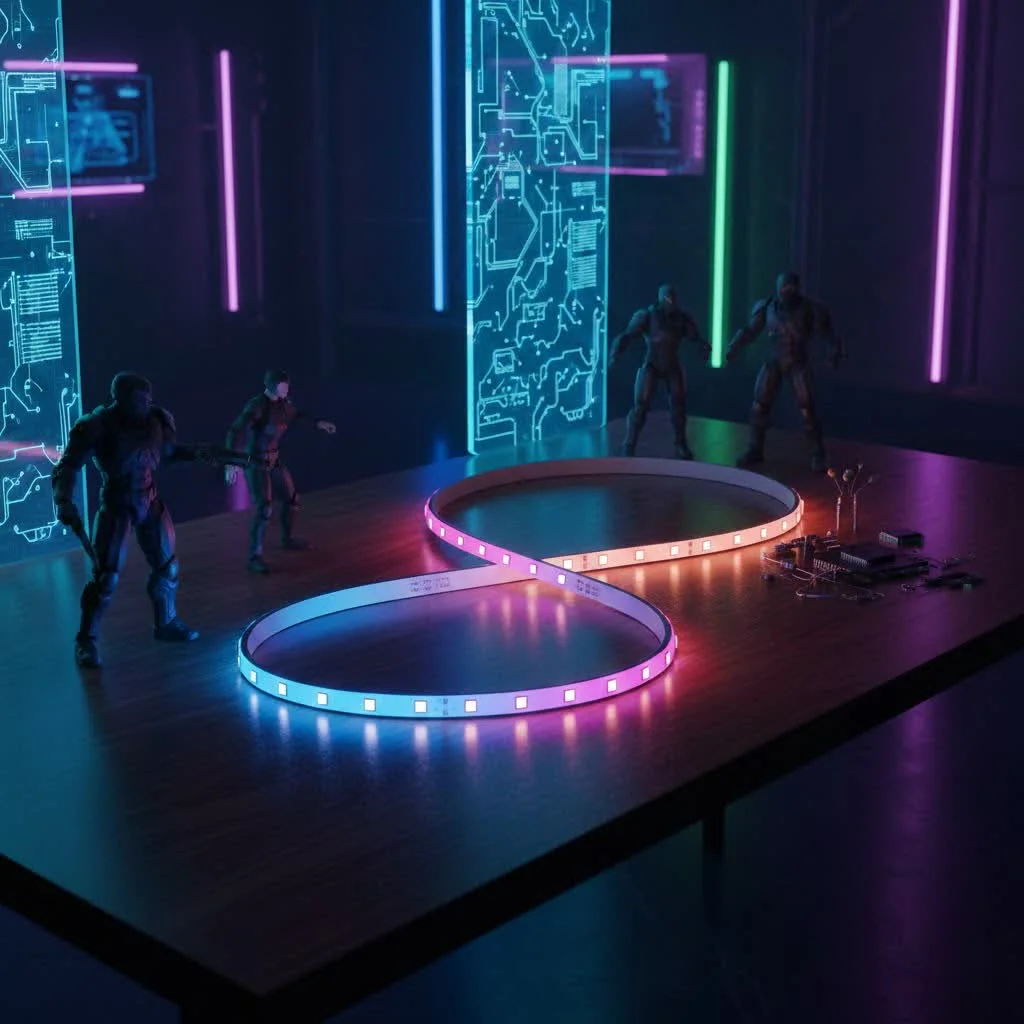
At its heart, a neon LED strip is a flexible lighting solution that beautifully mimics the classic glow of traditional glass neon tubes, but with all the modern advantages of LED technology. Instead of fragile glass tubes filled with inert gases, you get a robust, bendable silicone or PVC housing that encases tiny, powerful LED lights. The magic lies in this outer material, which acts as a diffuser, blending the individual LED points into a smooth, continuous, dot-free line of vibrant light. This means you get that iconic, ethereal glow without any harsh hotspots, making them perfect for creating captivating visual effects. For compare top led strip on this site.
Why Go Neon LED? The Brilliant Advantages Over Traditional Neon Lights
When comparing the modern neon LED strip with its glass ancestor, the benefits are clear, making the LED version the undisputed champion for virtually any lighting project.
Energy Efficiency & Longevity: Save Money, Last Longer
Traditional neon lights are power-hungry, often requiring high voltage and consuming a lot of electricity. A neon LED strip, however, uses a fraction of that energy, typically saving you 70-80% on electricity costs. This efficiency isn’t just good for your wallet; it also means a significantly longer lifespan, often lasting up to 50,000 hours or more, compared to the 10,000-15,000 hours of glass neon. Less power, more glow, for much longer!
Unmatched Flexibility & Design Freedom: Bend It, Shape It!
One of the most compelling reasons to choose neon LED strip is its incredible flexibility. Made from pliable silicone or PVC, these strips can be bent, twisted, and shaped into intricate designs, sharp angles, and flowing curves with ease. Unlike fragile glass tubes that require specialized craftsmanship and heating to bend, LED neon allows for limitless creative expression, empowering you to bring even the most complex lighting visions to life.
Safety First: Low Voltage, No Harmful Gases, Cool to Touch
Safety is paramount, and here, neon LED strip truly shines. Operating on a low voltage (typically 12V or 24V DC), they pose minimal risk of electric shock, unlike traditional neon that runs on thousands of volts. They contain no hazardous gases like mercury and remain cool to the touch, even after hours of operation. This makes them a much safer choice for homes with children and pets, or any public space.
Durability for Any Environment: Indoor or Outdoor, They Can Take It
|
Our Picks for the Best LED Strip in 2026
As an Amazon Associate I earn from qualifying purchases.
|
||
| Num | Product | Action |
|---|---|---|
| 1 | Govee 100ft RGBIC LED Strip Lights, Smart LED Lights Work with Alexa and Google Assistant, LED Lights for Bedroom WiFi App Control Segmented DIY Multiple Colors, Color Changing Light, (2 x 50ft) |

|
| 2 | Govee RGBIC LED Strip Lights, Smart LED Lights for Bedroom, Bluetooth LED Lights APP Control, DIY Multiple Colors on One Line, Color Changing LED Strip Lighting Music Sync, Home Decor, 16.4ft |
|
| 3 | Tenmiro Led Lights for Bedroom 100ft (2 Rolls of 50ft) Music Sync Color Changing Strip Lights with Remote and App Control RGB Strip, for Room Home Party Decoration |
|
| 4 | KSIPZE 100ft Led Strip Lights RGB Music Sync Color Changing Led Lights with Smart App Control Remote Led Lights for Bedroom Room Lighting Flexible Home Décor |
|
| 5 | Govee Smart RGB LED Strip Lights for Bedroom, 32.8ft WiFi LED Light Strip Work with Alexa Google Assistant, 16 Million Colors with App Control and Music Sync Lights for Home Decor, 2 Rolls of 16.4ft |
|
| 6 | Aclorol LED Strip Lights 5V USB 6.56FT/2M 640 LEDs Blue Indoor Rope Lights for Bedroom Not Waterproof IP20 CRI85+ Flexible LED Light for TV Backlight Living Room Party DIY Lighting |
|
| 7 | Govee RGBIC LED Strip Lights, 32.8ft Smart LED Lights for Bedroom, Bluetooth LED Lights APP Control, DIY Multiple Colors on One Line, Color Changing LED Strip Lighting Music Sync, Home Decor |
|
| 8 | KANTUTOE LED Lights for TV, 16.4ft LED Lights for 45-75 Inch TVs, RGB TV Backlight Behind, Music Sync Bluetooth APP & Remote Control Strip Lights USB Powered for Bedroom, Gaming, Home Décor |
|
| 9 | Govee Warm White LED Strip Lights, Bright 300 LEDs, 3000K Dimmable Light Strip 16.4ft with Control Box, LED Lights for Bedroom, Kitchen Cabinets, Living Room, ETL Listed Adapter Included |
|
| 10 | VOEWT LED Neon Lights Daylight White 6000K,9.8ft 110-120V LED Strip Lights,Flexible Outdoor Waterproof Neon Rope Lights for Bedroom,Cabinet,Kitchen,Living Room,Mirror,Halloween Decor |
|
The robust silicone or PVC casing of neon LED strips makes them incredibly durable and shatterproof, standing up to bumps and accidental impacts far better than delicate glass. Many are also designed with high IP (Ingress Protection) ratings (like IP67 or IP68), making them resistant to water, dust, and UV radiation. This resilience means they are perfectly suited for both indoor accent lighting and demanding outdoor architectural applications.
Seamless, Vibrant Glow: That Continuous “Neon” Look
The hallmark of neon LED strip lighting is its smooth, continuous illumination. The diffused light ensures that individual LED points are invisible, creating a uniform, soft glow that beautifully mimics the classic neon aesthetic. Whether you’re aiming for a retro vibe or a sleek, modern edge, this consistent light output delivers a visually stunning and professional finish.
Choosing Your Perfect Neon LED Strip: A NamsP.com Expert’s Guide
Selecting the right neon LED strip for your project might seem daunting with so many options available. Here’s what I recommend considering:
- Know Your Purpose: Are you looking for subtle accent lighting, bold signage, or dynamic mood lighting? Your application will dictate the type, brightness, and color control you need.
- Color & Control Options:
- Single-Color: For a consistent, vibrant hue (red, blue, green, warm white, cool white, etc.).
- RGB: Allows you to switch between red, green, and blue, and create various mixed colors.
- RGBW: Adds a dedicated white LED chip for truer white light and a wider color spectrum.
- Addressable/Digital (e.g., WS2811, DMX512): Each LED segment can be controlled independently, enabling stunning chasing, flowing, and dynamic effects.
- Brightness & Beam Angle: Consider the lumens per meter (lm/m) for brightness. Also, think about the light direction—most emit light from the top, but some offer side-emitting or even 360-degree illumination for unique effects.
- Length, Cutability, and Flexibility: Measure your space accurately. Neon LED strips typically have marked cut points (e.g., every 1 inch or 5 cm). Ensure the strip’s flexibility matches your design’s curvature needs.
- Waterproof Rating: For indoor, dry applications, IP20 or IP33 is fine. For bathrooms, kitchens, or outdoor use, you’ll need higher IP ratings like IP67 or IP68 for robust water protection.
- Voltage Compatibility: Most neon LED strips operate on either 12V DC or 24V DC. Always ensure your power supply (driver/transformer) matches the strip’s voltage and has enough wattage to power the entire length.
DIY Installation: Bringing Your Neon LED Strip Dreams to Life
Installing neon LED strip lights is a rewarding DIY project that can dramatically transform any space. Here’s a streamlined, step-by-step guide to help you achieve a professional finish:
Step-by-Step Installation Checklist
- Plan Your Masterpiece: Before touching any tools, meticulously plan your layout. Measure the surface where the strip will go, marking start and end points. Determine the best route for wiring and ensure your power source is easily accessible and within the strip’s voltage range.
- Gather Your Arsenal:
- Neon LED Strips: Your chosen type and length.
- Power Supply: Matched to your strip’s voltage and total wattage.
- LED Controller (optional): For dimming or color-changing effects.
- Mounting Solution: Mounting clips (aluminum, stainless steel, transparent), mounting channels/profiles, or high-quality double-sided tape.
- Tools: Measuring tape, wire cutters/strippers, scissors (for cutting the strip at designated marks), drill, screws, screwdriver.
- Connectors: WAGO connectors or solder and heat shrink tubing for secure wiring.
- Silicone Sealant: Crucial for waterproofing outdoor connections.
- Prep Your Canvas: Clean the installation surface thoroughly. Dust, oil, or dirt can prevent adhesive from sticking, and moisture can compromise connections. Use a clean, dry cloth and ensure the surface is completely dry before proceeding.
- Precision Cutting: If your design requires shorter lengths, cut the neon LED strip ONLY at the designated cut marks (usually indicated by a small scissor icon or copper pads). Cutting elsewhere can damage the circuit and render a section unusable.
- Secure Mounting: If using mounting clips or channels, mark their placement first, spacing them evenly to prevent sagging. Drill pilot holes and secure them firmly with screws. If using adhesive tape, ensure the surface is perfectly clean and press the strip firmly along its entire length.
- Wired for Success: Connect your neon LED strip to the power supply. Always ensure the polarity matches (positive to positive, negative to negative). Use reliable connectors or solder connections, securing them with heat shrink tubing for added protection and a clean look.
- The Grand Test: Before making any installation permanent, plug in your power supply and test the entire length of the neon LED strip. Check for consistent light, correct colors, and any flickering. This crucial step allows you to troubleshoot any issues easily.
- Final Securing & Waterproofing: Once you’ve confirmed everything works, gently press the strip into its final mounted position. For outdoor or damp locations, apply silicone sealant to all connections and end caps to ensure robust waterproofing and protect against the elements.
Keeping Your Glow Alive: Maintenance Tips for Longevity
Maintaining your neon LED strip lights is generally straightforward, contributing to their impressive lifespan.
- Regular Checks and Cleaning: Periodically inspect your strips and connections for any signs of wear or damage. Gently wipe down the strips with a soft, dry cloth to remove dust and maintain optimal brightness.
- Troubleshooting Common Issues: If you notice flickering or dim spots, first check your power supply to ensure it’s adequately sized and functioning correctly. Next, inspect all connections for looseness or corrosion. Occasionally, a damaged section of the strip might need to be replaced. avoid bending the strips too sharply, as this can damage the internal circuitry over time.
Creative Inspiration: Transforming Spaces with Neon LED Strips
The versatility of neon LED strip lights means the only limit is your imagination.
- Inside Your Home: Create stunning accent lighting under kitchen cabinets, illuminate unique architectural features, outline mirrors or headboards in bedrooms for a cozy ambiance, or add a dynamic glow behind your TV in media rooms.
- Boosting Your Business: Design eye-catching signage, highlight storefront windows, create inviting entranceways, or define seating areas in bars and restaurants with vibrant, customizable lighting that grabs attention.
- Outdoor Brilliance: Emphasize building facades, light up garden paths, frame patios, or even add a stylish, waterproof glow to boat decks for evening cruises. The durable, weather-resistant nature of outdoor neon LED strip makes these applications not just possible, but practical and long-lasting.
Expert Insight:
“Neon LED strips are a major upgrade for anyone looking to blend classic aesthetics with modern efficiency,” says Dr. Eleanor Vance, a renowned lighting design specialist. “Their low profile, incredible flexibility, and safety features open up design possibilities that were simply unfeasible with traditional neon. It’s about more than just light; it’s about crafting an experience.”
Frequently Asked Questions (FAQ)
Q: Can I really cut neon LED strips anywhere?
A: No, you should only cut neon LED strips at the designated cut marks, usually indicated by a small scissor icon or copper pads. Cutting elsewhere can damage the internal circuitry and render a section of the strip unusable.
Q: Are neon LED strips safe for outdoor use?
A: Absolutely! Many neon LED strips are designed with high IP ratings (like IP67 or IP68) making them fully waterproof and resistant to dust and UV, ideal for outdoor applications like architectural lighting and garden accents. Always check the product’s IP rating before outdoor installation.
Q: What’s the difference between RGB and RGBW neon LED strips?
A: RGB neon LED strips can produce a wide range of colors by mixing red, green, and blue light. RGBW strips add a dedicated white LED chip, allowing for more accurate and pure white light, alongside the full spectrum of RGB colors.
Q: How do I power a long run of neon LED strip?
A: For longer runs of neon LED strip, you need to ensure your power supply (driver) is correctly sized to handle the total wattage of the strip. Sometimes, for very long installations, multiple power supplies or power injection at different points might be necessary to prevent voltage drop and ensure consistent brightness along the entire length.
Q: Do neon LED strips get hot?
A: No, one of the key safety advantages of neon LED strips is their low heat emission. Unlike traditional neon glass tubes which can get quite hot, LED neon strips remain cool to the touch, making them safe for various applications and installations, even in enclosed spaces.
Q: How long do neon LED strips typically last?
A: High-quality neon LED strips have an impressive lifespan, often lasting up to 50,000 hours or more. This longevity is significantly longer than traditional neon lights and contributes to their overall cost-effectiveness and low maintenance requirements.
In essence, neon LED strip lighting offers a fantastic blend of aesthetic appeal, practical benefits, and design freedom that is simply unmatched. Whether you’re a seasoned DIY enthusiast or just starting to explore creative lighting, these flexible, vibrant strips provide a safe, energy-efficient, and durable way to illuminate your world. At NamsP.com, we believe that with the right knowledge, anyone can confidently tackle a neon LED strip project, adding that perfect touch of glow to their personal or professional spaces. So, go ahead, light up your imagination and see what brilliant designs you can create!
Frequently Asked Questions
Can I cut neon LED strips at any point along their length?
No, you should only cut neon LED strips at the designated cut marks, which are usually indicated by a small scissor icon or copper pads. Cutting elsewhere can damage the internal circuitry and render a section of the strip unusable, preventing it from lighting up.
Are neon LED strips suitable and safe for outdoor applications?
Absolutely! Many neon LED strips are designed with high IP ratings, such as IP67 or IP68, making them fully waterproof and resistant to dust and UV radiation. This makes them ideal for outdoor applications like architectural lighting, garden accents, and patio illumination, provided the correct IP rating is chosen.
What is the primary difference between RGB and RGBW neon LED strips?
RGB neon LED strips can produce a wide range of colors by mixing red, green, and blue light. RGBW strips, however, include an additional dedicated white LED chip, which allows for more accurate and pure white light alongside the full spectrum of RGB colors, offering greater versatility.
How do I ensure consistent brightness for very long neon LED strip installations?
For longer runs of neon LED strip, you must ensure your power supply (driver) is correctly sized to handle the total wattage of the strip. For very long installations, it may be necessary to use multiple power supplies or implement power injection at different points along the strip to prevent voltage drop and maintain consistent brightness.
Do neon LED strips generate a significant amount of heat during operation?
No, one of the key safety advantages of neon LED strips is their low heat emission. Unlike traditional neon glass tubes, which can become quite hot, LED neon strips remain cool to the touch, making them safe for various applications and installations, even in enclosed spaces or near flammable materials.
What is the typical lifespan I can expect from high-quality neon LED strips?
High-quality neon LED strips boast an impressive lifespan, often lasting up to 50,000 hours or more. This longevity is significantly greater than traditional neon lights, which typically last 10,000-15,000 hours, contributing to their overall cost-effectiveness and reduced maintenance requirements over time.
Install Neon LED Strip Lights
Follow these steps to successfully install neon LED strip lights and achieve a professional, vibrant lighting effect in your home or business.
Meticulously plan where the strip will go, measuring the surface and marking start/end points. Ensure your power source is accessible. Gather your neon LED strips, a compatible power supply, mounting clips or channels, and tools like a measuring tape, wire cutters, and a screwdriver.
Clean the installation surface thoroughly to remove dust, oil, or dirt, ensuring it is completely dry. If shorter lengths are needed, cut the neon LED strip only at the designated cut marks, typically indicated by a scissor icon or copper pads, to avoid damaging the circuit.
Securely mount the strips using clips, channels, or high-quality double-sided tape, spacing clips evenly to prevent sagging. Connect the neon LED strip to the power supply, ensuring correct polarity (positive to positive, negative to negative). Use reliable connectors or solder connections for durability.
Before making the installation permanent, plug in the power supply and test the entire length of the neon LED strip for consistent light and correct colors. Once confirmed, gently press the strip into its final position. For outdoor use, apply silicone sealant to all connections and end caps for robust waterproofing.
Get our weekly buyer guide
Practical specs, not advice. Unsubscribe anytime.
I bought a set of these neon LED strips for my art studio, hoping to get that cool, vibrant look. While the light quality is good and they’re definitely bendable, I found the installation a little trickier than expected. The robust housing is great for protection, but it made cutting and connecting the strips a bit more fiddly than I anticipated. Still, they look decent once they’re up.
I was hesitant about switching from traditional neon, but these neon LED strips are a game-changer! The continuous line of vibrant light really does replicate that classic glow without any of the fragility. I used them to outline my home bar, and the low voltage operation made me feel much safer about the installation. Plus, the energy savings are a huge bonus on my electricity bill.
Absolutely love these! I’ve been wanting to add some accent lighting to my gaming room, and the neon LED strips were the perfect choice. The 50,000-hour lifespan is incredible, meaning I won’t have to worry about replacing them anytime soon. They really do give off that smooth, continuous light, making my setup look super professional and vibrant.
These flexible lighting solutions are pretty impressive. I installed a few strips in my outdoor patio area, and they’ve held up great through some rain and heat. The silicone housing feels really durable, and the light diffusion is excellent, no individual LED points visible. My only minor complaint is that the adhesive could be a bit stronger, but a few extra clips solved that easily.