Ever gazed at a beautifully lit room, wondering how they achieved that perfect blend of vibrant hues and crisp, natural white light? Chances are, an RGBW LED strip was working its magic. Far beyond the simple color-changing strips of yesteryear, RGBW technology introduces a dedicated white light component, revolutionizing how we illuminate our spaces. If you’re ready to elevate your home lighting from ordinary to extraordinary, understanding the power of an RGBW LED strip is your first step.
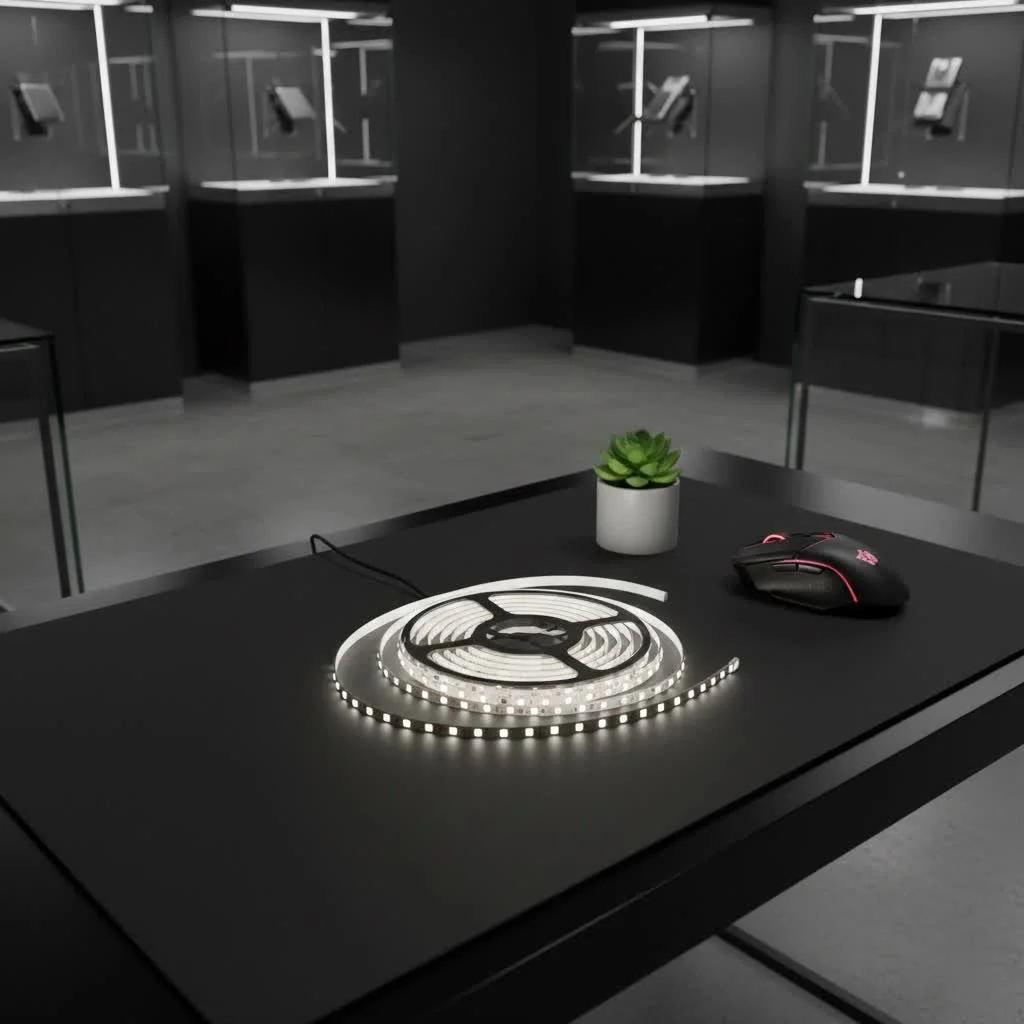
An RGBW LED strip is not just another fancy gadget; it’s a versatile lighting solution that brings unparalleled control over both color and white light quality. Whether you’re aiming for a cozy ambiance, dynamic party lighting, or bright task illumination, these strips offer a sophisticated way to achieve your desired effect. For browse all led strip articles on this site.
What Exactly is an RGBW LED Strip?
Let’s break it down. You’re probably familiar with RGB LED strips, which use Red, Green, and Blue diodes. By mixing these three primary colors, RGB strips can produce a vast spectrum of colors, including a simulated white. However, this “white” is often a blend, appearing somewhat bluish or artificial, and lacking the purity of natural white light.
Enter the RGBW LED strip. The “W” stands for “White,” indicating the inclusion of an additional, dedicated white LED chip alongside the Red, Green, and Blue ones. This single addition makes a world of difference. Instead of relying on color mixing to create white, an RGBW strip can generate a true, unadulterated white light, similar to what you’d get from a standard white LED bulb. This dedicated chip allows for a significantly purer, brighter, and more consistent white illumination.
“The dedicated white LED in RGBW strips isn’t just about ‘more white’; it’s about better white,” explains Dr. Lena Karlsson, a luminaire design specialist. “This purity opens up a whole new realm of possibilities for accurate color rendering and functional lighting, areas where traditional RGB often falls short.”
This intelligent design ensures that your whites are crisp and clean, while your colors remain rich and vibrant.
Why Choose RGBW? The Undeniable Benefits
Opting for an RGBW LED strip over its simpler counterparts brings a host of advantages that can transform your lighting experience.
True, Pure White Light
This is the flagship benefit. With a dedicated white diode, RGBW strips can produce a genuinely pure and bright white light. This is crucial for environments where functional white lighting is just as important as colorful accents – think kitchen under-cabinet lighting, task lighting in a workshop, or general room illumination. You no longer have to compromise on white light quality when you want to add a splash of color.
Unleashed Color Palette & Vibrancy
|
Our Picks for the Best LED Strip in 2026
As an Amazon Associate I earn from qualifying purchases.
|
||
| Num | Product | Action |
|---|---|---|
| 1 | KANTUTOE LED Lights for TV, 16.4ft LED Lights for 45-75 Inch TVs, RGB TV Backlight Behind, Music Sync Bluetooth APP & Remote Control Strip Lights USB Powered for Bedroom, Gaming, Home Décor |

|
| 2 | Govee Warm White LED Strip Lights, Bright 300 LEDs, 3000K Dimmable Light Strip 16.4ft with Control Box, LED Lights for Bedroom, Kitchen Cabinets, Living Room, ETL Listed Adapter Included |
|
| 3 | VOEWT LED Neon Lights Daylight White 6000K,9.8ft 110-120V LED Strip Lights,Flexible Outdoor Waterproof Neon Rope Lights for Bedroom,Cabinet,Kitchen,Living Room,Mirror,Halloween Decor |
|
| 4 | Govee Smart RGB LED Strip Lights for Bedroom, 32.8ft WiFi LED Light Strip Work with Alexa Google Assistant, 16 Million Colors with App Control and Music Sync Lights for Home Decor, 2 Rolls of 16.4ft |
|
| 5 | Govee 100ft RGBIC LED Strip Lights, Smart LED Lights Work with Alexa and Google Assistant, LED Lights for Bedroom WiFi App Control Segmented DIY Multiple Colors, Color Changing Light, (2 x 50ft) |
|
| 6 | Tenmiro Led Lights for Bedroom 100ft (2 Rolls of 50ft) Music Sync Color Changing Strip Lights with Remote and App Control RGB Strip, for Room Home Party Decoration |
|
| 7 | KSIPZE 100ft Led Strip Lights RGB Music Sync Color Changing Led Lights with Smart App Control Remote Led Lights for Bedroom Room Lighting Flexible Home Décor |
|
| 8 | Aclorol LED Strip Lights 5V USB 6.56FT/2M 640 LEDs Blue Indoor Rope Lights for Bedroom Not Waterproof IP20 CRI85+ Flexible LED Light for TV Backlight Living Room Party DIY Lighting |
|
| 9 | Govee RGBIC LED Strip Lights, 32.8ft Smart LED Lights for Bedroom, Bluetooth LED Lights APP Control, DIY Multiple Colors on One Line, Color Changing LED Strip Lighting Music Sync, Home Decor |
|
| 10 | Govee RGBIC LED Strip Lights, Smart LED Lights for Bedroom, Bluetooth LED Lights APP Control, DIY Multiple Colors on One Line, Color Changing LED Strip Lighting Music Sync, Home Decor, 16.4ft |
|
While RGB strips offer millions of colors, the addition of the white channel in RGBW enhances the overall color mixing. It allows for a broader spectrum, including subtle pastel shades and richer, more intense hues that are difficult to achieve with RGB alone. Imagine creating a soft lavender glow or a deep, saturated teal—RGBW makes these nuanced colors truly pop.
Unmatched Versatility for Any Space
From vibrant party lighting to subtle mood lighting, RGBW strips offer incredible versatility. You can switch between bold, dynamic colors for entertainment and then instantly transition to a clean, bright white for reading or working. This dual functionality means one strip can serve multiple purposes, adapting to any mood or activity.
Increased Brightness and Efficiency
The dedicated white LED chip significantly enhances the overall brightness of the strip, providing a higher lumen output compared to RGB strips where white is created by mixing colors. Furthermore, by having a specific white LED, RGBW strips can achieve desired lighting effects more efficiently, potentially leading to reduced energy consumption when white light is primarily used.
RGBW vs. Its Cousins: RGB and RGBWW
The world of LED strips can seem like an alphabet soup with RGB, RGBW, RGBWW, and RGBCCT. Understanding the nuances helps you pick the perfect strip for your needs.
Here’s a quick comparison:
| Feature | RGB LED Strip | RGBW LED Strip | RGBWW/RGBCCT LED Strip |
|---|---|---|---|
| Diodes | Red, Green, Blue (3-in-1 chip) | Red, Green, Blue, White (4-in-1 chip) | Red, Green, Blue, Warm White, Cool White (5-in-1 chip) |
| White Light | Simulated (mix of R, G, B), often bluish/cool | Pure, bright, dedicated white (single temperature) | Tunable white (adjusts from warm to cool) |
| Color Range | Millions of colors | Enhanced color mixing with pure white, millions of colors | Broadest color and white spectrum, millions of colors [cite: 3 (vs)] |
| Brightness | Good for decorative, less bright for pure white | Brighter, especially for white light | Often brightest with most white flexibility |
| Wiring Pins | 4 (R, G, B, +) | 5 (R, G, B, W, +) [cite: 2 (install)] | 6 (R, G, B, WW, CW, +) [cite: 2 (vs)] |
| Cost | Generally most affordable | Moderately priced | Highest cost |
| Best For | Decorative, accent lighting where pure white isn’t critical | Versatile lighting, combining vibrant colors with true white | High-end applications, dynamic mood lighting, professional use with full color temperature control [cite: 5 (vs)] |
Choosing RGBW is ideal when you desire both the dynamic color capabilities of RGB and the ability to produce a high-quality, standalone white light. If your project doesn’t strictly require tunable white light (i.e., changing between warm white and cool white), an RGBW strip offers a fantastic balance of features and value.
“For most home users, an RGBW strip hits the sweet spot,” says Mark Jansen, a smart home lighting integrator. “It gives you that amazing flexibility for colored ambiance but crucially, provides a comfortable, usable white light for everyday tasks without needing a separate white lighting system.”
Getting Started: Choosing the Right RGBW LED Strip
Before you dive into installation, selecting the right RGBW LED strip is key to a successful project.
- Voltage: Most common strips are 12V or 24V. Ensure your power supply (driver) matches the strip’s voltage. 24V strips can often run longer distances without significant voltage drop.
- Brightness/Density: LED density (e.g., 30 LEDs/meter, 60 LEDs/meter) affects brightness and how continuous the light appears. Higher density usually means more light and fewer “hot spots.”
- Waterproofing (IP Rating): For outdoor use or areas exposed to moisture (like bathrooms or kitchens), look for strips with an appropriate IP (Ingress Protection) rating (e.g., IP65, IP67).
- Quality and Brand: Invest in reputable brands to ensure longevity, consistent color, and reliable performance. Cheaper strips might have poor color accuracy or shorter lifespans.
DIY Installation: A Step-by-Step Guide to Setting Up Your RGBW LED Strip
Installing an RGBW LED strip might seem daunting with all those wires, but it’s a straightforward process for any DIY enthusiast.
Gathering Your Tools
Before you begin, gather these essentials:
- RGBW LED strip
- RGBW LED controller (5-channel)
- LED driver (power supply) matching your strip’s voltage and total wattage
- 5-strand cable (or individual wires: Red, Green, Blue, White, and Positive)
- Wire strippers
- Small screwdriver (for terminal blocks)
- Connectors (solderless or solder)
- Heat shrink tubing or electrical tape
- Cleaning alcohol and cloth
- Measuring tape
- Scissors or utility knife (to cut strip)
- Optional: Aluminum channels for a cleaner look and heat dissipation
Preparation: Planning, Measuring, Cleaning
- Plan Your Layout: Decide where the strip will go and how you’ll route the wiring to the controller and power supply.
- Measure and Cut: Measure the exact length of the space. RGBW strips have designated cutting points, usually marked with a copper pad. Cut only at these points to avoid damaging the circuit.
- Clean the Surface: Use rubbing alcohol to thoroughly clean the surface where the strip will be installed. This ensures the adhesive backing sticks firmly.
Connecting the Wires
This is the most critical step. RGBW strips typically have five connection points or wires: R (Red), G (Green), B (Blue), W (White), and a common Positive (+). [cite: 1 (install), 2 (install), 4 (install)]
- Strip the Wires: Carefully strip a small amount of insulation from the ends of your 5-strand cable wires and the RGBW strip’s connection points (if soldering or using screw terminals).
- Connect Strip to Controller: Match each color wire (Red, Green, Blue, White) from the strip to its corresponding terminal on the RGBW controller. Connect the common Positive (+) wire from the strip to the Positive terminal on the controller. Ensure connections are secure. If soldering, apply heat cautiously to prevent damage. [cite: 4 (install)]
- Insulate Connections: Cover all exposed wire connections with heat shrink tubing or electrical tape to prevent short circuits. [cite: 4 (install)]
Powering Up: Controller and Driver
- Connect Controller to Driver: Connect the output from your RGBW controller to the LED driver (power supply). The driver will have clearly marked output terminals for positive (+) and negative (-). [cite: 1 (install), 2 (install)]
- Connect Driver to Mains Power: Finally, connect your LED driver to your main AC power supply. Always follow the manufacturer’s instructions for safe wiring. [cite: 2 (install)]
Secure and Test
- Mount the Strip: Peel off the adhesive backing from the RGBW strip and carefully press it onto your clean, prepared surface. If using aluminum channels, install the strip inside them and then mount the channels.
- Test the Setup: Before final securement, plug in the power supply. Use your controller to test all colors (Red, Green, Blue, White) and ensure they function correctly. Check for any flickering or inconsistent brightness. [cite: 4 (install)]
Troubleshooting Tip: For very long RGBW LED strip runs, you might experience a “voltage drop,” where the light at the end of the strip is dimmer or has a different color than the beginning. An LED amplifier can be installed midway through the run to boost the signal and maintain consistent brightness. [cite: 1 (install)]
Mastering the Control: Your RGBW LED Strip at Your Fingertips
The true magic of an RGBW LED strip comes alive with the right controller. These devices allow you to manipulate colors, brightness, and sometimes even color temperature.
Types of Controllers
- RF (Radio Frequency) Remotes: Simple handheld remotes that use radio waves, allowing control without direct line of sight. Great for basic color and brightness adjustments.
- Wi-Fi Controllers: These connect to your home Wi-Fi network and are controlled via a smartphone app. They offer advanced features like scheduling, custom scenes, and integration with smart home ecosystems (e.g., Google Home, Amazon Alexa). [cite: 1 (controller), 2 (controller), 5 (controller)]
- Bluetooth Controllers: Controlled via a smartphone app but use Bluetooth, meaning you need to be within a certain range of the strip.
- DMX Controllers: Professional-grade controllers primarily used for complex installations, stage lighting, or architectural projects requiring precise synchronization and advanced programming. [cite: 2 (controller)]
“The choice of controller is as important as the strip itself,” advises Electrical Engineer Dr. Evelyn Reed. “For a smart home, a Wi-Fi enabled controller is invaluable, allowing you to create custom scenes, schedule lighting changes, and even integrate voice commands. Always ensure the controller is specifically rated for RGBW strips to utilize all channels effectively.”
Creative Lighting Ideas with RGBW LED Strips
Unleash your inner designer with these inspiring applications for your RGBW LED strips:
- Under-Cabinet Lighting: Provide bright, pure white task lighting for cooking, then switch to warm, colorful accents for dining.
- Cove Lighting: Install strips in ceiling coves to create a soft, diffused ambient glow that can change color with your mood.
- Accent Lighting: Highlight architectural features, shelving, artwork, or even furniture with dynamic colors or elegant white washes.
- Bedroom Ambiance: Set a calming warm white for winding down, then transition to a vibrant hue for a personalized touch.
- Home Theater Backlighting: Reduce eye strain and enhance immersion with adjustable bias lighting behind your TV, matching the screen’s mood or opting for a subtle white.
- Outdoor Entertainment Areas: With waterproof RGBW strips, create captivating lighting for patios, decks, or garden paths, perfect for parties or relaxed evenings.
Maintenance Tips for Lasting Brilliance
With proper care, your RGBW LED strips will provide years of stunning illumination.
- Regular Cleaning: Dust can accumulate on the strip and diffuser (if used), reducing brightness. Gently wipe the surface with a soft, dry cloth. For stubborn grime, a slightly damp cloth can be used on non-waterproof strips, ensuring it’s completely dry afterward.
- Checking Connections: Periodically inspect all wiring connections to ensure they are secure. Loose connections can lead to flickering or inconsistent light.
- Proper Ventilation: While LEDs generate less heat than traditional bulbs, they still produce some. Ensure your strips are installed in areas with adequate airflow, especially if they are enclosed in channels, to prevent overheating and prolong lifespan.
Frequently Asked Questions
What does RGBW stand for?
RGBW stands for Red, Green, Blue, and White. It refers to an LED strip that combines the three primary colors (Red, Green, Blue) with a dedicated white LED chip.
Can RGBW create warm white light?
RGBW strips usually offer a single color temperature for their dedicated white channel (e.g., cool white, natural white, or warm white). To have the ability to adjust between different white temperatures (from warm to cool), you would need an RGBWW or RGBCCT LED strip. [cite: 5 (vs), 4 (vs)]
Is RGBW brighter than RGB?
Yes, generally an RGBW LED strip is brighter than an RGB strip, especially when displaying white light. This is because RGBW has a dedicated white LED chip, which produces a pure and more intense white light compared to RGB, which mixes red, green, and blue to simulate white.
What kind of controller do I need for RGBW?
You need a 5-channel RGBW controller. This controller allows independent control over each of the Red, Green, Blue, and White channels, as well as the common positive line. [cite: 1 (install), 4 (install)]
Is RGBW worth the extra cost compared to RGB?
Many users find the extra cost of RGBW well worth it. The ability to produce true, pure white light alongside vibrant colors makes RGBW much more versatile for a wider range of applications, from functional task lighting to sophisticated mood lighting.
Elevate Your Space with RGBW
The RGBW LED strip is a game-changer in modern lighting, offering a remarkable fusion of dynamic color and pristine white light. Whether you’re an experienced DIYer or just starting, embracing RGBW technology allows you to create truly personalized and functional lighting schemes that enhance any environment. So go ahead, explore the possibilities, and let your creativity shine with the brilliant versatility of RGBW LED strips.
Get our weekly buyer guide
Practical specs, not advice. Unsubscribe anytime.