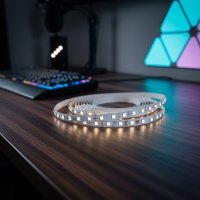
Have you ever wished for brilliant, adaptable lighting that defies the constraints of wall outlets? Welcome to the revolutionary world of LED strip lights battery powered. These versatile illuminators are changing the game for both professional designers and DIY enthusiasts, offering unparalleled flexibility and a touch of magic to any space. Whether you’re aiming to brighten a dark closet, create ambient outdoor lighting for a gathering, or embark on a creative lighting project, battery-operated LED strips provide a seamless, cord-free solution. At NamsP, we’ve seen firsthand how these lights transform environments, and we’re here to guide you through everything you need to know, from selection and installation to creative applications and maintenance.
What Makes Battery-Powered LED Strip Lights Unique?
Traditional lighting often ties you down with wires and power sockets. Battery-powered LED strip lights, however, cut the cord, opening up a universe of possibilities.
Defining the Portable Glow
A battery powered LED strip light is essentially a flexible circuit board adorned with tiny LEDs, designed to operate without a direct electrical connection. Instead, it draws power from a battery pack, which can house anything from standard AA or AAA batteries to powerful lithium-ion or convenient USB-rechargeable units. This ingenious setup means you can achieve stunning lighting effects in places where a power outlet is simply out of reach or impractical.
Unpacking the Core Features
These innovative lights boast a range of features that make them exceptionally convenient and versatile:
- Portable & Wireless Freedom: The most obvious benefit. No need for cumbersome cables or searching for an outlet, making them perfect for on-the-go lighting.
- Multiple Power Options: From disposable AA/AAA batteries for quick fixes to high-capacity lithium-ion packs and USB-rechargeable solutions, you can choose what best suits your needs.
- Energy-Efficient Brilliance: LEDs are inherently energy-efficient, drawing minimal power while delivering impressive brightness. This ensures longer battery life and reduced energy consumption.
- Flexible & Cuttable Design: Just like their wired counterparts, these strips can be bent, shaped, and even cut to fit almost any space, making DIY projects a breeze.
- Safe & Low Heat Emission: Operating at low voltages, battery LED strips produce very little heat, making them a safe choice for homes with children or pets.
- Easy Installation: Most come with adhesive backing, magnetic mounts, or clips, allowing for quick, hassle-free attachment to various surfaces.
- Waterproof & Durable Options: Many models offer IP (Ingress Protection) ratings like IP65 or IP67, making them suitable for outdoor use or humid environments.
- Convenient Control Methods: Depending on the model, you might find manual switches, remote controls, motion sensors, or even smart controls via smartphone apps, enhancing user convenience and energy savings.
As NamsP LED Guru, Alex Tran, always says, “The beauty of battery-powered LED strip lights lies not just in their illumination, but in the freedom they offer to light up any corner of your world, safely and sustainably.”
Choosing Your Perfect Battery-Powered LED Strip Lights
Selecting the right battery powered LED strip lights can feel like a quest, but by focusing on a few key factors, you’ll find the ideal match for your project.
Understanding Your Needs: More Than Just Illumination
|
Our Picks for the Best LED Strip in 2026
As an Amazon Associate I earn from qualifying purchases.
|
||
| Num | Product | Action |
|---|---|---|
| 1 | Govee Warm White LED Strip Lights, Bright 300 LEDs, 3000K Dimmable Light Strip 16.4ft with Control Box, LED Lights for Bedroom, Kitchen Cabinets, Living Room, ETL Listed Adapter Included |

|
| 2 | KSIPZE 100ft Led Strip Lights RGB Music Sync Color Changing Led Lights with Smart App Control Remote Led Lights for Bedroom Room Lighting Flexible Home Décor |
|
| 3 | KANTUTOE LED Lights for TV, 16.4ft LED Lights for 45-75 Inch TVs, RGB TV Backlight Behind, Music Sync Bluetooth APP & Remote Control Strip Lights USB Powered for Bedroom, Gaming, Home Décor |
|
| 4 | Tenmiro Led Lights for Bedroom 100ft (2 Rolls of 50ft) Music Sync Color Changing Strip Lights with Remote and App Control RGB Strip, for Room Home Party Decoration |
|
| 5 | Govee RGBIC LED Strip Lights, 32.8ft Smart LED Lights for Bedroom, Bluetooth LED Lights APP Control, DIY Multiple Colors on One Line, Color Changing LED Strip Lighting Music Sync, Home Decor |
|
| 6 | Govee RGBIC LED Strip Lights, Smart LED Lights for Bedroom, Bluetooth LED Lights APP Control, DIY Multiple Colors on One Line, Color Changing LED Strip Lighting Music Sync, Home Decor, 16.4ft |
|
| 7 | Govee 100ft RGBIC LED Strip Lights, Smart LED Lights Work with Alexa and Google Assistant, LED Lights for Bedroom WiFi App Control Segmented DIY Multiple Colors, Color Changing Light, (2 x 50ft) |
|
| 8 | Govee Smart RGB LED Strip Lights for Bedroom, 32.8ft WiFi LED Light Strip Work with Alexa Google Assistant, 16 Million Colors with App Control and Music Sync Lights for Home Decor, 2 Rolls of 16.4ft |
|
| 9 | VOEWT LED Neon Lights Daylight White 6000K,9.8ft 110-120V LED Strip Lights,Flexible Outdoor Waterproof Neon Rope Lights for Bedroom,Cabinet,Kitchen,Living Room,Mirror,Halloween Decor |
|
| 10 | Aclorol LED Strip Lights 5V USB 6.56FT/2M 640 LEDs Blue Indoor Rope Lights for Bedroom Not Waterproof IP20 CRI85+ Flexible LED Light for TV Backlight Living Room Party DIY Lighting |
|
Before diving into technical specifications, consider how you’ll use your lights:
- Decorative Lighting: For creating ambiance, holiday decorations, or party lighting, look for RGB or color-changing strips with multiple modes and effects.
- Basic Lighting: For practical uses like outdoor camping, emergency kits, or under-cabinet task lighting, prioritize high brightness and long battery life.
- Special Needs: If you need motion-activated lights for closets or stairways, or timer-controlled lighting, seek models with built-in sensors or scheduling functions.
The Heart of the Light: Selecting the Right Battery
The battery type is crucial for performance and longevity:
- AA/AAA Battery-Powered LED Strips: Great for low-power applications like small cabinet lights or short-term decorative setups. They allow for quick battery replacement but generally offer shorter runtimes.
- Lithium-Ion Battery LED Strips: These typically come with built-in rechargeable batteries, offering higher capacity and significantly longer runtimes. They are ideal for outdoor and portable lighting due to their energy density.
- USB-Rechargeable LED Strips: Extremely convenient for daily use, these can be recharged via power banks, laptops, or USB adapters, making them environmentally friendly and cost-effective.
Pro Tip for Runtime: To estimate how long your battery powered LED strip lights will last, you can use a simple calculation: Run Time (hours) = Battery Capacity (Ah) / LED Strip Current (A). Remember, higher brightness settings will drain batteries faster.
The Strip Itself: Brightness, Color, and Durability
- Brightness (Lumens): For accent lighting, lower brightness is fine. For task lighting (like in a workshop or kitchen), opt for high-brightness LEDs to ensure sufficient illumination.
- Color Options: Choose warm white for a cozy ambiance, cool white for a modern, crisp feel, or RGB/multicolor for dynamic decorative effects.
- Uniform Light Distribution: For a smooth, even glow without noticeable dark spots, consider COB (Chip-on-Board) LED strips or strips with diffusers.
- Waterproof Rating (IP Rating): For indoor use in dry areas, non-waterproof (IP20) strips are fine. For bathrooms, kitchens, or outdoor applications, look for strips with an IP65 (splash-resistant) or IP68 (fully submersible) rating.
- Cuttable Design: Ensure the strip can be cut at designated marks if you need a specific length.
Controlling the Glow: Options for Interaction
How you control your lights can greatly enhance your experience:
- Manual Switch: Simple on/off for basic needs.
- Remote Control: Offers convenience to adjust brightness, change colors, or select modes from a distance.
- Motion Sensor: Ideal for closets, stairways, or hallways, automatically turning lights on when movement is detected.
- Smart Control: Advanced options connect to smartphone apps or voice assistants for automated schedules and custom lighting scenes.
Simple Steps to Install Your Battery-Powered LED Strip Lights
Installing LED strip lights battery powered is usually a straightforward process, even for beginners. Here’s how to get started safely and effectively.
Pre-installation Checklist: Gather Your Gear
Before you begin, make sure you have:
- Your LED strip lights and battery pack.
- Compatible connectors (if not integrated).
- Measuring tape and scissors (if cutting the strip).
- A clean cloth and rubbing alcohol for surface preparation.
- A fuse (recommended for safety, especially with higher power setups).
- Any mounting accessories (adhesive tape, clips, magnetic mounts).
Step-by-Step Guide
- Check Power Requirements: Start by verifying the voltage (e.g., 5V, 12V, 24V) and wattage of your LED strip. It’s crucial that your battery pack provides a compatible voltage to prevent damage or reduced brightness.
- Choose the Right Battery Pack: As discussed, select a battery type and capacity that matches your strip’s requirements and desired runtime. For a 12V LED strip, an 8x 1.5V AA battery holder connected in series will provide 12V.
- Prepare the Surface: Clean the installation area thoroughly with a cloth and rubbing alcohol. A clean, dry surface ensures the adhesive backing (if used) sticks properly.
- Connect the Battery Pack: Carefully connect the positive (+) and negative (-) wires of your LED strip to the corresponding terminals on the battery pack. If using connectors, ensure they are securely fastened. Always double-check polarity to avoid issues.
- Test the Setup: Before final mounting, turn on your lights to ensure everything is working correctly. Check for even illumination and proper function of any controls.
- Mount the LED Strip: Peel off the adhesive backing and firmly press the strip onto your desired surface. For irregular surfaces or temporary setups, use clips or magnetic mounts for added security.
- Optimize Battery Life: Adjust brightness settings or use a dimmer if available to conserve power.
Connecting RGB Strips: A Quick Note
If you’re using RGB LED strip lights battery powered, you’ll typically need a compatible controller. Connect the controller to your battery pack first (ensuring correct polarity), then attach the RGB LED strip to the controller. Remember that RGB strips can consume more power due to the multiple color channels, so a larger capacity battery or mindful use of dimming is often recommended.
Maximizing Life and Performance: Tips for Your LED Strips
To ensure your battery powered LED strip lights deliver long-lasting brilliance and operate safely, a few practices can make all the difference.
Extending Battery Life
- Use Dimmers: Dimmable LED strips allow you to reduce brightness, significantly extending battery runtime.
- Choose High-Efficiency LEDs: Invest in strips with high-efficiency LED chips that produce more light with less power.
- Mind the Length: Longer LED strips consume more power. Re-evaluate if you truly need a very long strip for your application; sometimes shorter, strategically placed segments are more effective and battery-friendly.
- Rechargeable Batteries: For frequent use, rechargeable lithium-ion or NiMH batteries are a sustainable and cost-effective choice.
Maintenance for Lasting Brilliance
- Keep it Clean: Dust and grime can dull the light output and potentially cause overheating. Gently wipe your strips with a dry or slightly damp cloth.
- Inspect Connections: Periodically check all connections for looseness or corrosion, especially in outdoor or humid environments.
- Proper Storage: If storing your LED strip lights battery powered for extended periods, remove the batteries to prevent leakage and store them in a cool, dry place.
Safety First: A Crucial Reminder
Even with low-voltage lighting, safety should always be a priority:
- Use a Fuse: Incorporating an inline fuse between your battery and LED strip can protect both components from short circuits, which can lead to overheating or fire.
- Avoid Overheating: While LEDs produce minimal heat, tightly packed installations or prolonged use in enclosed spaces can still cause heat buildup. Ensure adequate ventilation. Lithium-ion batteries, in particular, can be sensitive to high temperatures.
- Secure Connections: Loose or exposed wires are potential hazards. Always ensure connections are tight and insulated with electrical tape or heat shrink tubing.
- Proper Chargers: When using rechargeable batteries, always use the manufacturer-recommended charger to prevent overcharging or damaging the battery, which can lead to reduced lifespan or even safety risks.
Creative Applications: Unleash Your Imagination with Battery-Powered LED Strips
The beauty of LED strip lights battery powered lies in their boundless versatility. Free from outlets, they can illuminate almost anything, anywhere.
Indoor Magic
- Under-Cabinet Lighting: Instantly brighten kitchen countertops or display shelves without needing an electrician.
- Closets and Drawers: Say goodbye to fumbling in the dark. Motion-sensor battery strips are perfect for these often-overlooked spaces.
- Accent Lighting: Highlight artwork, architectural features, or create a cozy glow behind your TV or monitor for reduced eye strain.
- Gaming Setups: Elevate your gaming experience with dynamic, color-changing lights behind your desk or monitor.
- Stairway Illumination: Enhance safety and aesthetics by lining stair treads.
- Kids’ Rooms: Create enchanting night lights or fun decorative elements that are safe and easy to move.
Outdoor Adventures and Temporary Setups
- Camping and RVs: Lightweight and portable, these strips are excellent for lighting tents, awnings, or providing ambient light around your campsite.
- Patio and Deck Decor: String them along railings, under umbrellas, or wrap them around planters for magical evening ambiance.
- Outdoor Events and Parties: Quickly set up temporary lighting for garden parties, BBQs, or festive gatherings without extension cords.
- Holiday Decorations: Light up wreaths, fences, or costumes without worrying about weather or power access.
DIY Projects and Automotive Flair
- Model Building & Dioramas: Bring intricate models to life with tiny, targeted lighting.
- Book Nooks & Reading Lights: Create a personalized, well-lit reading space anywhere.
- Automotive Interior Accent: Add custom lighting to your car’s footwells, trunk, or dashboard for a unique touch.
- Bike Lighting: Enhance visibility and style on your bicycle, especially for night rides.
The possibilities are truly endless when you embrace the freedom of battery powered LED strip lights.
Frequently Asked Questions (FAQ)
Q: How long do battery-powered LED strip lights typically last on a single charge/set of batteries?
A: The lifespan varies significantly based on battery type and capacity, LED efficiency, brightness settings, and usage. Generally, disposable AA/AAA setups might last 3-24 hours, while rechargeable lithium-ion packs can last 4-12 hours per charge. USB-rechargeable strips connected to a 10,000mAh power bank could run for 10-30 hours.
Q: Can I cut battery-powered LED strip lights to size?
A: Yes, most LED strip lights are designed to be cuttable at specific marked intervals, usually indicated by copper pads or scissor icons. Always cut along these designated lines to avoid damaging the circuit.
Q: Are battery-powered LED strip lights waterproof?
A: Many LED strip lights battery powered come with an IP rating, indicating their level of protection against dust and water. For outdoor use or humid areas, look for strips rated IP65 (splash-resistant) or higher, up to IP68 (fully waterproof).
Q: What voltage do battery-powered LED strips usually require?
A: Most LED strip lights operate on low voltages, commonly 5V, 12V, or 24V DC. It is critical to match the battery pack’s output voltage to the LED strip’s voltage requirements for optimal performance and to prevent damage.
Q: Is it safe to leave battery-powered LED strip lights on for extended periods?
A: While LEDs are generally safe due to low heat emission, it’s always wise to monitor any electrical device for extended periods. For safety and to conserve battery life, consider using timers or motion sensors, and ensure proper ventilation around the battery pack and strip.
Illuminate Your World with NamsP
Battery powered LED strip lights offer an exciting blend of flexibility, efficiency, and creative potential. They empower you to bring innovative lighting solutions to any corner of your home, outdoor space, or DIY project, unhindered by traditional power limitations. From creating a cozy reading nook to illuminating a camping adventure, these versatile strips provide convenience and style.
At NamsP, we believe in equipping you with the knowledge and confidence to tackle any lighting endeavor. We encourage you to explore the endless possibilities that LED strip lights battery powered bring. Start your next project, experiment with different applications, and share your illuminating experiences with us. The freedom to light up your world is now truly in your hands!
Get our weekly buyer guide
Practical specs, not advice. Unsubscribe anytime.