Hey there, fellow lighting enthusiasts! As someone who’s spent over a decade knee-deep in the world of LED strip lights, from designing to the nitty-gritty of installation and even those tricky repairs, I can tell you there’s a real magic to these flexible wonders. Here at NamsP, we’re all about empowering you to transform your spaces, and Flexible Led Strip Lights are truly a game-changer. They’re not just lights; they’re an experience waiting to happen, offering unparalleled versatility for everything from cozy home accents to dazzling outdoor displays.
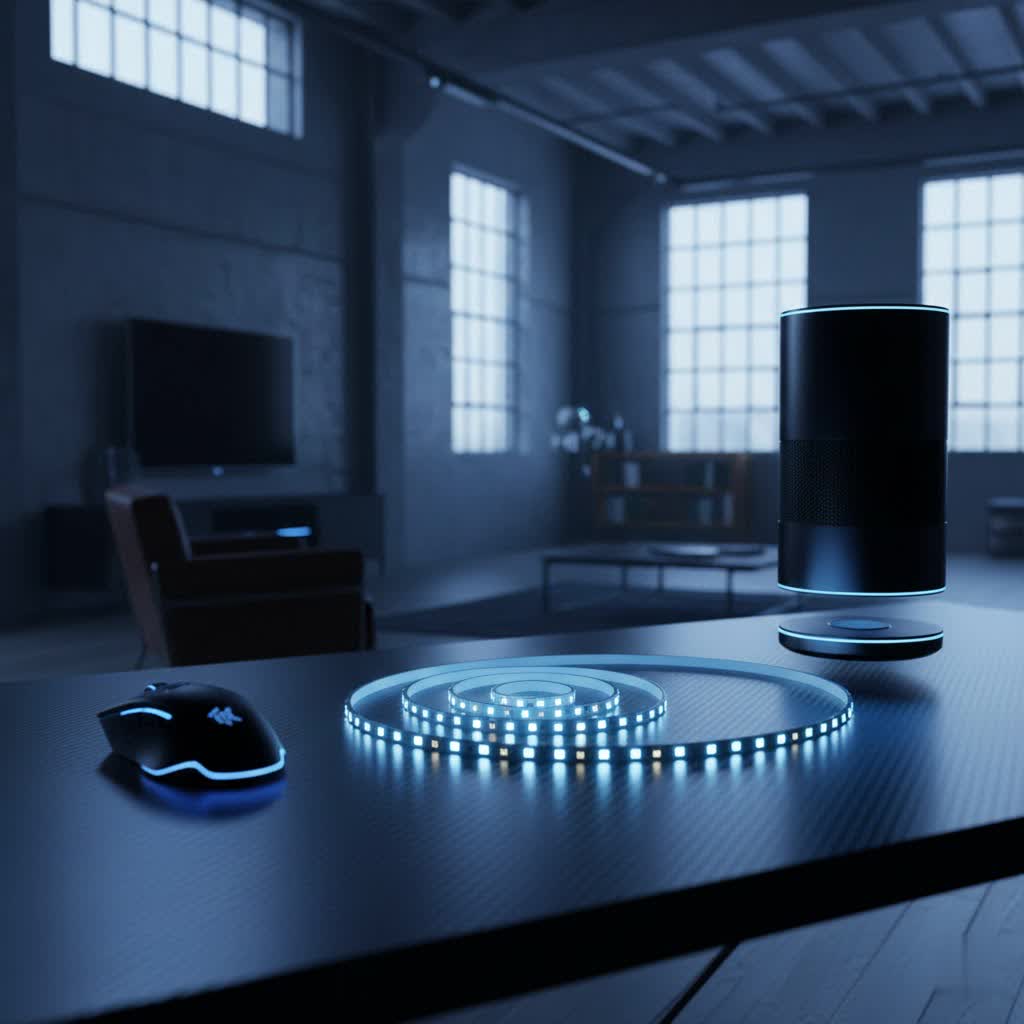
So, if you’re ready to dive into the world of flexible LED strip lights, you’ve come to the right place. We’ll explore everything you need to know, from picking the perfect strip to installing it like a pro and keeping it shining bright for years to come. Let’s light up your world!
1. Decoding Flexible LED Strip Lights: Types and Features
At its core, a flexible LED strip light is a series of tiny LED chips mounted on a thin, pliable circuit board, often with an adhesive backing. This ingenious design allows them to bend, twist, and conform to almost any surface, making them incredibly versatile. But not all strips are created equal! Understanding the different types and their key features is your first step to a brilliant lighting project.
1.1. The Spectrum of Choices: Understanding Different Types
The beauty of flexible LED strips lies in their diversity. You’ll find a range of options, each designed for specific lighting effects and moods:
- Single Color LED Strips: These are your go-to for consistent, static illumination. You’ll commonly find them in various shades of white – warm white for a cozy, inviting atmosphere (think 2700K-3000K), cool white for a crisp, modern feel (5000K-6500K), and natural white for a balanced, daylight-like glow (4000K-4500K). Beyond white, they also come in vibrant reds, blues, greens, and even amber or UV for specialized applications.
- Tunable White LED Strips: Imagine having the power to shift your white light from warm to cool with a simple tap! Tunable white strips offer this flexibility, allowing you to adjust the color temperature to match your mood or the time of day. Perfect for dynamic environments like home offices or living rooms.
- RGB and RGBW LED Strips: Ready to add a splash of color? RGB (Red, Green, Blue) strips can mix these primary colors to produce millions of hues. For even richer, more accurate color rendition and a dedicated crisp white, opt for RGBW strips, which include an additional white LED chip.
- Addressable LED Strips (DMX & SPI): For the ultimate in lighting control, addressable strips allow you to control individual sections or even single LEDs. This opens up a world of dynamic effects, like chasing patterns, flowing colors, and intricate animations, often used in professional installations or truly custom DIY projects.
|
Our Picks for the Best LED Strip in 2026
As an Amazon Associate I earn from qualifying purchases.
|
||
| Num | Product | Action |
|---|---|---|
| 1 | Govee Smart RGB LED Strip Lights for Bedroom, 32.8ft WiFi LED Light Strip Work with Alexa Google Assistant, 16 Million Colors with App Control and Music Sync Lights for Home Decor, 2 Rolls of 16.4ft |

|
| 2 | Aclorol LED Strip Lights 5V USB 6.56FT/2M 640 LEDs Blue Indoor Rope Lights for Bedroom Not Waterproof IP20 CRI85+ Flexible LED Light for TV Backlight Living Room Party DIY Lighting |
|
| 3 | Govee RGBIC LED Strip Lights, Smart LED Lights for Bedroom, Bluetooth LED Lights APP Control, DIY Multiple Colors on One Line, Color Changing LED Strip Lighting Music Sync, Home Decor, 16.4ft |
|
| 4 | KSIPZE 100ft Led Strip Lights RGB Music Sync Color Changing Led Lights with Smart App Control Remote Led Lights for Bedroom Room Lighting Flexible Home Décor |
|
| 5 | Govee Warm White LED Strip Lights, Bright 300 LEDs, 3000K Dimmable Light Strip 16.4ft with Control Box, LED Lights for Bedroom, Kitchen Cabinets, Living Room, ETL Listed Adapter Included |
|
| 6 | Govee RGBIC LED Strip Lights, 32.8ft Smart LED Lights for Bedroom, Bluetooth LED Lights APP Control, DIY Multiple Colors on One Line, Color Changing LED Strip Lighting Music Sync, Home Decor |
|
| 7 | Govee 100ft RGBIC LED Strip Lights, Smart LED Lights Work with Alexa and Google Assistant, LED Lights for Bedroom WiFi App Control Segmented DIY Multiple Colors, Color Changing Light, (2 x 50ft) |
|
| 8 | KANTUTOE LED Lights for TV, 16.4ft LED Lights for 45-75 Inch TVs, RGB TV Backlight Behind, Music Sync Bluetooth APP & Remote Control Strip Lights USB Powered for Bedroom, Gaming, Home Décor |
|
| 9 | Tenmiro Led Lights for Bedroom 100ft (2 Rolls of 50ft) Music Sync Color Changing Strip Lights with Remote and App Control RGB Strip, for Room Home Party Decoration |
|
| 10 | VOEWT LED Neon Lights Daylight White 6000K,9.8ft 110-120V LED Strip Lights,Flexible Outdoor Waterproof Neon Rope Lights for Bedroom,Cabinet,Kitchen,Living Room,Mirror,Halloween Decor |
|
1.2. Key Features to Look For
Beyond color, several technical specifications define a flexible LED strip’s performance:
- Brightness (Lumens): This is how much light your strip emits. Measured in lumens per foot or meter, it’s crucial for achieving your desired effect. For subtle accent lighting, 100-300 lumens per meter might suffice, while task lighting in a kitchen often requires 300-600 lumens per meter, and general illumination or outdoor areas might need 600+ lumens per meter. My golden rule? It’s always better to go a bit brighter and use a dimmer than to wish you had more light!
- Color Temperature (Kelvin): As mentioned with single-color strips, color temperature (measured in Kelvin, K) dictates the “warmth” or “coolness” of the white light. Warm whites (2700K-3000K) create inviting spaces, natural whites (4000K-4500K) are ideal for workspaces, and cool whites (5000K-6500K) provide an energizing, modern feel.
- Color Rendering Index (CRI): The CRI tells you how accurately a light source reveals the true colors of objects compared to natural daylight. A higher CRI (80+ is good, 90+ is excellent) means colors will appear more vivid and natural. This is super important in areas like kitchens, art studios, or retail displays where color accuracy matters.
- Voltage (12V vs. 24V): Most flexible LED strips operate on low-voltage DC power. 12V strips are perfect for shorter runs (typically up to 5 meters) and smaller projects. For longer runs (up to 10 meters or more) without significant brightness loss due to voltage drop, 24V strips are generally the better choice.
- IP Rating (Ingress Protection): This rating indicates a strip’s resistance to dust and water. An IP20 rating means it’s suitable for dry indoor environments. For kitchens, bathrooms, or covered outdoor areas, look for IP65 (splash-proof). If you’re thinking about underwater applications or fully exposed outdoor installations, IP67 or IP68 rated strips are what you need for complete waterproofing.
2. Choosing Your Perfect Strip: A Step-by-Step Guide
With so many options, picking the right flexible LED strip lights can feel a bit overwhelming. But don’t worry, with a clear vision and a few key considerations, you’ll be a master selector in no time.
2.1. Define Your Purpose: Accent, Task, Decorative?
Before you buy, ask yourself: What do you want these lights to do?
- Accent Lighting: Do you want to highlight architectural features, create a subtle glow behind a TV, or add mood lighting? You’ll likely need lower lumens and potentially color-changing options.
- Task Lighting: Are you illuminating a workbench, kitchen counter, or reading nook? Brightness and accurate color (high CRI) will be key here.
- Decorative Projects: Building a custom sign or intricate light art? Flexibility, cut points, and advanced control might be your focus.
2.2. Consider the Environment: Indoor or Outdoor? Dry or Wet?
Where will your lights live?
- Indoor & Dry: Standard IP20 strips are fine for most living spaces, bedrooms, and offices.
- Indoor & Damp: For kitchens, bathrooms (away from direct water), or laundry rooms, an IP65 rating provides protection against splashes and humidity.
- Outdoor & Exposed: Decks, patios, or garden features require at least an IP65 rating, and if they’ll be fully exposed to rain or even submerged, definitely go for IP67 or IP68.
2.3. Power Up Smartly: Matching Wattage and Power Supply
This is where many DIYers can stumble. Every LED strip has a wattage rating per meter or foot. You need to calculate the total wattage for your entire run and then choose a compatible power supply (also called a driver) that can handle that load.
Expert Insight from NamsP: Always select a power supply with at least 20% more wattage than your total LED strip requirement. This headroom ensures stability, prevents overheating, and significantly extends the lifespan of both your strips and the power supply. Overloading a power supply is a common cause of premature failure!
Also, ensure the power supply’s voltage (12V or 24V) matches your chosen LED strips. An incompatible voltage can damage your lights or pose a fire risk.
2.4. Quality Matters: Durability and Heat Management
Don’t skimp on quality. Well-made strips from reputable brands will last longer and perform better. Look for robust materials and proper certifications. LED strips generate heat, and effective heat dissipation is crucial for longevity. While the strips themselves are flexible, mounting them in aluminum channels or profiles not only provides a professional finish but also acts as a heatsink, keeping your LEDs cool and extending their life.
3. Installation Made Easy: Bringing Your Vision to Light
Installing flexible LED strip lights is surprisingly straightforward, even for beginners. With a little preparation and attention to detail, you’ll achieve stunning results.
3.1. Gathering Your Tools & Preparing the Surface
Think of this as laying the groundwork for success.
- Checklist: Tools You’ll Need
- Flexible LED strip lights
- Compatible power supply/driver
- Connectors (solderless clip-on or soldering equipment)
- Sharp scissors (for cutting strips)
- Measuring tape
- Rubbing alcohol or surface cleaner
- Clean cloth
- Mounting clips or aluminum channels (optional, but recommended)
- Wire strippers (if using solderless connectors that require stripped wires)
- Surface Prep: The Secret to Lasting Adhesion
Before anything else, clean the surface where you plan to install the strips. Dust, grease, and grime are the enemies of adhesive! Use rubbing alcohol or a mild surface cleaner, then wipe it completely dry. A smooth, clean, and dry surface ensures your strip’s adhesive backing forms a strong, long-lasting bond.
3.2. Cutting and Connecting: Customizing Your Length
The flexibility of these lights means you can customize their length.
- Where to Cut? Look closely at your LED strip for designated cut points. These are usually marked by a dotted line or a small scissors symbol. Never cut anywhere else, or you risk damaging the circuit and making a section of your strip unusable. Use sharp scissors for a clean cut.
- Connectors: Solderless Solutions: For joining cut sections or connecting to your power supply, solderless connectors are a DIYer’s best friend. Simply open the clip, align the copper pads on the strip with the connector’s pins (ensuring correct polarity – typically red wire to ‘+’ and black to ‘-‘), and snap it shut.
3.3. Adhering and Securing Your Strips
Most flexible LED strips come with pre-applied 3M adhesive backing, making installation a breeze.
- The Peel-and-Stick Method: Peel off a few inches of the protective backing at a time and carefully press the strip onto your prepared surface. Work your way along, pressing firmly to ensure there are no air bubbles and the strip adheres securely.
- Mounting Clips and Aluminum Channels for a Pro Finish: For added security, especially on rough or porous surfaces, or for longer runs, mounting clips are fantastic. They screw into the surface and clip over the strip, providing a mechanical hold. Even better, consider aluminum channels. These provide excellent heat dissipation, protect the strips, and diffuse the light for a more professional, “dot-free” look.
3.4. Wiring It Right: Connecting to Power
This step brings your lights to life!
- Matching Polarity: If you’re using connectors, ensure the positive (+) and negative (-) terminals on your LED strip align perfectly with those on your connector and power supply. Incorrect polarity means your lights won’t work.
- Testing Before Finalizing: Before you permanently stick down or secure everything, I always recommend a “mock installation.” Connect your strips to the power supply and turn them on. Make sure everything is working as expected – colors are correct, brightness is right, and there are no flickering sections. This troubleshooting step saves a lot of headaches later! Once tested, plug your power supply into an electrical outlet.
4. Beyond the Basics: Creative Applications for Flexible LED Strip Lights
This is where the fun really begins! Flexible LED strip lights are incredibly versatile, allowing you to unleash your inner interior designer. Here are some of my favorite ways to use them:
4.1. Transform Your Kitchen & Living Spaces
- Under-Cabinet and Shelf Lighting: This is a classic for a reason! Strips under kitchen cabinets provide excellent task lighting for meal prep and add a sophisticated glow. Similarly, lighting shelves in a living room or display cases creates stunning focal points.
- Cove and Ceiling Accents: Install strips within recessed ceiling coves or along the perimeter of a flat ceiling to create beautiful, diffused ambient lighting. This adds depth and a luxurious feel to any room.
- TV Backlighting for an Immersive Experience: Placing LED strips behind your television or computer monitor not only reduces eye strain in dark rooms (known as bias lighting) but also creates an immersive, cinematic experience, making your screen appear larger and colors more vibrant.
4.2. Elevate Your Bedroom & Architectural Details
- Headboard and Under-Bed Glow: Embed strips behind your headboard for a soft, romantic glow, or along the underside of your bed frame for a floating effect that doubles as a subtle nightlight.
- Highlighting Architectural Features: Draw attention to crown molding, columns, alcoves, or even unique wall textures by discreetly tucking LED strips along their edges. This accentuates your home’s unique design elements.
4.3. Safety & Style for Stairs and Outdoors
- Illuminating Staircases: Safety meets style! Install strips beneath each stair tread or along handrails to illuminate steps, making them safer at night and adding a contemporary design element. Many opt for motion-activated strips here.
- Deck and Patio Lighting: Bring your outdoor living spaces to life. Outline deck railings, steps, or even create a glowing effect under patio furniture. Just remember to use appropriately IP-rated waterproof strips for these applications!
5. Longevity and Brilliance: Maintenance Tips from an Expert
You’ve invested time and effort into your flexible LED strip lights, so let’s make sure they last! With proper care, they can illuminate your spaces for years.
5.1. Keep It Clean: Simple Dusting and Wiping
LED strips can accumulate dust and dirt, which can diminish their brightness and alter their color output.
- Routine Cleaning: Gently wipe the surface of your LED strips with a soft, dry microfiber cloth regularly.
- Stubborn Grime: For more stubborn dirt, slightly dampen the cloth with a mild cleaning solution (avoiding harsh chemicals) and wipe carefully. Always unplug the lights before cleaning for safety.
5.2. Handle with Care: Avoiding Bends and Twists
While “flexible” is in their name, there are limits to how much you can bend or twist these strips.
- Respect the Bend Radius: Follow the manufacturer’s guidelines for bending radius (usually no tighter than a 1-inch radius). Over-bending can damage the internal circuits and cause sections to fail.
- Use Connectors for Corners: For sharp 90-degree turns, it’s always best to use L-shaped connectors rather than forcing the strip to bend too sharply.
5.3. Stay Cool: Preventing Overheating
Excessive heat is the enemy of LED longevity. While LEDs are energy-efficient, they still generate heat.
- Ensure Ventilation: Install your strips in well-ventilated areas where heat can dissipate naturally. Avoid tightly enclosed spaces.
- Utilize Heat Sinks: As mentioned, aluminum channels aren’t just for aesthetics; they are excellent heat sinks that help draw heat away from the LEDs, significantly extending their lifespan.
5.4. Power Protection: Steady Voltage is Key
- Surge Protectors: Power fluctuations can stress your LED strips and power supplies. Using a surge protector can shield your investment from unexpected spikes.
- Check Connections: Periodically inspect all wiring and connections to ensure they are secure and free from damage or corrosion. Loose connections can lead to flickering or intermittent operation.
5.5. Regular Checks: A Little Care Goes a Long Way
A quick monthly or quarterly check-up for domestic settings can catch potential issues early. For commercial or high-usage areas, bi-weekly inspections might be beneficial. Look for:
- Flickering or inconsistent colors.
- Visible physical damage to the strip or wiring.
- Any signs of moisture ingress (if in a damp environment).
FAQs
Q: Can I cut flexible LED strip lights anywhere?
A: No, you can only cut flexible LED strip lights at designated cut points, usually marked by a dotted line or a scissors symbol on the strip itself. Cutting elsewhere will damage the circuit.
Q: Do I need a special power supply for LED strips?
A: Yes, most flexible LED strips require a compatible low-voltage DC power supply (also called a driver) that matches their voltage (12V or 24V) and can handle their total wattage.
Q: Are all flexible LED strips waterproof?
A: No, flexible LED strips come with different IP ratings. IP20 is for dry indoor use, while IP65, IP67, or IP68 ratings indicate increasing levels of water resistance, suitable for damp or wet environments.
Q: How do I control the brightness and color?
A: Brightness and color control depend on the type of strip and controller. Single-color strips use dimmers, while RGB/RGBW strips require a compatible RGB/RGBW controller, often operated via remote, wall switch, or a smart app.
Q: What’s the difference between 12V and 24V strips?
A: Both are low voltage, but 24V strips are generally better for longer runs (typically over 5 meters) as they minimize voltage drop, ensuring consistent brightness across the entire length. 12V strips are suitable for shorter runs.
Q: My LED strip isn’t sticking, what should I do?
A: Ensure the surface is perfectly clean, dry, and smooth before applying the strip. If the adhesive still fails, consider using additional mounting clips, strong double-sided tape, or installing the strips within aluminum channels for better adhesion and security.
Conclusion
Flexible LED strip lights offer an unparalleled blend of versatility, energy efficiency, and aesthetic appeal, making them a fantastic choice for nearly any lighting project you can dream up. From subtly enhancing your home’s architecture to creating vibrant, dynamic displays, the possibilities are truly endless. By understanding the types, making informed choices about features like brightness and IP ratings, mastering a few simple installation steps, and committing to basic maintenance, you’ll ensure your flexible LED strip lights shine brightly for years to come.
So, go ahead, illuminate your creativity! Don’t hesitate to explore our resources at NamsP.com for more in-depth guides and to confidently embark on your next LED strip light adventure.
