Ever walked into a room and felt instantly captivated by the lighting? Chances are, you’ve experienced the magic of Smd Led Strips. These flexible, versatile lighting solutions have revolutionized how we illuminate our homes and businesses, offering a blend of efficiency, creativity, and modern aesthetics. As someone with over a decade of hands-on experience in designing, installing, and fixing LED strip lighting, I’m here to demystify everything about SMD LED strips, helping you confidently integrate them into your next project.
What Exactly is an SMD LED Strip?
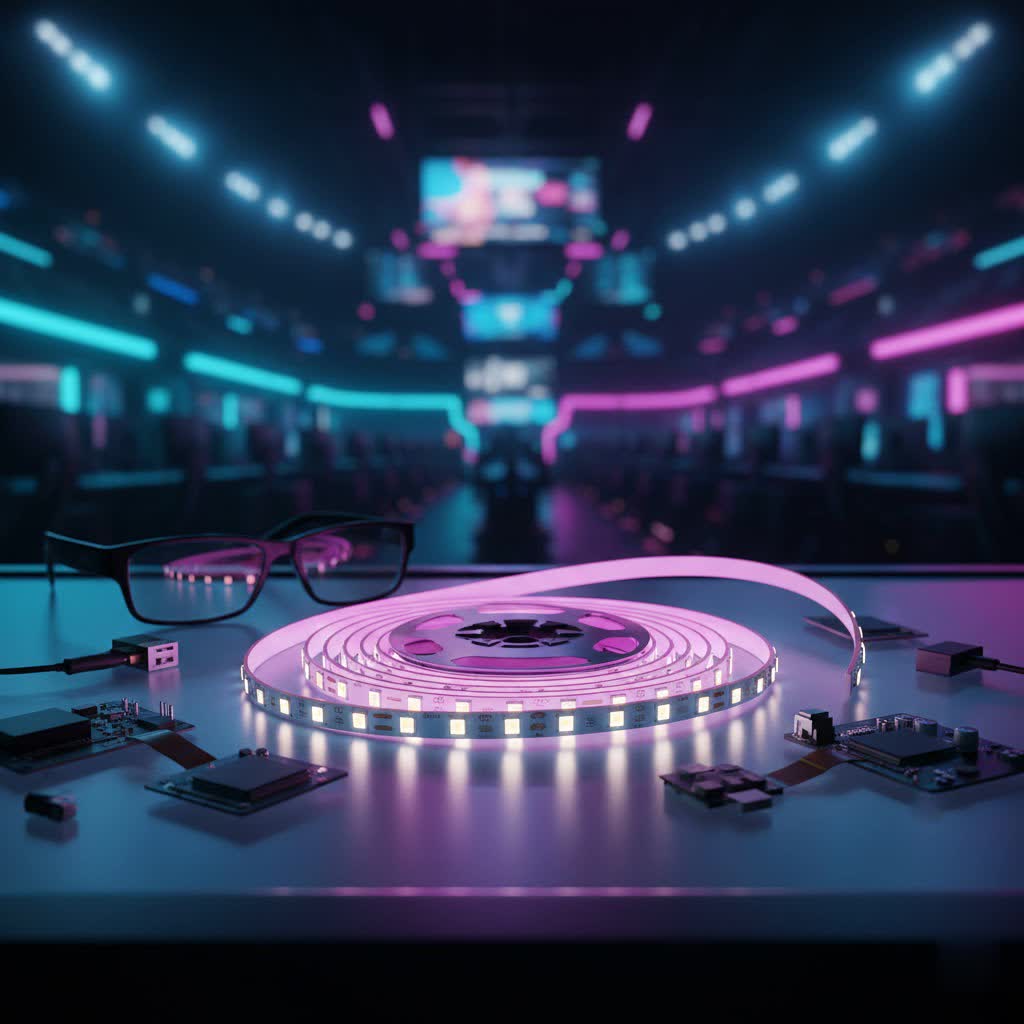
Let’s break it down. “SMD” stands for Surface Mounted Device. Imagine tiny light-emitting diodes, each a miniature powerhouse, directly soldered onto the surface of a flexible circuit board (PCB). That’s the essence of an SMD LED. When you see “smd led strip,” it refers to these flexible tapes populated with numerous such chips, designed to provide continuous, customizable illumination.
The numbers you often see, like SMD 5050 or SMD 2835, refer to the physical dimensions of the individual LED chip in millimeters. For example, a 5050 chip measures 5.0mm x 5.0mm, while a 2835 chip is 2.8mm x 3.5mm. These dimensions aren’t just technical jargon; they indicate the chip’s size and, consequently, its potential brightness and application. Larger chips like the 5050 are known for their high light output and often house multiple diodes (like red, green, and blue for RGB color-changing strips), making them incredibly versatile for vibrant displays. Smaller, more efficient chips like the 2835 are commonly used for single-color applications where a smooth, consistent light and high energy efficiency are key.
Why Choose SMD LED Strips? Advantages and Benefits
So, why have SMD LED strips become the go-to choice for so many? It boils down to a powerful combination of practical advantages and creative freedom.
- Energy Efficiency: These little powerhouses consume significantly less electricity than traditional incandescent bulbs, translating into lower energy bills and a greener footprint. You can light up your space without constantly worrying about energy consumption.
- Versatility and Flexibility: The flexible nature of the strip allows it to bend and contour around various surfaces, making it ideal for unique installations where rigid lights just won’t do. They can be cut at designated points, offering incredible customization for any space.
- Compact Design: Their slim profile means SMD LED strips can be tucked away discreetly, providing ambient light without the light source itself being visible. This is perfect for achieving that sought-after “invisible light source” effect.
- Long Lifespan: With proper installation and care, SMD LED strips can last for up to 50,000 hours, far outliving traditional lighting options. This means less frequent replacements and more consistent performance over time.
- Cost-Effectiveness: While initial costs can vary, their energy efficiency and long lifespan often make them a more economical lighting solution in the long run.
- Wide Beam Angle: SMD LEDs typically offer a wide beam angle, ensuring even light distribution across a surface, minimizing harsh shadows and creating a uniform glow.
Decoding Your Needs: How to Choose the Perfect SMD LED Strip
Selecting the right SMD LED strip for your project can feel a bit like navigating a maze, but with a few key considerations, you’ll find your way.
Brightness (Lumens) and Light Output
|
Our Picks for the Best LED Strip in 2026
As an Amazon Associate I earn from qualifying purchases.
|
||
| Num | Product | Action |
|---|---|---|
| 1 | Govee 100ft RGBIC LED Strip Lights, Smart LED Lights Work with Alexa and Google Assistant, LED Lights for Bedroom WiFi App Control Segmented DIY Multiple Colors, Color Changing Light, (2 x 50ft) |

|
| 2 | KSIPZE 100ft Led Strip Lights RGB Music Sync Color Changing Led Lights with Smart App Control Remote Led Lights for Bedroom Room Lighting Flexible Home Décor |
|
| 3 | Govee Smart RGB LED Strip Lights for Bedroom, 32.8ft WiFi LED Light Strip Work with Alexa Google Assistant, 16 Million Colors with App Control and Music Sync Lights for Home Decor, 2 Rolls of 16.4ft |
|
| 4 | VOEWT LED Neon Lights Daylight White 6000K,9.8ft 110-120V LED Strip Lights,Flexible Outdoor Waterproof Neon Rope Lights for Bedroom,Cabinet,Kitchen,Living Room,Mirror,Halloween Decor |
|
| 5 | Govee Warm White LED Strip Lights, Bright 300 LEDs, 3000K Dimmable Light Strip 16.4ft with Control Box, LED Lights for Bedroom, Kitchen Cabinets, Living Room, ETL Listed Adapter Included |
|
| 6 | Tenmiro Led Lights for Bedroom 100ft (2 Rolls of 50ft) Music Sync Color Changing Strip Lights with Remote and App Control RGB Strip, for Room Home Party Decoration |
|
| 7 | Govee RGBIC LED Strip Lights, Smart LED Lights for Bedroom, Bluetooth LED Lights APP Control, DIY Multiple Colors on One Line, Color Changing LED Strip Lighting Music Sync, Home Decor, 16.4ft |
|
| 8 | Govee RGBIC LED Strip Lights, 32.8ft Smart LED Lights for Bedroom, Bluetooth LED Lights APP Control, DIY Multiple Colors on One Line, Color Changing LED Strip Lighting Music Sync, Home Decor |
|
| 9 | KANTUTOE LED Lights for TV, 16.4ft LED Lights for 45-75 Inch TVs, RGB TV Backlight Behind, Music Sync Bluetooth APP & Remote Control Strip Lights USB Powered for Bedroom, Gaming, Home Décor |
|
| 10 | Aclorol LED Strip Lights 5V USB 6.56FT/2M 640 LEDs Blue Indoor Rope Lights for Bedroom Not Waterproof IP20 CRI85+ Flexible LED Light for TV Backlight Living Room Party DIY Lighting |
|
First, think about the purpose. Are you aiming for subtle accent lighting to create a cozy mood, or do you need bright task lighting for a workspace? Lumens are your guide here – they measure the total visible light emitted. For ambient lighting, a lower lumen output might suffice, while under-cabinet lighting or display illumination will demand higher lumens. Many strips offer various lumen outputs per meter to match different needs, from mood lighting to commercial displays.
Color Temperature (CCT) and Color Options
The “feel” of your space largely depends on the light’s color temperature, measured in Kelvin (K).
- Warm White (2700K-3000K): Creates a cozy, inviting, and relaxing atmosphere, ideal for bedrooms and living rooms.
- Natural White (4000K-5000K): Offers a clean, balanced light that’s great for kitchens, offices, or task areas where clarity is important.
- Cool White (6000K+): Provides a bright, energetic light, often chosen for modern aesthetics, commercial spaces, or areas requiring high illumination.
Beyond white, you have a spectrum of color options:
- Single Color: Dedicated to one specific color (e.g., red, blue, green).
- RGB: Red, Green, Blue chips in one package, allowing for millions of color combinations. Perfect for dynamic, mood-setting lighting.
- RGBW/RGBWW: Adds a dedicated white (or warm white) chip for purer white light alongside the RGB colors, offering more versatility.
- Addressable RGB: Allows individual control over sections of the strip for advanced chasing and animation effects.
Voltage and Power Requirements
Most SMD LED strips operate on either 12V or 24V DC.
- 12V strips are common for residential and shorter runs, balancing power consumption and brightness.
- 24V strips are more efficient for longer runs, as they can carry power over greater distances without significant voltage drop, making them ideal for larger installations.
Always ensure your power supply (driver or transformer) matches the strip’s voltage and can handle the total wattage of your entire LED run. Overloading a power supply is a surefire way to shorten its life and potentially cause issues.
IP Rating: Waterproofing for Every Environment
The Ingress Protection (IP) rating tells you how well your strip is protected against dust and water.
- IP20: Non-waterproof, suitable for dry indoor applications like under cabinets or behind TVs.
- IP65 (Silicone Coating): Splash-proof, ideal for kitchens and bathrooms where minor splashes might occur.
- IP67/IP68 (Silicone Tube/Filling): Fully waterproof, designed for outdoor use, wet areas, or even submersion, making them perfect for deck lighting or certain landscape features.
LED Density and Chip Type Comparison
The number of LEDs per meter (e.g., 30 LEDs/m, 60 LEDs/m, 120 LEDs/m) directly impacts the brightness and how “dotty” the light appears. Higher density creates a more continuous, uniform glow, reducing the visible “hot spots” of individual LEDs.
When comparing common chip types:
- SMD 5050: Often referred to as “triple chip” LEDs, they are brighter and commonly used for RGB applications due to their larger size which can house three smaller LED diodes (red, green, blue). Great for general lighting or vibrant accent lighting.
- SMD 2835/3528: These are typically single-chip LEDs, known for their efficiency and smooth, uniform light output. They are excellent for continuous accent lighting and often achieve high CRI (Color Rendering Index) for accurate color representation.
DIY Installation: Step-by-Step Guide to Setting Up Your SMD LED Strips
Installing SMD LED strips yourself is incredibly satisfying and usually quite straightforward. Here’s how to get it done right:
Preparation is Key
Before you start peeling and sticking, a little planning goes a long way.
- Plan Your Layout: Visualize where the strip will go. Measure the exact lengths you need.
- Gather Your Tools: You’ll typically need your SMD LED strip, a compatible power supply, connectors (if you’re cutting or joining sections), a controller (for dimming or color changes), scissors, and a ruler.
- Clean the Surface: This is critical! The mounting surface must be smooth, clean, completely dry, and dust-free. Use isopropyl alcohol to wipe down the area – avoid common household cleaners as they can leave residues. A lightly sanded surface can improve adhesion.
Measure, Cut, and Connect
- Test Run: Before committing, connect your strip to the power supply and controller and temporarily hold it in place. This lets you confirm the desired effect and ensures everything works before final installation.
- Cut Precisely: SMD LED strips have designated cut marks, usually indicated by copper pads or a scissor icon. Only cut along these marks to avoid damaging the circuit.
- Connect Sections: If your design requires multiple sections or navigating corners, use strip-to-strip connectors (L, T, X shapes) or solder connections. Always ensure positive (+) aligns with positive (+) and negative (-) with negative (-) throughout your setup to maintain polarity.
Secure and Power Up
- Peel and Stick: Most SMD LED strips come with a strong adhesive backing (often 3M). Carefully peel off the protective paper and firmly press the strip onto your prepared surface.
- Connect to Power: Plug the LED strip into your controller (if using one), and then connect the controller to the power supply. Finally, plug the power supply into an outlet.
- Consider Aluminum Channels: For a truly professional finish and improved heat dissipation (which extends the lifespan of your LEDs), consider mounting your strips in aluminum channels with diffusers. This also helps reduce the “dot effect.”
Troubleshooting Common Issues
- Lights don’t turn on: Double-check all connections, especially polarity, and ensure the power supply is correctly plugged in and functioning.
- Flickering or incorrect colors: This is often a polarity issue or a loose connection. Re-check all wiring from the power supply to the strip.
- Dimming at the end of a long run: This is called voltage drop. For very long runs, you might need to power the strip from both ends or use a 24V system.
Unleashing Creativity: Innovative Ideas for SMD LED Strip Lighting
Here’s where SMD LED strips truly shine – literally! Their versatility makes them perfect for countless creative applications.
- Under-Cabinet & Shelf Lighting: Transform your kitchen or bathroom by illuminating countertops and showcasing decor. This provides both practical task lighting and a sophisticated glow.
- Cove & Architectural Accent Lighting: Install strips in ceiling coves, crown molding, or behind architectural features to create a dramatic wash of light. This technique can make rooms feel larger and more open.
- TV & Monitor Backlighting: Placing RGB strips behind your television or computer monitor not only adds a cool aesthetic but also reduces eye strain by providing bias lighting.
- Staircase & Pathway Illumination: Line stair risers or pathways for enhanced safety and a striking, modern look.
- Bedroom & Vanity Enhancements: Add warm white strips under your bed for a cozy nightlight, or frame mirrors and headboards for a luxurious, spa-like ambiance.
- Wardrobe and Drawer Lighting: Install strips inside closets or drawers with motion sensors, so they illuminate automatically when opened – incredibly practical!
- Outdoor Ambiance: With appropriate IP-rated strips (IP65, IP67, or IP68), you can illuminate decks, patios, garden features, or even outline your house for festive displays.
As “Michael Chen, Lead Lighting Designer at NamsP,” often says, “The beauty of SMD LED strips lies in their ability to disappear, leaving only the light behind. It’s about crafting an experience, not just adding a fixture.”
Maintaining Your SMD LED Strips for Lasting Brilliance
While SMD LED strips are built for longevity, a little care ensures they continue to perform optimally.
- Gentle Cleaning: Dust and grime can dull the light output. Gently wipe your strips with a soft, dry cloth. For stubborn spots, a slightly damp cloth (ensure the strip is off and dry before turning back on, especially for non-waterproof strips) can be used.
- Heat Management: LEDs generate some heat, and excessive heat can shorten their lifespan. Ensure they are not installed in enclosed spaces without adequate ventilation. Using aluminum channels helps dissipate heat effectively.
- Check Connections: Periodically inspect any connectors or soldered joints for corrosion or looseness, especially in areas with movement or temperature fluctuations.
FAQs about SMD LED Strips
Q: Can SMD LED strips be cut anywhere?
A: No, SMD LED strips can only be cut at designated marks, usually indicated by copper pads or a scissor icon, typically found every few inches. Cutting elsewhere will damage the circuit and prevent that section from working.
Q: Do I need a special power supply for SMD LED strips?
A: Yes, you need a DC (Direct Current) power supply that matches the voltage of your LED strip (typically 12V or 24V). It’s crucial that the power supply’s wattage capacity is sufficient to power the total length of your strip.
Q: Are all SMD LED strips waterproof?
A: No, SMD LED strips come with different IP (Ingress Protection) ratings. IP20 strips are for dry indoor use, while IP65, IP67, or IP68 ratings indicate increasing levels of water resistance for splash-prone or outdoor environments. Always check the IP rating for your intended application.
Q: What’s the main difference between SMD and COB LED strips?
A: The primary difference lies in how the LED chips are mounted. SMD strips have individual LED chips spaced apart, which can create a “dot effect.” COB (Chip-on-Board) strips integrate multiple tiny LED chips directly onto a single board, covered with a phosphor layer, resulting in a seamless, “dotless” light line with higher intensity and a more uniform glow. SMD strips typically offer more color options (like RGB), while COB excels in uniform white light.
Q: How do I control the color and brightness of my SMD LED strips?
A: For single-color strips, a dimmer switch controls brightness. For RGB or RGBW strips, a dedicated LED controller (often with a remote, app, or smart home integration) allows you to change colors, adjust brightness, and create dynamic lighting effects.
Conclusion
SMD LED strips are more than just a lighting solution; they’re a versatile tool for transforming any space. From creating cozy ambiance to providing practical task lighting, their energy efficiency, flexibility, and array of options make them an unparalleled choice for modern illumination. Whether you’re a DIY enthusiast or simply looking to upgrade your home’s lighting, embracing SMD LED strips will empower you to craft stunning, personalized environments that truly reflect your style. Don’t be afraid to experiment, illuminate, and let your creativity shine with SMD LED strips!
