Bright LED strip lights are an excellent choice for transforming any space with vibrant and impactful illumination, offering flexibility, energy efficiency, and stunning light output. These lights achieve their brilliance through factors like high lumen output, increased LED density, larger chip sizes (e.g., 5050), and cooler color temperatures (5000K-6500K), which are perceived as brighter. Understanding these technical specifications is key to selecting and installing the perfect bright LED strips for your home or business.
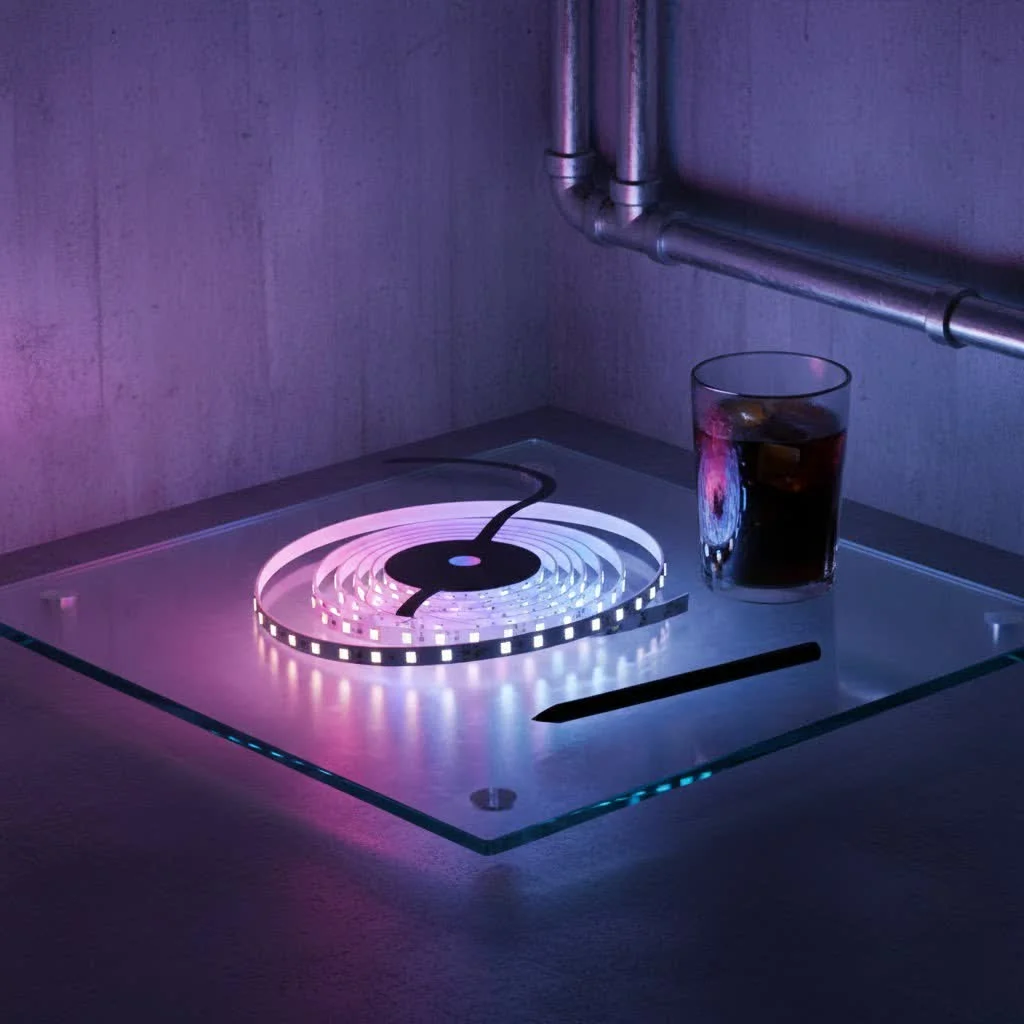
Unpacking the Brilliance: What Makes LED Strips Truly Bright?
When we talk about bright LED strip lights, we’re examine a fascinating mix of technology and design. It’s not just about turning them on; it’s about understanding the science behind their glow.
Lumens vs. Watts: The Real Measure of Brightness
For bright LED strip lights, lumens are the true measure of brightness, indicating the total visible light produced. The higher the lumen count per foot or meter, the brighter the strip will be. Watts, conversely, measure energy consumption. While higher wattage often correlates with more light in LEDs, always prioritize lumens per foot (lm/ft) or per meter (lm/m) when selecting bright LED strip lights.
LED Density: Packing a Punch of Light
The number of individual LED chips packed onto a strip per unit of length significantly impacts its brightness and light quality. Strips with a higher density of LEDs provide a more continuous, uniform, and brighter output, reducing “spotting” and creating a smoother line of light. High-density strips often feature 60, 120, or even more LEDs per meter, creating a much more intense and seamless glow compared to standard options.
LED Chip Size: Bigger Chips, Brighter Glow
The physical size of the LED chips also plays a crucial role in determining brightness. Larger chips generally have more surface area to emit light, leading to a higher lumen output per individual LED. For instance, 5050 LED chips (5.0mm x 5.0mm) are known for their higher brightness capabilities compared to smaller chips like 3528 or 2835, making them a popular choice for bright applications.
Color Temperature: The Perception of Brightness
While color temperature doesn’t directly increase raw lumen output, it profoundly influences how we perceive brightness. Cooler white or daylight white lights (5000K-6500K) have a bluer, crisper tone, mimicking natural daylight, and are often perceived as brighter to the human eye than warmer white lights (2700K-3500K) with identical lumen output. For an expansive and brightly lit space, a cooler color temperature is often preferred.
Luminous Efficiency: Smart Brightness, Less Power
|
Our Picks for the Best LED Strip in 2026
As an Amazon Associate I earn from qualifying purchases.
|
||
| Num | Product | Action |
|---|---|---|
| 1 | Govee RGBIC LED Strip Lights, 32.8ft Smart LED Lights for Bedroom, Bluetooth LED Lights APP Control, DIY Multiple Colors on One Line, Color Changing LED Strip Lighting Music Sync, Home Decor |

|
| 2 | KSIPZE 100ft Led Strip Lights RGB Music Sync Color Changing Led Lights with Smart App Control Remote Led Lights for Bedroom Room Lighting Flexible Home Décor |
|
| 3 | Govee 100ft RGBIC LED Strip Lights, Smart LED Lights Work with Alexa and Google Assistant, LED Lights for Bedroom WiFi App Control Segmented DIY Multiple Colors, Color Changing Light, (2 x 50ft) |
|
| 4 | Aclorol LED Strip Lights 5V USB 6.56FT/2M 640 LEDs Blue Indoor Rope Lights for Bedroom Not Waterproof IP20 CRI85+ Flexible LED Light for TV Backlight Living Room Party DIY Lighting |
|
| 5 | KANTUTOE LED Lights for TV, 16.4ft LED Lights for 45-75 Inch TVs, RGB TV Backlight Behind, Music Sync Bluetooth APP & Remote Control Strip Lights USB Powered for Bedroom, Gaming, Home Décor |
|
| 6 | Govee Warm White LED Strip Lights, Bright 300 LEDs, 3000K Dimmable Light Strip 16.4ft with Control Box, LED Lights for Bedroom, Kitchen Cabinets, Living Room, ETL Listed Adapter Included |
|
| 7 | VOEWT LED Neon Lights Daylight White 6000K,9.8ft 110-120V LED Strip Lights,Flexible Outdoor Waterproof Neon Rope Lights for Bedroom,Cabinet,Kitchen,Living Room,Mirror,Halloween Decor |
|
| 8 | Govee Smart RGB LED Strip Lights for Bedroom, 32.8ft WiFi LED Light Strip Work with Alexa Google Assistant, 16 Million Colors with App Control and Music Sync Lights for Home Decor, 2 Rolls of 16.4ft |
|
| 9 | Tenmiro Led Lights for Bedroom 100ft (2 Rolls of 50ft) Music Sync Color Changing Strip Lights with Remote and App Control RGB Strip, for Room Home Party Decoration |
|
| 10 | Govee RGBIC LED Strip Lights, Smart LED Lights for Bedroom, Bluetooth LED Lights APP Control, DIY Multiple Colors on One Line, Color Changing LED Strip Lighting Music Sync, Home Decor, 16.4ft |
|
Luminous efficiency refers to how many lumens a strip light can produce per watt of energy (lumens per watt, or lm/W). A high-efficiency LED strip delivers maximum light output for minimal power input. This means you get dazzling brightness while keeping energy consumption in check, making your lighting solution both brilliant and economical.
Choosing Your Star Performer: Selecting the Perfect Bright LED Strip Lights
Selecting the right bright LED strip lights involves aligning the strip’s capabilities with your specific project needs.
Identify Your Mission: Accent vs. Task vs. General Lighting
Before anything else, consider the purpose of your lighting. Are you aiming for:
- Accent Lighting? Highlighting architectural features or creating a subtle glow. Around 200 lumens per foot could be sufficient.
- Task Lighting? For areas needing focused, clear light, like under kitchen cabinets or in a workshop. These demand significantly higher brightness for functionality and visibility.
- General Lighting? To illuminate an entire room. This requires very high lumen output to serve as a primary light source.
Understanding your application will guide you toward the appropriate brightness level for your bright LED strip lights.
Dive into Density and Chip Type: SMD vs. COB
When pursuing ultimate brightness, two main technologies stand out:
- SMD (Surface Mounted Device) Strips: These are common, featuring individual LED chips mounted on the strip. High-density SMD strips, often with 60 or 120 LEDs per meter and larger chips like 5050, can achieve impressive brightness.
- COB (Chip-on-Board) Strips: For seamless, spotless illumination combined with extreme brightness, COB LED strips are ideal. They feature numerous tiny LED chips directly mounted onto a flexible circuit board, creating a continuous, phosphor-coated light surface. This results in incredibly high LED density (e.g., up to 512 LEDs per meter), offering perfectly uniform light output without visible hot spots, even near reflective surfaces.
Powering Your Brilliance: Drivers and Power Supplies
Bright LED strip lights typically operate on low DC voltage (12V or 24V), requiring a power supply (driver or transformer) to convert AC household current. It’s crucial to match the strip’s voltage requirement with the power supply’s output voltage. Ensure the power supply’s wattage capacity is at least 10-20% higher than the total wattage consumed by your LED strips to prevent overloading and ensure safe operation.
Beyond Brightness: Color Temperature and CRI
While brightness is a priority, don’t overlook other factors that enhance the quality of your bright LED strip lights:
- Color Temperature (CCT): Cooler temperatures (like 6500K daylight white) are perceived as brighter and are great for task-oriented areas. Warmer temperatures (around 3000K warm white) create a cozier feel. Some strips offer tunable white options.
- CRI (Color Rendering Index): CRI measures how accurately a light source reveals true colors compared to natural light. A high CRI (90+) is vital for spaces like kitchens, art studios, or retail displays where true color representation is important.
Durability and Protection: IP Ratings for Every Environment
The Ingress Protection (IP) rating tells you how well a strip is protected against dust and water.
- IP20/IP33: Standard protection, suitable for dry indoor applications.
- IP44/IP54: Protected against some dust and splashing water, good for kitchens or bathrooms.
- IP65: Protected against dust and water jets, ideal for outdoor covered areas.
- IP67/IP68: Fully protected against dust and can withstand immersion in water (IP68 for continuous immersion), perfect for outdoor landscapes, pools, or marine applications.
Lighting Up Your Space: Simple Steps for Installing Bright LED Strip Lights
Installing bright LED strip lights can be a rewarding DIY project, achieving professional-looking results with preparation and care.
Gather Your Arsenal: Tools and Materials Checklist
Before you begin, ensure you have these essentials:
- Bright LED strip lights
- Compatible power supply/driver
- Controller (if dimmable or color-changing)
- Measuring tape
- Scissors (for cutting strips at designated points)
- Wire connectors or solder
- Mounting clips, adhesive, or aluminum channels
- Optional: Aluminum heat sink channels (highly recommended for bright LED strip lights)
Plan Your Path: Measure, Cut, and Connect
First, meticulously measure the installation area. Most strips have designated cutting points, usually marked by a copper pad, allowing you to trim them to the exact length. If your project requires turns or extends beyond a single strip, use solderless connectors or solder wires to bridge gaps, ensuring proper polarity (+ to + and – to -).
Secure and Power Up: Mounting and Connecting to the Supply
Peel off the protective backing and firmly press the LED strips onto a clean, dry surface. For added security and improved heat management, especially for bright LED strip lights, consider using aluminum mounting channels. These channels dissipate heat, extending LED life, and provide a neat finish. Connect your strip to the power supply, ensuring all connections are secure and properly insulated. Always double-check wiring before plugging into an outlet.
Optional: The Heat Sink Advantage
“For truly bright LED strip lights, ignoring heat dissipation is like driving a car without a radiator,” advises Alex Thorne, a seasoned lighting design expert. “Over time, excessive heat significantly degrades LED performance and shortens lifespan. Investing in good quality aluminum heat sink channels for high-lumen strips is a non-negotiable step for long-term reliability and consistent brightness.” These channels are specifically designed to absorb and radiate heat away from the LED chips, keeping them running cooler and brighter for longer.
Keeping Your Glow Going: Maintenance and Longevity Tips
To ensure your bright LED strip lights continue to shine brilliantly for years, a little TLC goes a long way.
The Heat Conundrum: Preventing Overheating
Excessive heat is the enemy of LED longevity. Always ensure adequate ventilation around your installed bright LED strip lights. If they are enclosed, ensure sufficient air circulation, and utilize aluminum channels, especially for high-power strips, to help dissipate heat efficiently. Avoid placing non-rated strips in direct sunlight or in areas where heat can build up.
Clean and Clear: Simple Maintenance Routines
Over time, dust and grime can accumulate on your bright LED strip lights, slightly dimming their output. A simple, gentle cleaning routine can help. Using a soft, dry cloth or a slightly damp cloth (ensure the strips are powered off and completely dry before re-energizing) to wipe down the surface periodically will keep your lights looking their best.
Dimming Your Way to a Longer Life
Running your LEDs at less than their full power not only gives you greater control over ambiance but can also significantly extend their lifespan. LEDs typically last longer when they operate at cooler temperatures, and dimming them reduces heat generation. So, don’t be afraid to dial back the brightness when full power isn’t needed – your strips will thank you for it!
Unleashing Creativity: Innovative Ideas with Bright LED Strip Lights
Bright LED strip lights are incredibly versatile tools for unleashing your inner designer. Here are some inspiring ways to use them:
- Kitchen Transformations: Under-Cabinet and Island Lighting: Bright LED strips under kitchen cabinets provide excellent task lighting for meal prep and illuminate countertops beautifully. Around a kitchen island, they create a modern, inviting glow.
- Bedroom Ambiance: Headboard Backlighting and Cove Lighting: Install bright LED strips behind your headboard for a luxurious, soft glow. Cove lighting along ceiling perimeters adds depth and a calming, indirect light source.
- Outdoor Oases: Deck, Patio, and Landscape Illumination: With the right IP rating, bright LED strip lights can define deck edges, illuminate pathways, or create stunning backlighting for outdoor features, making your garden come alive after dark.
- Accentuate and Highlight: Shelf, Display, and Artwork Lighting: Use bright LED strip lights to draw attention to collectibles, illuminate shelving units, or create a dramatic halo effect around artwork. Their slim profile makes them ideal for discreet installations.
Frequently Asked Questions (FAQ)
Q: Can all LED strip lights be cut?
A: Most LED strip lights are designed to be cut at specific, marked intervals, usually indicated by a copper pad. Cutting elsewhere can damage the strip. Always check your product’s specifications before cutting.
Q: How do I know what power supply I need?
A: You need to calculate the total wattage consumed by your LED strip lights (watts per foot/meter multiplied by total length) and ensure your power supply has an output voltage that matches your strips (e.g., 12V or 24V). Choose a power supply with at least 10-20% more wattage than your calculated total.
Q: What’s the difference between SMD and COB LED strips?
A: SMD (Surface Mounted Device) strips have individual LED chips visible along the strip. COB (Chip-on-Board) strips have many tiny chips bonded directly to the circuit board, creating a continuous, phosphor-coated light surface that appears as one solid line of light, often with higher density and no visible spotting.
Q: Do bright LED strips use a lot of electricity?
A: While bright LED strips offer high lumen output, they are significantly more energy-efficient than traditional lighting. Their power consumption (wattage) is generally low relative to the light they produce, helping you save on electricity bills.
Q: Can I use bright LED strips outdoors?
A: Yes, if they have an appropriate IP (Ingress Protection) rating. For outdoor use, look for IP65 (for covered areas), IP67, or IP68 (for direct water exposure) rated bright LED strip lights to ensure durability against dust and moisture.
Q: Why are my bright LED strips getting hot?
A: Bright LED strips naturally generate heat. If they’re getting excessively hot, it could be due to inadequate ventilation, being overpowered by the power supply, or a lack of proper heat dissipation methods like aluminum heat sinks. Excessive heat can shorten their lifespan.
Conclusion
Bright LED strip lights offer a phenomenal way to inject energy, functionality, and style into any environment. By understanding the key factors like lumens, LED density, chip type, and color temperature, you’re empowered to make informed choices that perfectly match your vision. Whether you’re aiming for practical task lighting, dramatic accentuation, or comprehensive general illumination, these versatile lights deliver. With the right selection, careful installation, and a touch of maintenance, you can confidently illuminate your world, transforming ordinary spaces into extraordinary experiences with the dazzling power of bright LED strip lights. So go ahead, embark on your lighting adventure and let your creativity shine!
Frequently Asked Questions
Can all LED strip lights be cut to size?
Most LED strip lights are designed to be cut at specific, marked intervals, usually indicated by a copper pad. Cutting elsewhere can damage the strip. Always check your product's specifications before cutting to ensure proper functionality.
How do I determine the correct power supply for my LED strips?
You need to calculate the total wattage consumed by your LED strip lights (watts per foot/meter multiplied by total length) and ensure your power supply has an output voltage that matches your strips (e.g., 12V or 24V). Choose a power supply with at least 10-20% more wattage than your calculated total for safe and efficient operation.
What is the main difference between SMD and COB LED strips?
SMD (Surface Mounted Device) strips have individual LED chips visible along the strip, while COB (Chip-on-Board) strips feature many tiny chips bonded directly to the circuit board. COB strips create a continuous, phosphor-coated light surface that appears as one solid line of light, often with higher density (e.g., up to 512 LEDs per meter) and no visible spotting.
Do bright LED strips consume a lot of electricity?
While bright LED strips offer high lumen output, they are significantly more energy-efficient than traditional lighting. Their power consumption (wattage) is generally low relative to the light they produce, helping you save on electricity bills compared to incandescent bulbs.
Can bright LED strips be used in outdoor environments?
Yes, bright LED strips can be used outdoors if they have an appropriate IP (Ingress Protection) rating. For outdoor use, look for IP65 (for covered areas), IP67, or IP68 (for direct water exposure) rated bright LED strip lights to ensure durability against dust and moisture.
Why do my bright LED strips get hot during operation?
Bright LED strips naturally generate heat as a byproduct of light production. If they're getting excessively hot, it could be due to inadequate ventilation, being overpowered by the power supply, or a lack of proper heat dissipation methods like aluminum heat sinks. Excessive heat can significantly shorten their lifespan and degrade performance.
Installing Bright LED Strip Lights
Learn how to install bright LED strip lights effectively and safely to achieve professional-looking results in your home or business.
Before starting, collect all necessary items: bright LED strip lights, a compatible power supply/driver, a controller (if needed), measuring tape, scissors, wire connectors or solder, and mounting clips or aluminum channels. Aluminum heat sink channels are highly recommended for bright LED strips to ensure longevity.
Meticulously measure the installation area. Most LED strips have designated cutting points, usually marked by a copper pad, allowing precise trimming. If your project requires turns or multiple strips, use solderless connectors or solder wires, ensuring proper polarity (+ to + and - to -) for continuous illumination.
Peel off the protective backing from the LED strips and firmly press them onto a clean, dry surface. For enhanced security and heat management, especially with bright LED strips, consider using aluminum mounting channels. Once mounted, connect your strip to the power supply, ensuring all connections are secure and properly insulated before plugging into a wall outlet.
For truly bright LED strip lights, investing in good quality aluminum heat sink channels is crucial for long-term reliability and consistent brightness. These channels absorb and radiate heat away from the LED chips, keeping them running cooler and extending their lifespan. This step is non-negotiable for high-lumen strips.
Get our weekly buyer guide
Practical specs, not advice. Unsubscribe anytime.

I finally got around to upgrading my kitchen under-cabinet lighting with these bright LED strip lights, and wow, what a difference! The 5050 chip size really delivers on the promise of vibrant illumination. Installation was straightforward, and the adhesive has held up perfectly so far. My kitchen feels so much more modern and functional now.
As someone who appreciates good tech specs, I was impressed by the LED density on these strips. You can really tell the difference compared to cheaper options I’ve tried in the past. The light is consistent and doesn’t have any hot spots. Perfect for my home office setup where I need reliable, bright lighting for long hours.
These lights are definitely bright, maybe even a little too bright for my living room setup. I went with a cooler color temperature around 6000K, and while it’s great for task lighting, it’s a bit harsh for relaxing evenings. I wish I had paid more attention to the color temperature recommendations for different moods. Next time I’ll go for something warmer.
I used these LED strips to highlight some architectural features on my patio, and they look fantastic at night. The high lumen output really makes a statement without being overwhelming. I was a bit worried about the energy efficiency, but my electricity bill hasn’t seen any noticeable jump, which is a huge plus. Definitely recommend for outdoor use!