COB LED strip lighting offers a seamless, dot-free illumination, superior brightness, and enhanced longevity, making it an ideal choice for modern interior and exterior design. Unlike traditional SMD LED strips, COB (Chip-on-Board) technology mounts numerous tiny LED chips directly onto a flexible circuit board, covered by a uniform phosphor layer, creating a continuous light-emitting surface. This results in a smooth, uninterrupted line of light, free from visible individual dots, which is particularly beneficial for visible installations and reflective surfaces.
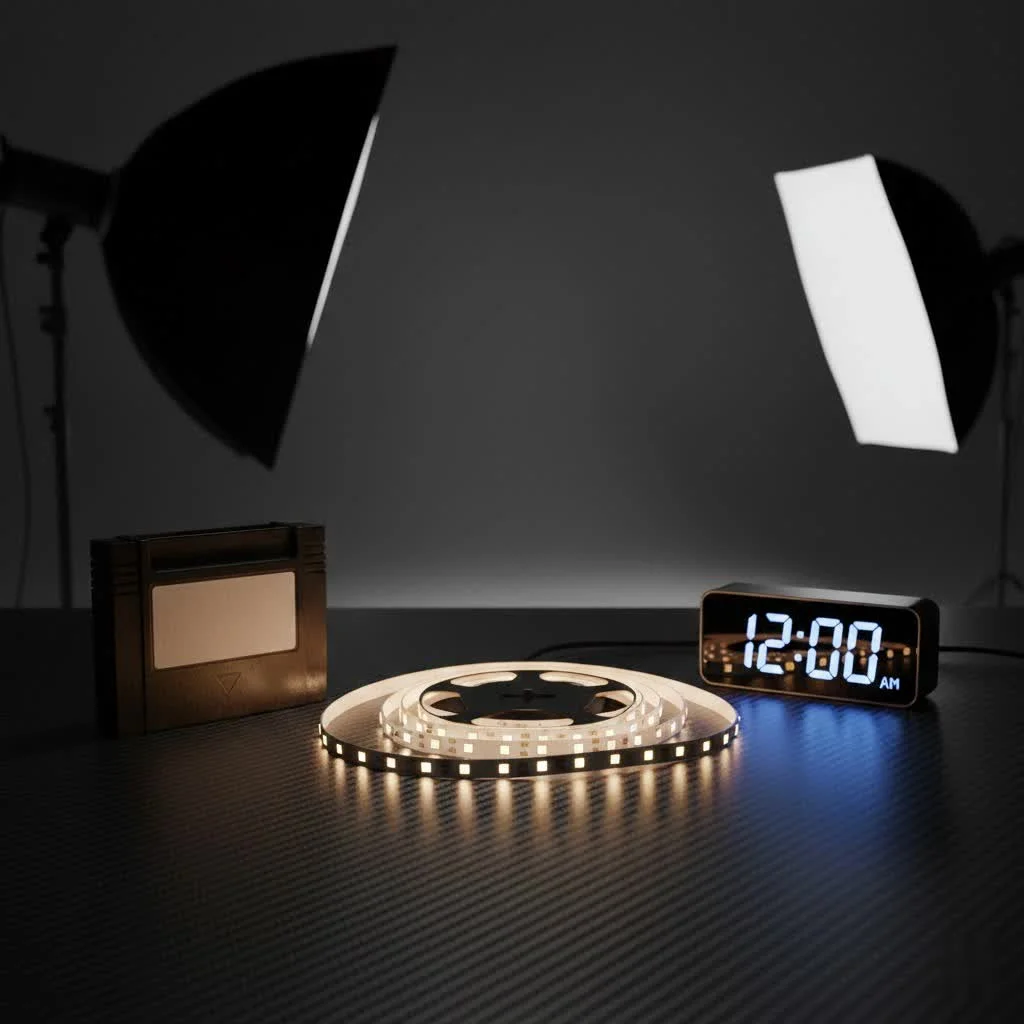
At NamsP, with over a decade of experience in LED strip design, installation, and repair, we examine the unique aspects of COB LED strips, their benefits, installation process, and creative applications for stunning effects. For shop curated led strip on this site.
What Exactly is a COB LED Strip?
A COB LED strip, or “Chip-on-Board” LED strip, features a fundamental difference in LED manufacturing and arrangement compared to traditional Surface-Mounted Device (SMD) LED strips. Instead of visibly spaced individual LED chips, COB technology involves directly mounting numerous tiny LED chips in a densely packed matrix onto a flexible printed circuit board (FPCB). These chips are then covered with a uniform layer of phosphor, often encased in linear silicone encapsulation. This design creates one continuous light-emitting surface, providing a perfectly smooth, uninterrupted line of light, free from the individual “dots” or “hotspots” seen with other LED strips, especially on reflective surfaces.
Why Choose COB LED Strips? Unveiling the Benefits
Understanding the advantages of COB LED strips is crucial for selecting the right lighting solution. They offer numerous benefits, making them a preferred choice for homeowners and professionals.
Seamless, Dot-Free Illumination
This is the most significant advantage of COB LED strips. The high density of chips, covered by a continuous phosphor layer, eliminates visible spotting. This “dotless” effect is crucial for applications where the light source is visible or when lighting reflective surfaces like polished countertops, glossy tiles, or mirrors, providing a clean, professional finish.
Superior Brightness and Efficiency
COB LED strips offer higher light density, meaning more light output per watt compared to traditional SMD strips. This translates to brighter illumination while often consuming less power, making them a more energy-efficient choice. Users can achieve more light with less energy consumption.
Enhanced Heat Dissipation and Longevity
COB technology excels in thermal management by mounting chips directly to the circuit board and often using silicone encapsulation, which effectively dissipates heat across the strip. This lower operating temperature reduces stress on the LEDs, significantly extending their lifespan to often 50,000 hours or more under proper use. Dr. Anh Nguyen, an LED lighting expert from Global Lighting Solutions, notes that “The superior thermal management in COB LED strips isn’t just a technical detail; it’s a direct contributor to their long-term reliability and consistent performance, offering real value over time.”
High Color Rendering Index (CRI)
|
Our Picks for the Best LED Strip in 2026
As an Amazon Associate I earn from qualifying purchases.
|
||
| Num | Product | Action |
|---|---|---|
| 1 | Tenmiro Led Lights for Bedroom 100ft (2 Rolls of 50ft) Music Sync Color Changing Strip Lights with Remote and App Control RGB Strip, for Room Home Party Decoration |

|
| 2 | Govee Smart RGB LED Strip Lights for Bedroom, 32.8ft WiFi LED Light Strip Work with Alexa Google Assistant, 16 Million Colors with App Control and Music Sync Lights for Home Decor, 2 Rolls of 16.4ft |
|
| 3 | Aclorol LED Strip Lights 5V USB 6.56FT/2M 640 LEDs Blue Indoor Rope Lights for Bedroom Not Waterproof IP20 CRI85+ Flexible LED Light for TV Backlight Living Room Party DIY Lighting |
|
| 4 | Govee RGBIC LED Strip Lights, 32.8ft Smart LED Lights for Bedroom, Bluetooth LED Lights APP Control, DIY Multiple Colors on One Line, Color Changing LED Strip Lighting Music Sync, Home Decor |
|
| 5 | Govee RGBIC LED Strip Lights, Smart LED Lights for Bedroom, Bluetooth LED Lights APP Control, DIY Multiple Colors on One Line, Color Changing LED Strip Lighting Music Sync, Home Decor, 16.4ft |
|
| 6 | VOEWT LED Neon Lights Daylight White 6000K,9.8ft 110-120V LED Strip Lights,Flexible Outdoor Waterproof Neon Rope Lights for Bedroom,Cabinet,Kitchen,Living Room,Mirror,Halloween Decor |
|
| 7 | Govee Warm White LED Strip Lights, Bright 300 LEDs, 3000K Dimmable Light Strip 16.4ft with Control Box, LED Lights for Bedroom, Kitchen Cabinets, Living Room, ETL Listed Adapter Included |
|
| 8 | KSIPZE 100ft Led Strip Lights RGB Music Sync Color Changing Led Lights with Smart App Control Remote Led Lights for Bedroom Room Lighting Flexible Home Décor |
|
| 9 | KANTUTOE LED Lights for TV, 16.4ft LED Lights for 45-75 Inch TVs, RGB TV Backlight Behind, Music Sync Bluetooth APP & Remote Control Strip Lights USB Powered for Bedroom, Gaming, Home Décor |
|
| 10 | Govee 100ft RGBIC LED Strip Lights, Smart LED Lights Work with Alexa and Google Assistant, LED Lights for Bedroom WiFi App Control Segmented DIY Multiple Colors, Color Changing Light, (2 x 50ft) |
|
Many COB LED strips boast a high Color Rendering Index (CRI), often 90 or above. CRI measures how accurately a light source reveals the true colors of objects compared to natural light. A high CRI ensures colors appear more vibrant, natural, and true-to-life, which is important for accentuating decor, retail displays, or enhancing living spaces.
Incredible Flexibility and Versatility
COB LED strips maintain excellent flexibility, allowing them to be bent and shaped for various contours and designs, ideal for intricate installations. They are available in a wide range of color temperatures (from warm white to cool white), and also RGB, RGBW, or RGBCCT options for dynamic color-changing capabilities, providing immense versatility for any lighting scheme.
COB vs. SMD LED Strips: A Head-to-Head Comparison
While both COB and SMD LED strips are excellent linear lighting solutions, understanding their core differences helps in choosing the best option for your project.
| Feature | COB LED Strip | SMD LED Strip |
|---|---|---|
| Light Appearance | Continuous, uniform, dot-free “neon-like” glow | Individual visible light points/dots |
| LED Density | Very high (e.g., 512, 840 LEDs/meter) | Moderate (e.g., 30, 60, 120 LEDs/meter) |
| Energy Efficiency | Generally higher (more lumens per watt) | Good, but often less efficient than COB |
| Heat Dissipation | Excellent (chips directly on PCB, better thermal management) | Good (can benefit from aluminum profiles) |
| Color Rendering | Often very high CRI (90+) | Varies, many good options available |
| Flexibility | Excellent | Excellent |
| Cost | Typically higher upfront | Generally more affordable upfront |
| Ideal Use | Reflective surfaces, visible installations, accent lighting, high-end aesthetics, display cases | General ambient lighting, hidden installations, budget-conscious projects, wide range of color options |
For projects demanding a seamless, high-end aesthetic, especially where the light strip is visible or reflected, COB LED strips are superior. For budget-friendly applications or hidden installations, SMD strips remain a viable choice.
Getting Started: How to Install Your COB LED Strip
Installing COB LED strips is a rewarding DIY project that can improve your space. With proper planning and tools, professional-looking results are achievable.
Preparation is Key
Before unrolling your COB LED strip, plan thoroughly.
- Measure the Area: Accurately determine the required length of strip lighting. Measure twice to ensure precision.
- Clean the Surface: Ensure the installation surface is completely clean, dry, and free of dust, grease, or debris. A clean base guarantees optimal adhesion for the strip’s backing. Isopropyl alcohol is effective for cleaning.
- Gather Your Tools: You will typically need a measuring tape, sharp scissors (or a utility knife), the COB LED strip, a compatible power supply (driver), connectors (if needed), and potentially an LED dimmer or controller.
Cutting Your COB Strip
COB LED strips are designed to be cut to length, but only at designated cut marks, which appear as small copper pads or dashed lines, typically every 25mm, 50mm, or 100mm.
- Locate Cut Marks: Carefully identify these marks on your strip.
- Cut with Precision: Use sharp scissors to make a clean, straight cut directly through the center of the copper pads. Cutting outside these marks can damage the circuit and render a section of the strip unusable.
Making the Connections
Connecting your COB LED strip to its power source is straightforward. Most COB strips operate on either 12V or 24V DC power, so ensure your power supply matches the strip’s voltage.
- Power Supply: Connect the positive (+) and negative (-) wires from your COB strip to the corresponding terminals on your LED driver (power supply).
- Connectors vs. Soldering: For simple installations, solderless clip-on connectors are convenient. For a more secure and long-lasting connection, especially in professional or high-traffic applications, soldering the wires is recommended. Always insulate soldered joints with heat-shrink tubing or electrical tape.
- Power Injection for Longer Runs: For runs exceeding 5 meters (approximately 16.4 feet), voltage drop can occur, causing LEDs at the end of the strip to appear dimmer. To counteract this, consider “power injection” by connecting additional power wires to the strip at intervals, ensuring consistent brightness.
Mounting Your Strip
COB LED strips typically come with a strong 3M industrial-strength adhesive backing for easy installation.
- Peel and Stick: Once your surface is clean and dry, peel off the protective layer from the adhesive backing and firmly press the strip onto your desired path. Apply consistent pressure for good contact.
- Aluminum Profiles: For a polished, professional finish, enhanced heat dissipation, and added physical protection, install your COB LED strip inside an aluminum LED profile. These channels come with diffusers that further smooth out the light and protect the strip from dust and moisture, especially recommended for kitchen, bathroom, or outdoor applications.
Testing Your Setup
Always perform a test run before finalizing everything.
- Power On: Connect your power supply to an outlet and turn it on.
- Check for Uniformity: Ensure the entire length of the COB LED strip illuminates evenly and to your satisfaction. Address any dim spots or connection issues immediately.
Creative Applications: Lighting Up Your World with COB LED Strips
The versatility of COB LED strips makes them suitable for countless practical and aesthetic applications.
- Under-Cabinet Lighting: Achieve pristine, shadow-free illumination over kitchen countertops, enhancing meal prep and highlighting backsplashes without distracting light dots.
- Accent and Cove Lighting: Create subtle yet impactful ambient light in living rooms, bedrooms, or hallways by installing COB strips in coves, behind crown molding, or along architectural features. The seamless glow adds depth and warmth.
- Retail and Display Lighting: For businesses, COB strips are perfect for showcasing products in display cases, shelves, or behind signage. The high CRI makes colors pop, and uniform light ensures no product is overshadowed by visible LED points.
- Architectural Features: Highlight unique architectural details, staircases, or wall recesses with a continuous line of light, adding modern sophistication.
- DIY Projects: From custom light fixtures to illuminated shelves, gaming setups, or creative art installations, the flexibility and dot-free output of COB strips enable endless DIY possibilities.
Maintaining Your COB LED Strips for Lasting Brilliance
While COB LED strips are known for longevity and durability, proper care ensures they continue to shine brightly for years.
- Keep Them Clean: Periodically wipe down exposed LED strips with a soft, dry cloth to remove dust and debris. For stubborn grime, use a slightly damp cloth with mild soap, ensuring the strip is completely dry before powering on.
- Ensure Proper Ventilation: Although COB strips have excellent heat dissipation, avoid enclosed spaces without airflow or tight coverings, which can shorten their lifespan. Use aluminum profiles as heat sinks if in doubt.
- Check Connections: Occasionally inspect connections for signs of loosening or corrosion, especially in areas with vibration or temperature fluctuations. Secure any loose wires.
- Use the Right Power Supply: Always use a compatible 12V or 24V power supply that meets or exceeds the total wattage requirements of your LED strip run. An overloaded power supply can lead to premature failure.
Frequently Asked Questions (FAQ)
Q: Do COB LED strips get hot?
A: Like all electronic components that produce light, COB LED strips generate heat. However, their Chip-on-Board design promotes excellent thermal management, allowing them to dissipate heat more efficiently and run cooler than many traditional LED strips, contributing to their longer lifespan of 50,000 hours or more.
Q: Can COB LED strips be cut?
A: Yes, COB LED strips can be cut, but only at the designated cut marks. These marks are typically spaced every 25mm, 50mm, or 100mm along the strip and must be followed precisely to avoid damaging the circuit.
Q: Are COB LED strips dimmable?
A: Absolutely! Most COB LED strips are fully dimmable when paired with a compatible LED dimmer switch or controller. This allows users to adjust the brightness to create the perfect ambiance for any occasion.
Q: What voltage do COB LED strips use?
A: COB LED strips commonly operate on either 12-volt (12V) or 24-volt (24V) direct current (DC) power. It is crucial to match the strip’s voltage requirement with the output voltage of your power supply to ensure proper function and longevity.
Q: Are COB LED strips better than SMD?
A: “Better” depends on specific needs. COB LED strips offer superior uniform, dot-free light, better heat dissipation, and often higher CRI (90+), making them ideal for high-aesthetic applications. SMD strips are generally more affordable and offer a wider range of colors, suitable for situations where visible dots are not an issue.
Q: How long do COB LED strips typically last?
A: COB LED strips are designed for longevity, often lasting 50,000 hours or more under proper operating conditions. Their superior thermal management contributes significantly to this extended lifespan, ensuring consistent performance over many years.
Light Up Your World with Confidence
COB LED strip lighting represents a significant leap forward in linear illumination, offering a blend of aesthetic perfection, energy efficiency, and durability. Whether you’re a seasoned DIY enthusiast or new to home lighting customization, COB strips provide a robust and beautiful solution.
At NamsP, our mission is to empower you with the knowledge and confidence to tackle your LED strip projects safely and effectively. We believe that with the right guidance, anyone can transform their space with stunning, professional-grade lighting. Explore the possibilities and bring the seamless brilliance of COB LED strips into your world!
Install Your COB LED Strip Lighting
This guide provides step-by-step instructions for installing COB LED strip lights, ensuring a professional and long-lasting setup for your home or business.
Accurately measure the area where you plan to install the COB LED strip. Ensure the surface is completely clean, dry, and free of dust or grease for optimal adhesive backing. Gather essential tools including a measuring tape, sharp scissors, the COB LED strip, a compatible power supply, and any necessary connectors or dimmers.
Carefully cut the COB LED strip only at the designated cut marks, typically found every 25mm, 50mm, or 100mm, using sharp scissors for a clean cut. Connect the positive (+) and negative (-) wires from your COB strip to the corresponding terminals on your 12V or 24V LED driver. For longer runs exceeding 5 meters, consider power injection to prevent voltage drop.
Peel off the protective layer from the 3M adhesive backing and firmly press the strip onto your desired path, applying consistent pressure. For a more professional finish and enhanced heat dissipation, consider installing the strip inside an aluminum LED profile. Finally, connect your power supply to an outlet and turn it on to ensure the entire length of the COB LED strip illuminates evenly and to your satisfaction.
Get our weekly buyer guide
Practical specs, not advice. Unsubscribe anytime.

I used these COB strips for some accent lighting in my home theater, and the superior brightness is definitely noticeable. It creates a great ambiance without being too harsh. My only minor complaint is that getting the corners perfectly smooth took a bit more finessing than I expected, but the end result is worth it. They really do offer a continuous light-emitting surface.
I tried the COB LED strips for my outdoor patio, hoping for that enhanced longevity. While the light quality is good and it’s definitely brighter than my old setup, one section started flickering after about three months. It’s not a huge deal since it’s just one small part, but I was expecting a bit more durability for exterior design. Still, the overall effect is nice when it’s working.
I was hesitant about upgrading my kitchen under-cabinet lighting, but the seamless, dot-free illumination from COB LED strips is a game-changer. It really makes a difference on my glossy countertops, no more distracting reflections. Installation was pretty straightforward too, even for a DIY novice like me. Highly recommend for anyone looking for a clean, modern look.
As someone who’s always tinkering with home tech, I appreciate the Chip-on-Board technology. The way numerous tiny LED chips are mounted directly onto the flexible circuit board really does eliminate those annoying hot spots you get with traditional SMD strips. It’s a significant improvement for visible installations where you want a truly uniform light. Very impressed with the engineering.