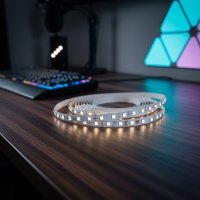
Your bedroom is more than just a place to sleep; it’s your personal sanctuary, a space where you unwind, recharge, and express your unique style. What if you could transform this essential room with lighting that not only sets the perfect mood but also enhances functionality and adds a touch of modern elegance? That’s precisely what LED strip lights for bedroom can achieve, making them one of the most popular and versatile lighting solutions for contemporary homes.

Gone are the days of harsh overhead lights dictating your bedroom’s ambiance. LED strip lights offer unparalleled flexibility, allowing you to craft a personalized lighting experience that adapts to your every need, from bright morning routines to tranquil evening relaxation. As someone who has spent over a decade designing, installing, and fixing these ingenious lights, I’ve seen firsthand how they can revolutionize a living space. For expert led strip reviews on this site.
What Exactly Are LED Strip Lights?
At their core, LED strip lights are flexible circuit boards embedded with tiny Light Emitting Diodes (LEDs). Imagine a thin, adhesive-backed tape that can bend, curve, and be cut to specific lengths, each segment glowing with vibrant or subtle illumination. This innovative design allows them to be discreetly placed in areas where traditional fixtures simply wouldn’t fit, providing a seamless and often “hidden” light source. They are remarkably versatile, turning almost any surface into a canvas for light.
Why Choose LED Strip Lights for Your Bedroom?
The allure of LED strip lights for bedroom extends far beyond their sleek appearance. They bring a host of practical benefits that make them an ideal choice for your personal space.
Energy Efficiency and Longevity That Saves You Money
Let’s talk numbers: LED strip lights consume significantly less energy than conventional incandescent or even fluorescent bulbs – often up to 80% less. This translates directly into lower electricity bills, making them a cost-effective choice in the long run. Moreover, these lights boast an impressive lifespan, often lasting 25,000 hours or more. That means you won’t be climbing on chairs to change bulbs frequently, saving you time and the hassle of replacements. Think about it: a one-time installation for years of consistent, beautiful light.
Unmatched Versatility for Every Mood
One of the most compelling reasons to embrace LED strip lights is their incredible adaptability. Whether you want to create a cozy reading nook, a romantic atmosphere, or a vibrant space for creative tasks, these lights deliver. With options for dimming and color changing, you can effortlessly transition your room’s vibe with a simple tap on an app or a voice command. Imagine a soft, warm glow for winding down, or a cool, crisp light for focusing on a project – it’s all at your fingertips.
Enhanced Safety and Comfort
|
Our Picks for the Best LED Strip in 2026
As an Amazon Associate I earn from qualifying purchases.
|
||
| Num | Product | Action |
|---|---|---|
| 1 | Tenmiro Led Lights for Bedroom 100ft (2 Rolls of 50ft) Music Sync Color Changing Strip Lights with Remote and App Control RGB Strip, for Room Home Party Decoration |

|
| 2 | Govee RGBIC LED Strip Lights, Smart LED Lights for Bedroom, Bluetooth LED Lights APP Control, DIY Multiple Colors on One Line, Color Changing LED Strip Lighting Music Sync, Home Decor, 16.4ft |
|
| 3 | KANTUTOE LED Lights for TV, 16.4ft LED Lights for 45-75 Inch TVs, RGB TV Backlight Behind, Music Sync Bluetooth APP & Remote Control Strip Lights USB Powered for Bedroom, Gaming, Home Décor |
|
| 4 | KSIPZE 100ft Led Strip Lights RGB Music Sync Color Changing Led Lights with Smart App Control Remote Led Lights for Bedroom Room Lighting Flexible Home Décor |
|
| 5 | VOEWT LED Neon Lights Daylight White 6000K,9.8ft 110-120V LED Strip Lights,Flexible Outdoor Waterproof Neon Rope Lights for Bedroom,Cabinet,Kitchen,Living Room,Mirror,Halloween Decor |
|
| 6 | Aclorol LED Strip Lights 5V USB 6.56FT/2M 640 LEDs Blue Indoor Rope Lights for Bedroom Not Waterproof IP20 CRI85+ Flexible LED Light for TV Backlight Living Room Party DIY Lighting |
|
| 7 | Govee Warm White LED Strip Lights, Bright 300 LEDs, 3000K Dimmable Light Strip 16.4ft with Control Box, LED Lights for Bedroom, Kitchen Cabinets, Living Room, ETL Listed Adapter Included |
|
| 8 | Govee 100ft RGBIC LED Strip Lights, Smart LED Lights Work with Alexa and Google Assistant, LED Lights for Bedroom WiFi App Control Segmented DIY Multiple Colors, Color Changing Light, (2 x 50ft) |
|
| 9 | Govee Smart RGB LED Strip Lights for Bedroom, 32.8ft WiFi LED Light Strip Work with Alexa Google Assistant, 16 Million Colors with App Control and Music Sync Lights for Home Decor, 2 Rolls of 16.4ft |
|
| 10 | Govee RGBIC LED Strip Lights, 32.8ft Smart LED Lights for Bedroom, Bluetooth LED Lights APP Control, DIY Multiple Colors on One Line, Color Changing LED Strip Lighting Music Sync, Home Decor |
|
Compared to traditional lighting, LED strip lights emit minimal heat. This low heat output significantly reduces any risk of overheating or fire, making them a safe addition, even when installed near fabrics or within confined spaces like behind a headboard. Plus, many advanced LED strips offer excellent color rendering index (CRI), meaning they accurately represent the colors of objects, creating a more natural and visually comfortable environment. Some also allow you to adjust color temperature to reduce blue light exposure before sleep, supporting your natural circadian rhythm.
Navigating the World of LED Strip Lights: Types and Features
Choosing the right LED strip lights for your bedroom involves understanding the different types and features available. Here’s a breakdown to help you make an informed decision:
Flexible vs. Rigid Strips
Most LED strip lights you’ll encounter are flexible, designed to bend and conform to various shapes, perfect for outlining curves or wrapping around furniture. They usually come with an adhesive backing for easy installation. Rigid strips, on the other hand, offer greater durability and are often used for straight-line applications where a more robust solution is preferred. For most bedroom applications, flexible strips offer the most creative freedom.
Waterproof vs. Non-waterproof Options
While bathrooms or outdoor spaces demand waterproof LED strips with a protective coating, a standard bedroom typically won’t require this feature. Non-waterproof options are generally sufficient for dry indoor areas like under the bed or behind a headboard and often come at a lower cost. However, if you’re installing near a window that might experience condensation, a water-resistant (e.g., IP54 rated) option could offer extra peace of mind.
Single Color vs. RGB vs. RGBIC
- Single Color: These strips emit a consistent hue, such as warm white, cool white, or a specific color like red or blue. They are ideal for creating a stable and focused environment.
- RGB (Red, Green, Blue): RGB strips contain red, green, and blue LEDs that can be mixed to produce a wide spectrum of colors. This offers immense versatility for mood lighting and allows you to change the ambiance dramatically.
- RGBIC (Red, Green, Blue, Independent Control): RGBIC strips take color control a step further by allowing you to display multiple colors on a single strip simultaneously, creating dynamic, flowing light effects that are truly mesmerizing.
Dimmable and Smart Features
Most modern LED strip lights offer dimmable options, allowing you to adjust brightness levels to suit different activities or times of day. Smart LED strips integrate with apps and voice assistants (like Google Home or Amazon Alexa), providing convenient control over brightness, color, and even custom lighting scenes. Imagine setting a “Good Morning” scene that gradually brightens with warm light, or a “Movie Night” scene that dims to a perfect cozy glow – all controllable with your voice or smartphone.
Voltage and LED Density
LED strip lights typically operate at 12V or 24V (requiring a power supply/driver) or 120V (which can plug directly into an outlet). For bedrooms, lower voltage options are generally safer and easier to work with.
LED density refers to the number of LEDs per meter (e.g., 30 LEDs/M, 60 LEDs/M). For a cozy, diffused glow, 30 LEDs/M might be sufficient. If you need brighter, more uniform illumination, higher densities like 60 LEDs/M or more will minimize “hot spots” and create a smoother line of light.
How to Choose the Perfect LED Strip Lights for Your Bedroom
Selecting the best LED strip lights isn’t just about picking a color; it’s about aligning the lighting with your lifestyle and desired atmosphere.
Define Your Desired Mood and Functionality
Before you buy, ask yourself: What do I want this lighting to do?
- Ambient Lighting: For general, soft illumination around the room (e.g., ceiling coves).
- Task Lighting: For specific activities like reading or getting ready (e.g., behind a headboard, around a mirror).
- Accent Lighting: To highlight architectural features, artwork, or furniture (e.g., under shelves, behind a TV).
- Mood Lighting: To create a relaxing, romantic, or energetic atmosphere (e.g., RGB strips with color and dimming control).
Consider Color Temperature and Hue
The color of light significantly impacts your mood and energy levels.
- Warm White (2200K-3000K): Emits a soft, yellowish glow, perfect for creating a cozy, relaxing, and inviting atmosphere, ideal for winding down in the evening.
- Neutral White (3500K-4000K): A balanced white that strikes a good balance between calming and functional, suitable for general room lighting.
- Cool White (5000K-6500K): A brighter, bluish-white light that promotes alertness and focus, good for task lighting in the morning but less ideal for evening relaxation.
- RGB Colors: If you desire dynamic and vibrant options, RGB or RGBIC strips allow you to choose from millions of colors, letting you match your lighting to any mood or occasion. For a sleep sanctuary, colors like red or purple are often recommended as they are less disruptive to melatonin production.
Brightness (Lumens) and Power (Wattage)
Don’t just look at wattage; lumens measure the actual brightness of the light. For accent lighting, lower lumen output is fine. For brighter ambient or task lighting, you’ll need higher lumens. Always ensure the power supply matches the voltage and wattage requirements of your chosen LED strips to prevent electrical issues and ensure optimal performance.
Control Options
Decide how you want to control your lights:
- Remote Control: Simple and straightforward for basic color and brightness adjustments.
- Smartphone App: Offers more advanced customization, scene setting, and scheduling.
- Voice Control: Integrates with smart home assistants for hands-free operation.
Length and Cutability
Measure your installation area accurately. Most LED strips come in standard lengths (e.g., 5 meters/16.4 feet) and can be cut at designated marks (usually every few inches/centimeters) to fit your specific needs. Plan your layout carefully to avoid coming up short or having too much excess.
Step-by-Step Installation Guide for LED Strip Lights in Your Bedroom
Installing LED strip lights in your bedroom is a rewarding DIY project that doesn’t require an electrician for most low-voltage setups. Here’s how to get it done safely and effectively:
Checklist of Tools and Materials You’ll Need:
- LED strip lights (with adhesive backing or mounting clips)
- Compatible power supply (transformer/driver)
- Controller (remote, app-controlled unit)
- Measuring tape
- Scissors (for cutting strips)
- Rubbing alcohol or a mild cleaning solution
- Clean cloth
- Cable channels or wire clips (optional, for hiding wires)
- Connectors (if joining multiple strips)
- Screwdriver (if using mounting clips)
Phase 1: Planning and Preparation
- Measure Your Space: Use a tape measure to meticulously plan where your LED strips will go. Think about outlining your headboard, tracing ceiling coves, or running them under shelves. Add a little extra length for any corners or tricky spots to avoid running short.
- Clean the Surface: This is crucial for proper adhesion. Wipe down the entire installation area with a damp cloth to remove any dust, debris, or oils. Then, wipe again with rubbing alcohol for a perfectly clean surface. Ensure the surface is completely dry before proceeding.
- Clear Obstacles: Remove any furniture or decor that might obstruct the installation process. Ensure you have easy access to power outlets.
Phase 2: Installation
- Cutting the Strips (If Necessary): LED strips have designated cut marks, usually indicated by a copper pad or scissor icon. Carefully cut along these marks with sharp scissors to achieve the desired length. Do not cut anywhere else, as this can damage the circuit.
- Connecting Multiple Strips (If Needed): If your design requires more than one strip, you can use specialized connectors (which simply clip onto the ends) or, for a more robust connection, solder the strips together. When connecting, pay close attention to polarity (+ and – markings) to ensure consistent light. Misaligned polarity will prevent the strip from lighting up correctly.
- Attaching the Strips:
- Adhesive Backing: Most LED strips come with pre-applied adhesive. Peel off a small section of the protective layer, press the strip firmly onto your cleaned surface, and continue peeling and pressing as you go.
- Mounting Clips: For added security, especially on textured or uneven surfaces, use mounting clips. These are typically screwed into the surface and clip around the strip.
- Connecting to the Power Supply and Controller: Connect your LED strip to the controller (if applicable), and then connect the controller to the power supply. Finally, plug the power supply into a wall outlet. Ensure all connections are secure.
- Hiding Wires (Optional but Recommended): For a clean, professional look, hide any visible wires. You can run them behind furniture, use discreet cable channels that match your wall color, or tuck them within crown molding or trim.
Phase 3: Testing and Troubleshooting
- Power On and Test: Once everything is connected, plug in your LED strip lights and switch them on. Check each section of the strip for consistent brightness and color.
- Adjust Settings: Use your remote, app, or voice commands to experiment with different colors, brightness levels, and effects.
- Troubleshooting Common Issues:
- Not lighting up: Check all connections for proper polarity and security. Ensure the power supply is correctly plugged in and functioning.
- Flickering or inconsistent colors: This often points to a loose connection or an inadequate power supply. Verify connections and ensure your power supply meets the strip’s requirements. Consult the manufacturer’s troubleshooting guide.
Creative LED Strip Light Ideas to Transform Your Bedroom
Now for the fun part – unleashing your creativity! LED strip lights can elevate your bedroom design in countless ways.
Behind the Headboard: The Floating Effect
This is a classic for a reason. Installing LED strip lights behind your headboard creates a soft, ambient glow that makes your bed appear to float. This subtle illumination is perfect for a cozy atmosphere and can also serve as gentle backlighting for reading without harsh glare. You can even adjust the color temperature to align with your sleep cycle – warm tones in the evening to promote relaxation, and brighter, cooler tones in the morning for an energizing start.
Under the Bed: A Magical Night Light
A popular and elegant application is placing LED strips under the bed frame. This creates a soft, floor-level illumination that acts as a subtle night light, guiding your steps in the dark without fully waking you up. It also adds a luxurious, ethereal glow, making your bedroom feel like a boutique hotel suite. For a romantic touch, select warm white or soft RGB colors.
Ceiling Cove Lighting: Architectural Elegance
For a truly sophisticated look, install LED strips within ceiling coves or along the edges of your ceiling. This indirect lighting washes the ceiling with a soft, uniform glow, making the room feel larger and more open while providing excellent ambient illumination without any visible light source. It’s a fantastic way to highlight architectural details and add depth to your bedroom.
Around Windows and Shelves: Highlighting Features
Use LED strip lights to frame your windows, drawing attention to outdoor views and creating a warm, inviting outline at night. Similarly, placing them under shelves not only highlights your cherished books or decor items but also provides practical task lighting for display areas.
Wardrobe and Closet Illumination
No more rummaging in the dark! Installing LED strips inside your wardrobe or closet provides even, bright lighting that eliminates shadows, making it easier to find your clothes. Cool white light works well here for clarity, and smart controls can automatically turn them on when you open the doors.
TV Backlighting: Reduce Eye Strain
Place LED strips behind your TV to reduce eye strain, especially in a dimly lit room. The bias lighting creates a contrast that makes on-screen images appear sharper and can even enhance the perceived color of your display. Syncing the lights to your TV’s content for dynamic color changes takes the entertainment experience to a whole new level.
Artistic Wall Accents
Illuminate your favorite artwork, mirrors, or textured walls with LED strips to create captivating accent lighting. The focused glow adds depth and sophistication, turning ordinary elements into focal points. You can frame photo galleries or use them to create geometric light patterns directly on the wall.
Path Lighting: Guiding Your Way
For late-night trips, strategically placing LED strips along the bottom of your walls or around doorframes provides a gentle, low-level light that guides your way without disturbing anyone else. This subtle illumination enhances safety and convenience in the dark.
Maintaining Your LED Strip Lights for Lasting Brilliance
While LED strip lights are known for their longevity and low maintenance, a few simple practices can ensure they continue to shine brightly for years to come.
- Gentle Cleaning: Dust can accumulate on the strips, slightly dimming their output. Gently wipe them with a soft, dry cloth. Avoid using water or harsh cleaning solutions, as these can damage the LEDs or adhesive.
- Check Connections: Periodically inspect all connections (strip to connector, controller to power supply) to ensure they remain secure. Loose connections can lead to flickering or inconsistent lighting.
- Ensure Proper Ventilation: Although LEDs produce minimal heat, ensuring a slight amount of space between the strips and the surface they are mounted on can help dissipate any residual heat, contributing to their overall lifespan.
Frequently Asked Questions (FAQ)
Q: How can I create ambient light with LED strip lights in my bedroom?
A: Creating ambient light is simple! Place LED strips discreetly behind your headboard, under your bed, or within ceiling coves. This indirect placement casts a soft, diffused glow that enhances the room’s overall atmosphere without being overpowering. You can adjust the brightness and color to achieve the perfect cozy feeling.
Q: What are the main benefits of using LED strip lights in a bedroom?
A: LED strip lights offer numerous benefits, including high energy efficiency (saving on electricity bills), exceptional longevity (reducing replacement frequency), and incredible versatility in creating various moods and lighting effects. They are also relatively safe due to low heat emission and can significantly enhance your bedroom’s aesthetic and functionality.
Q: Can I install LED strip lights myself, or do I need an electrician?
A: For most low-voltage LED strip light kits designed for home use, you can absolutely install them yourself! They typically come with adhesive backing for easy application and plug-and-play components. Always follow the manufacturer’s instructions carefully. However, for high-voltage strips or complex wiring, consulting a qualified electrician is always recommended.
Q: Are LED strip lights safe for use in bedrooms?
A: Yes, LED strip lights are generally very safe for bedroom use. They operate at low voltages and emit minimal heat compared to traditional bulbs, significantly reducing the risk of overheating or fire hazards. Just ensure you purchase quality products with safety certifications and follow the installation guidelines.
Q: How do I choose the right color for my LED strip lights in the bedroom?
A: The right color depends on the mood you want to create. For a relaxing and cozy atmosphere, warm white (2700K-3000K) or soft, muted RGB colors like deep red or purple are ideal. For tasks, a neutral white (3500K-4000K) might be suitable. Many users opt for RGB strips to have the flexibility to change colors for different occasions.
Q: What should I do if my LED strip lights aren’t working properly?
A: First, check all connections to ensure they are secure and that the polarity (+ and -) is correctly aligned. Verify that the power supply is properly connected and functioning. If the issue persists (e.g., flickering, uneven lighting), consult the troubleshooting section of your product manual, as it might indicate a power supply issue or a faulty strip segment.
Q: Can I control my LED strip lights with a smartphone or voice commands?
A: Absolutely! Many modern LED strip light systems offer smart features that allow control via a dedicated smartphone app. Some can also integrate seamlessly with smart home platforms like Amazon Alexa or Google Home, enabling convenient voice control to adjust brightness, change colors, or activate pre-set scenes without leaving your bed.
Your Bedroom, Reimagined with LED Strip Lights
Embracing LED strip lights for bedroom is more than just a decor choice; it’s an investment in creating a more adaptable, energy-efficient, and aesthetically pleasing living space. From illuminating forgotten corners to setting the perfect sleep-inducing ambiance, these versatile lights empower you to craft a bedroom that truly reflects your personality and caters to your every need. So go ahead, dive into the world of LED strip lighting, and transform your sanctuary into the dream space you’ve always envisioned.
Get our weekly buyer guide
Practical specs, not advice. Unsubscribe anytime.